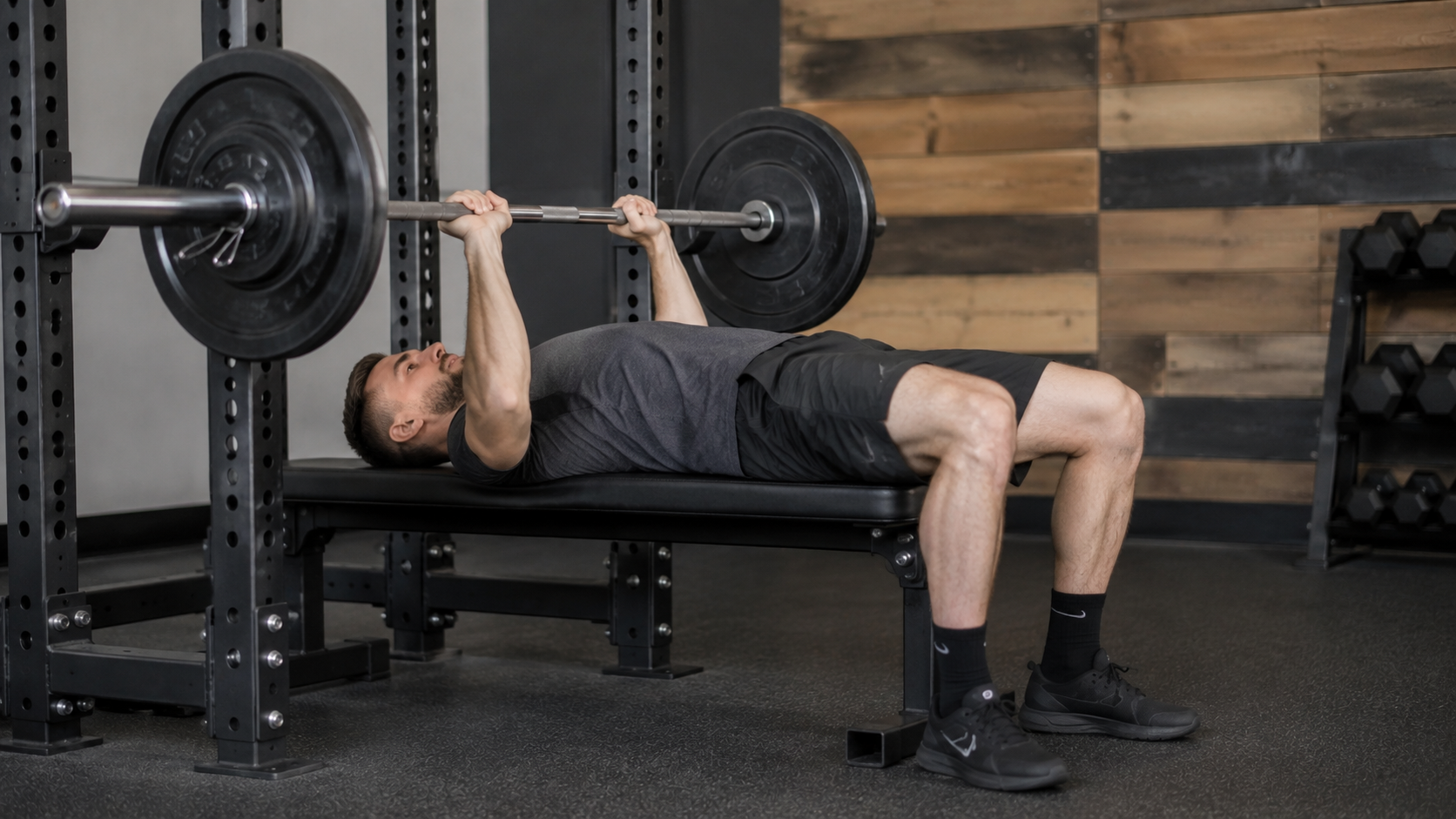
This is a triceps-leaning bench press with chest and shoulder involvement.
It uses a barbell in the gym, with a grip slightly narrower than shoulder-width and the upper arms as the main focus. Corect can analyse this movement from a phone video and score its form.
Set up the bench and your body
Set the seat height so you can plant both feet flat and stay tight on the bench before the bar moves. Your setup should feel braced and still, with your upper back settled and your body ready to press from a controlled start.
Choose the grip width
Take a grip that is slightly narrower than shoulder-width. Keep the bar centered in your hands and the setup consistent rep to rep.
From there, lower the bar toward your chest with your elbows close to your body, pause briefly at the bottom, then press back to the start.
Lower the bar with control
Lower the bar under control and keep your elbows close to your body as it comes down. The clean rep feels smooth on the way to the chest, with no rush or drop.
Keep the descent repeatable so the bottom stays stable for the pause.
Pause at the bottom
The pause is where the rep proves you can stay tight instead of bouncing out of the bottom. It should feel like a brief dead stop, not a tap.
When it disappears, the bar pops off the chest and the change of direction gets rushed. On video, that usually shows up as a quicker bottom and a sloppy transition into the press.
Press the bar back to start
Drive the bar straight up from the paused touch point and keep it close to the body. The rep should feel like the triceps finish the press after the bar leaves the chest, with the upper arms staying tight and the bar moving smoothly back to the start.
Common form mistakes
Watch for the grip drifting wider, the elbows peeling away from the body, or the bar touching higher and higher on the chest. A clean rep keeps the upper arms tight on the way down and shows a clear pause before the press starts.
Score feet that slide or reset between reps, since a shaky base usually comes with a drifting bar path. If the bar bounces straight back up with no pause, the set has turned loose.
How to check your reps on video
Watch for the bottom position first. The bar should lower with your elbows close to your body, settle for a moment, then drive back up without a bounce.
If the elbows flare, the pause disappears, or the bar comes off a different spot than it touched, the rep is no longer matching the movement you want. Corect can score that from a phone video.
Close-Grip Bench Press: the movement, step by step
- Adjust the seat height and position yourself on the bench with your feet flat on the ground.
- Grasp the barbell with a close grip, slightly narrower than shoulder-width apart.
- Lower the barbell towards your chest, keeping your elbows close to your body.
- Pause for a moment at the bottom, then push the barbell back up to the starting position.
- Repeat for the desired number of repetitions.
Common questions
What makes the close-grip bench press different?
It is a triceps-leaning bench press with chest and shoulder involvement. The grip is slightly narrower than shoulder-width, and the upper arms stay close to the body.
How should the bar move in a clean rep?
The bar should lower under control, pause briefly at the bottom, then press back to the start. It should move smoothly and stay close to the body.
What are the most common form mistakes?
Common mistakes include the grip drifting wider, elbows peeling away from the body, the bar touching higher on the chest, feet sliding, and losing the pause.
Can Corect score this lift from video?
Yes. Corect can analyze this movement from a phone video and score its form.
The hardest part of fixing any of this is that you cannot see yourself mid-rep. Corect reads your form from a phone video and shows you what actually happened on each rep of your close-grip bench press — depth, bar path, where the breakdown starts. Try it free.