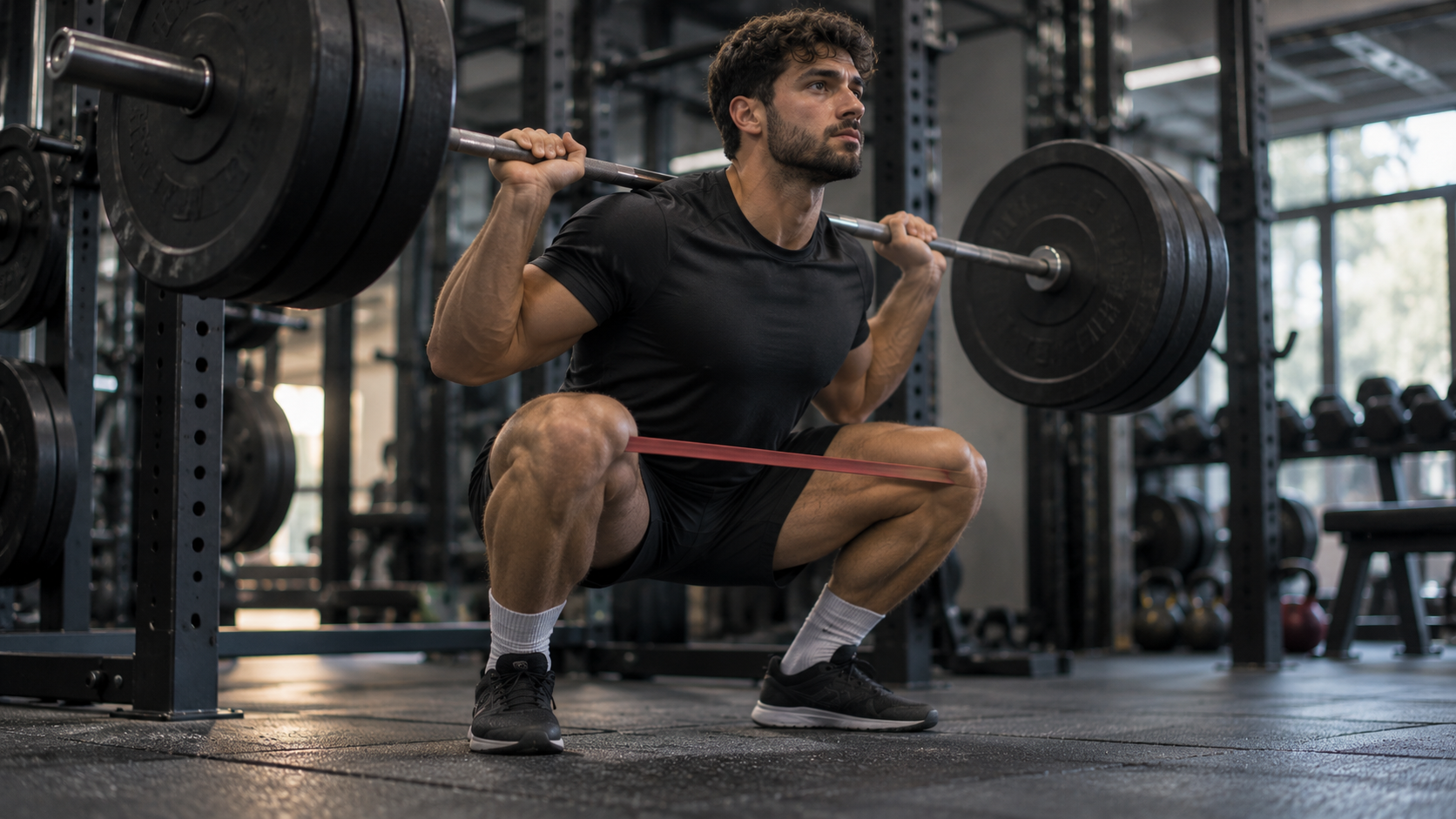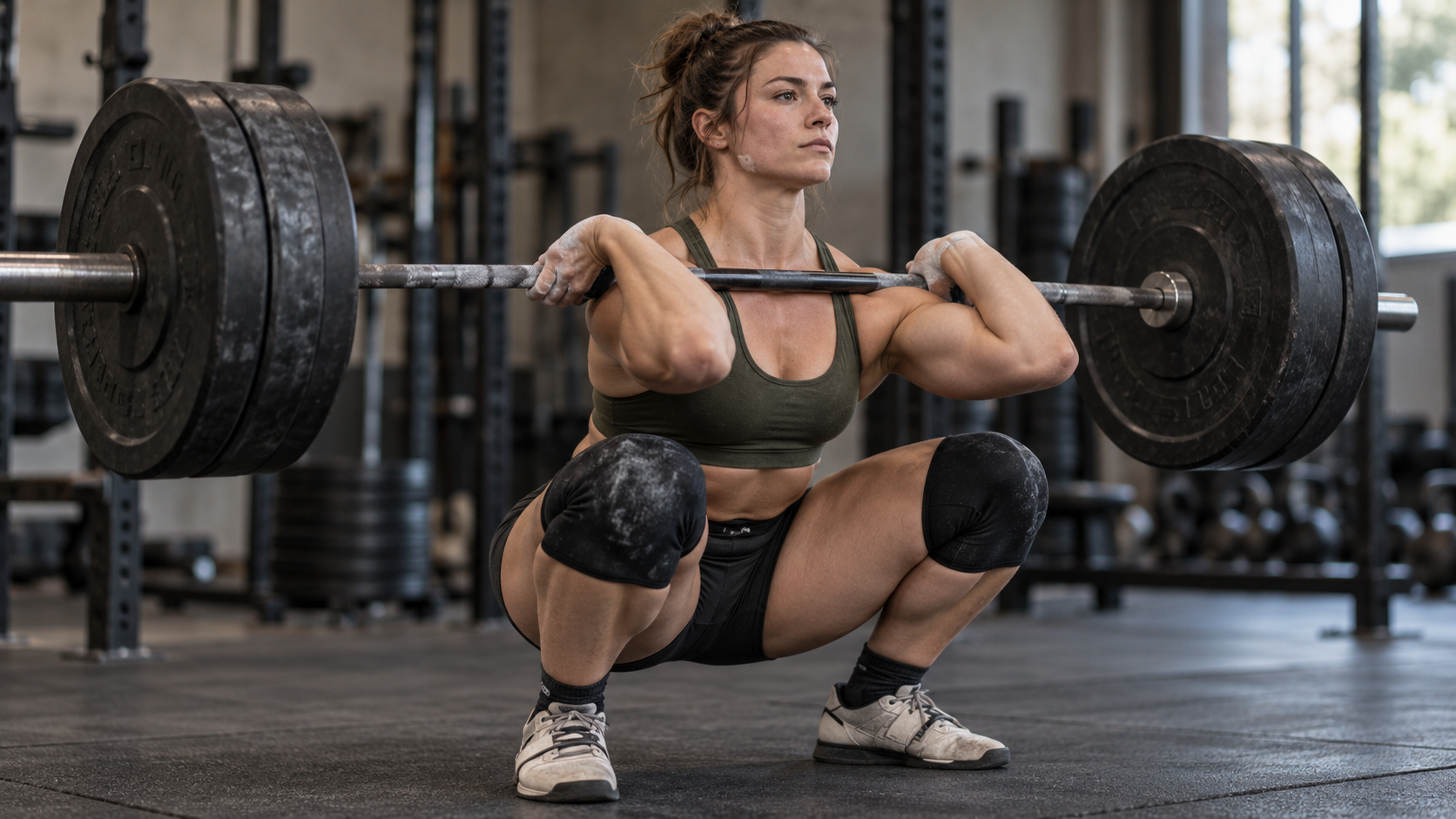
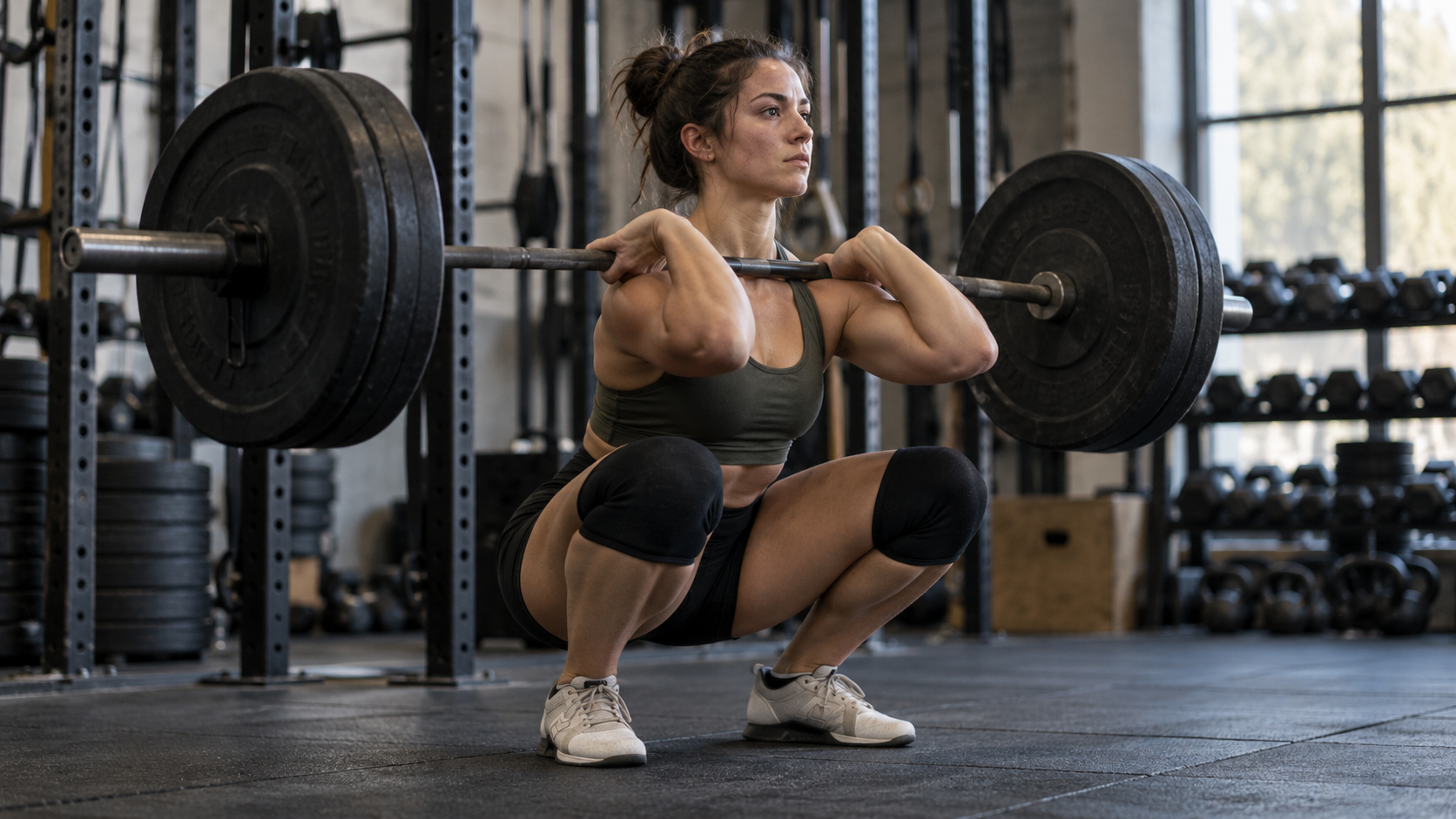
Keep the barbell resting on your collarbone and shoulders, chest up, core braced, and lower into the squat with your hips back and knees bending. The rep should stay upright and stacked, with the load centered over your upper legs instead of pulling you forward.
At the bottom, stay controlled and keep pressure through your heels. If the torso folds or the bar drifts, the position is breaking down.
Set up the bar and stance
Set your feet about shoulder-width with the toes slightly turned out, then rack the bar across your collarbone and shoulders. That front rack is what keeps the lift upright and gives you a position you can actually control.
Lower under control
Keep the descent upright. Brace hard so the torso does not pitch forward, and let the knees open as the hips drop just enough to stay balanced over midfoot.
If the rep is breaking down, the chest falls first, the upper back softens, or the knees cave as you sink. A clean descent looks stacked and controlled all the way down, with the bar staying steady on the shoulders instead of drifting.
Hit depth without folding
The bottom should look organized, not forced. Once you reach your deepest clean position, the bar stays over your midfoot, the chest stays up, and the upper back keeps the rack from collapsing.
True depth is the lowest position you can repeat without losing that shape. If you have to fold to go lower, that is past the range you own.
Drive back up
If the rep stays clean, the bar comes up from the front rack without the chest dumping forward. You keep pressure through your heels and hold the torso tight so the bar does not drift ahead of the midfoot.
When it turns into a good-morning pattern, the hips rise before the bar and the upper back softens. On video, that shows up as the chest dropping and the load tipping forward instead of coming straight back to standing.
Common errors you can see on video
The breakdowns Corect can spot are the ones that change the line of the rep. If the elbows drop, the bar starts to drift off the collarbone and shoulders, and the chest follows it down. If the brace goes, the torso softens as you descend and the squat turns into a fold. On video, that shows up as the bar moving forward and the hips shooting back.
Instability shows up fast too. The knees should stay in line with the stance, not cave in or wobble from rep to rep. If you can’t hit thighs parallel without the upper back giving out, you are losing upper back position before the bottom.
Front squat for quads and upper body stability
This lift shifts the work toward the quadriceps, glutes, core, and upper back without needing much else from the upper body. The point is not a bigger rack cue or more knee-tracking talk; it is a squat that lets those muscles stay loaded while the torso stays upright enough to keep the rep under control.
On video, it should look steady and repeatable: the bar rests on the collarbone and shoulders, the descent stays controlled to parallel or your comfortable limit, and the rep comes back up without the chest folding.
When wrist pain shows up
Wrist discomfort usually starts in the rack, not in the squat itself. If the bar sits too far forward or the elbows drop, the load shifts into the hands and wrists instead of staying on the collarbone and shoulders. On video, the right rack looks still and stacked: bar fixed high on the shoulders, chest up, upper back tight, wrists quiet. When it is going wrong, the hands bend back, the elbows drift, and the bar looks like it is being held up instead of supported.
If it keeps showing up rep to rep, check the rack position first. Corect can also help you spot whether the issue is the rack, the descent, or a breakdown in upper-back tension from phone video.
Barbell Front Squat: the movement, step by step
- Start by standing with your feet shoulder-width apart, toes slightly turned out.
- Hold the barbell in front of your shoulders, resting it on your collarbone and shoulders.
- Engage your core and keep your chest up as you lower your body down into a squat position, pushing your hips back and bending your knees.
- Lower until your thighs are parallel to the ground, or as low as you can comfortably go.
- Pause for a moment at the bottom, then push through your heels to return to the starting position.
- Repeat for the desired number of repetitions.
Common questions
How should the bar sit in a front squat?
The bar should rest on your collarbone and shoulders in a front rack. That position keeps the lift upright and gives you a setup you can control.
What does a clean front squat descent look like?
The descent stays upright and controlled, with the torso stacked and the bar steady on the shoulders. If the chest falls, the upper back softens, or the knees cave, the rep is breaking down.
How do you know if you hit the right depth?
True depth is the lowest position you can repeat without losing shape. If you have to fold to go lower, that is past the range you own.
What usually causes wrist pain in the front squat?
Wrist discomfort usually starts in the rack, not in the squat itself. If the bar sits too far forward or the elbows drop, the load shifts into the hands and wrists instead of staying on the shoulders.
The hardest part of fixing any of this is that you cannot see yourself mid-rep. Corect reads your form from a phone video and shows you what actually happened on each rep of your barbell front squat — depth, bar path, where the breakdown starts. Try it free.