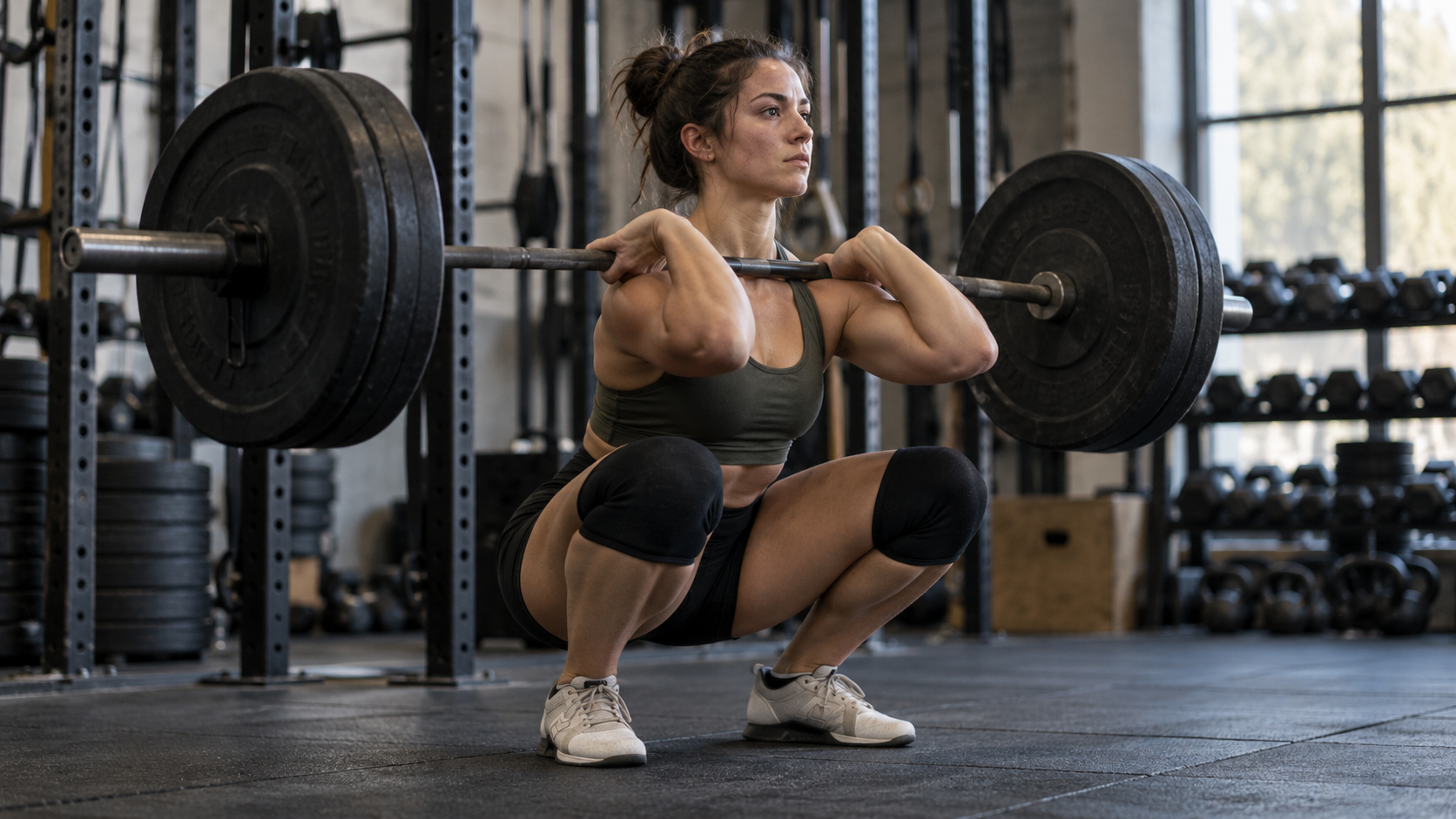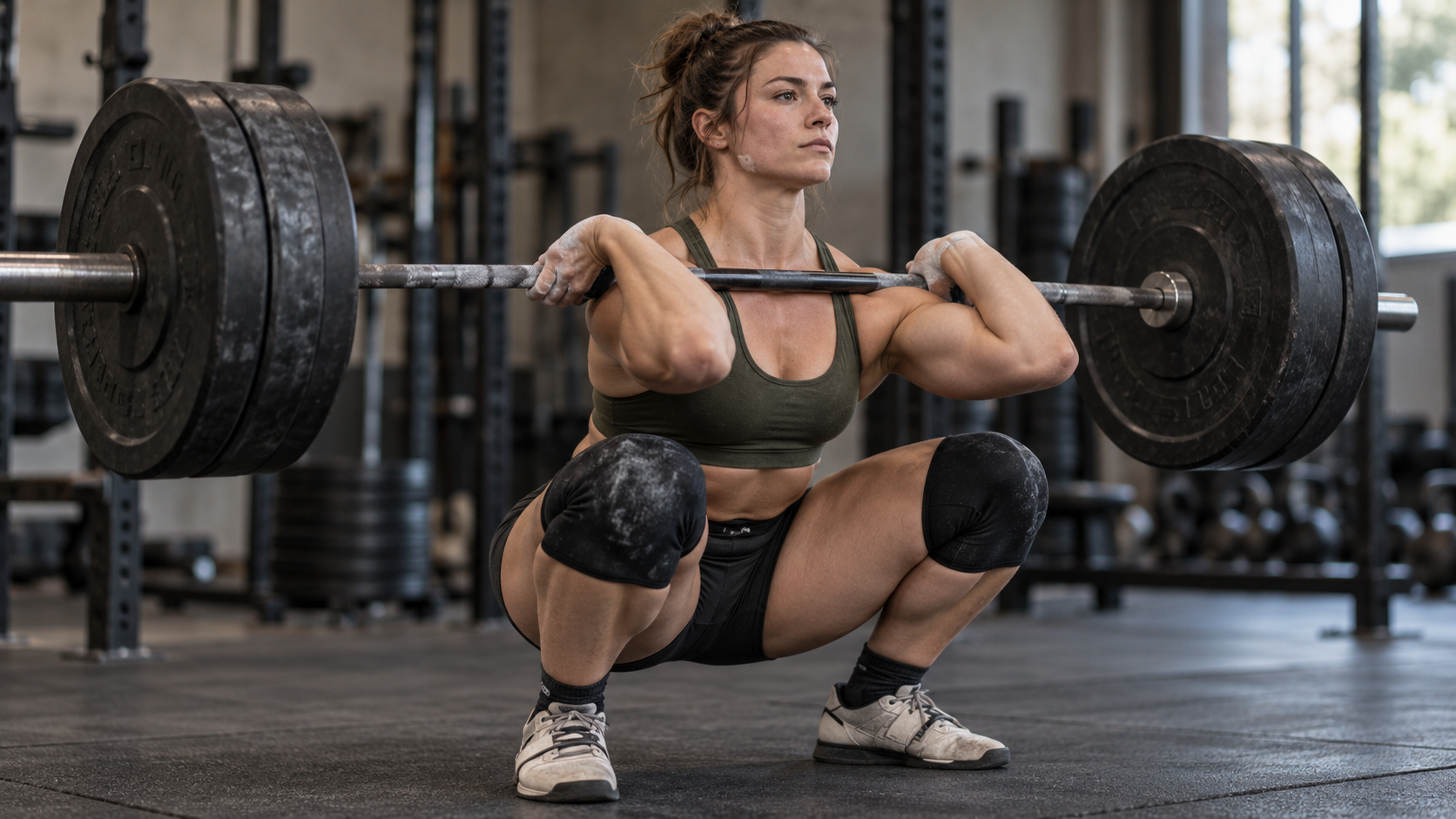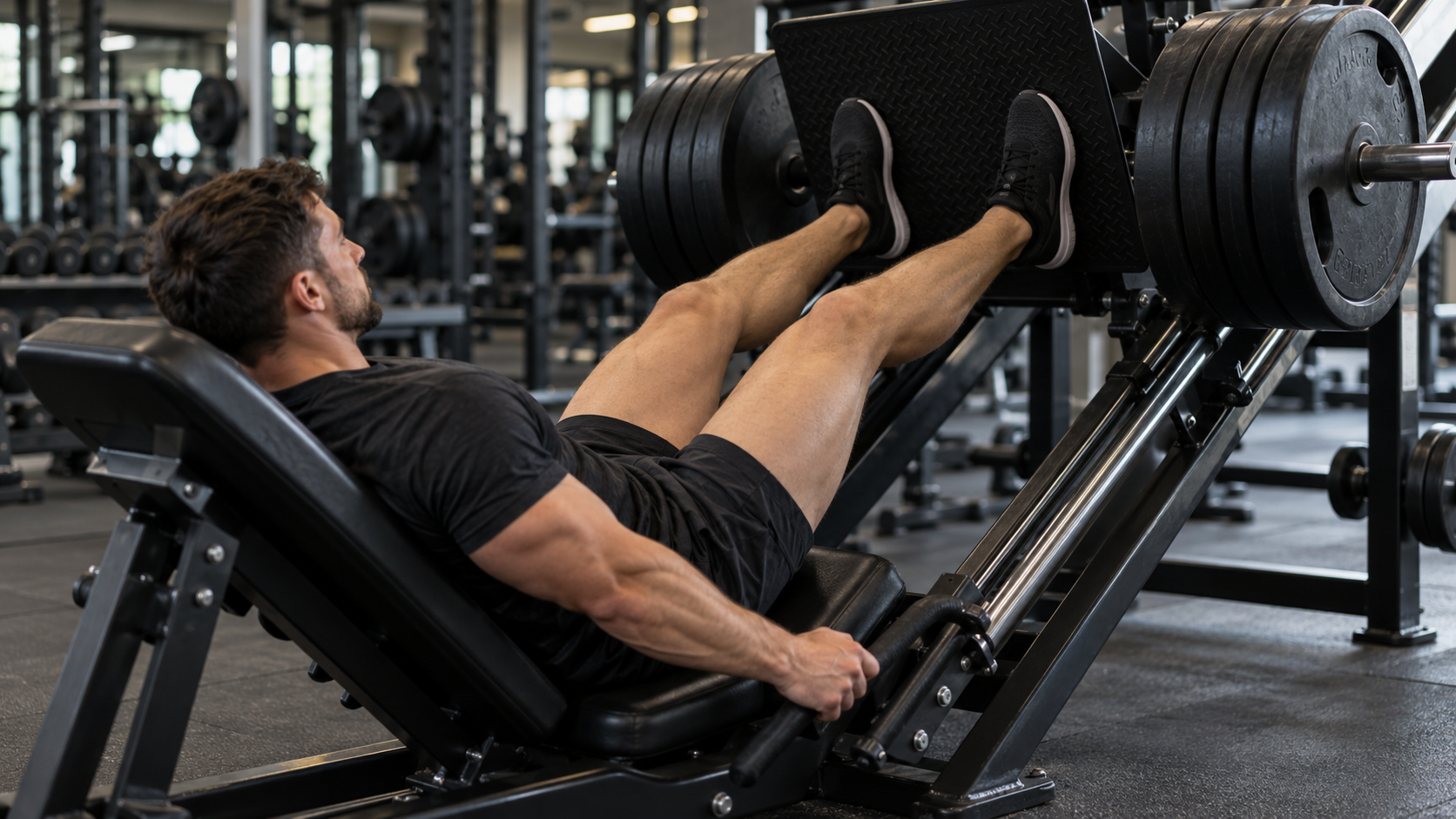
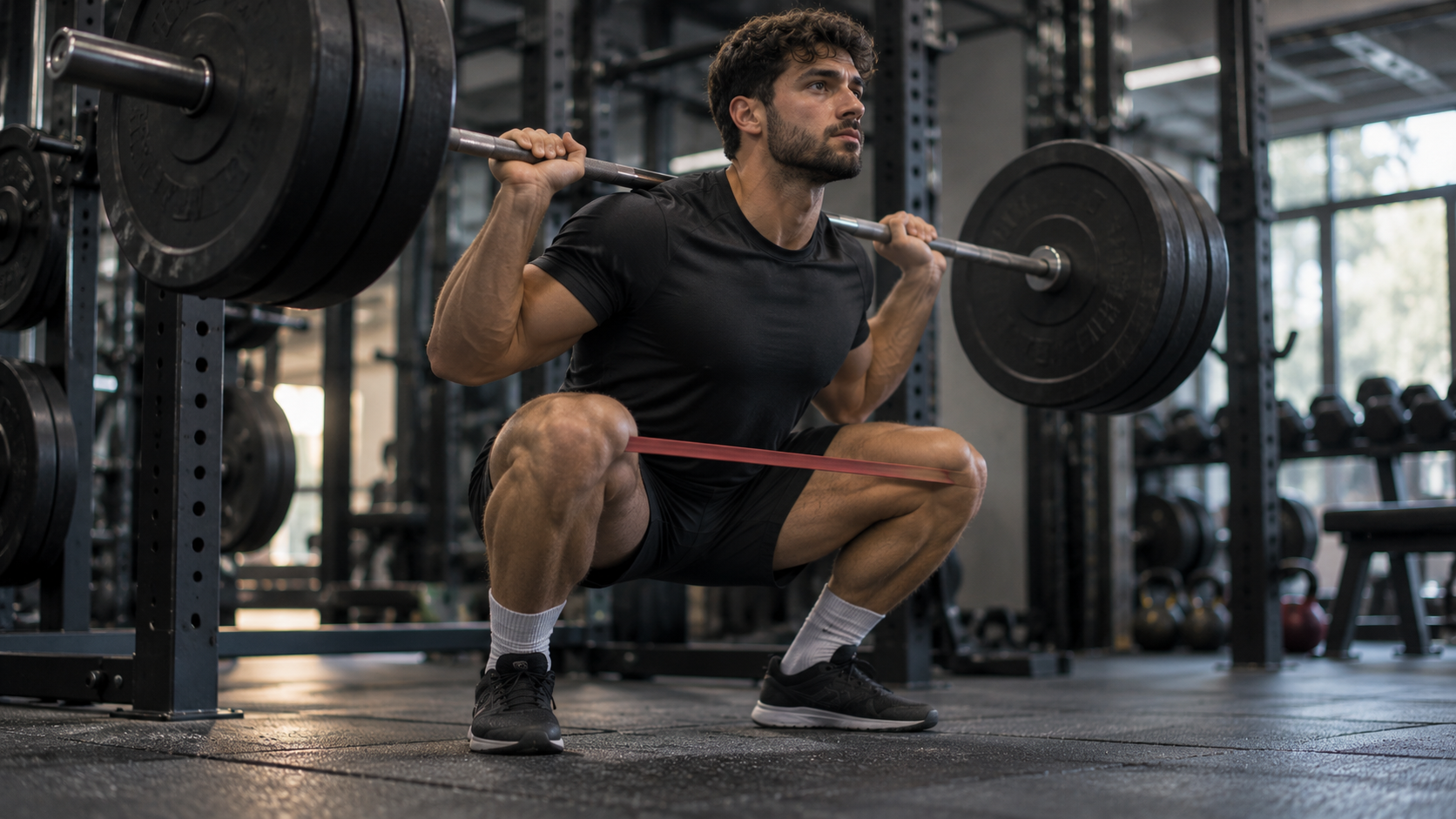
Glutes, quadriceps, hamstrings, and calves do the main work here. It is still a squat pattern, so the upper legs stay under most of the load instead of this turning into an isolation move.
The band adds resistance to that same job, making the legs work harder through the squat itself rather than changing what the movement is.
How the band changes the demand
The band makes you work harder to keep your knees from drifting inward, so the hips stay on and the rep feels tighter through the descent and the pause.
That extra tension is what changes the feel of the squat: you have to control the knees on the way down and drive them back into line on the way up, instead of just dropping and standing.
Glutes versus quads versus hamstrings
The glutes and quadriceps do most of the visible work on the way up, while the hamstrings and calves help steady the lower body. The load shifts as you move: deeper reps ask more from the quads and glutes through the bottom, while uneven knees or hips make that work less even from side to side.
What good reps look like
A good rep should feel like your glutes and quadriceps are doing the main work, with your hamstrings and calves helping through the drive up. With the band just above your knees, you should feel steady tension through the upper legs and a clean push from the heels as you stand.
How form changes the muscles you feel
Form changes which muscles do the most work, but the feel should stay in your upper legs. When the rep gets sloppy, the load stops spreading cleanly across the glutes, quadriceps, hamstrings, and calves, and the band tension is less obvious at the bottom.
What Corect can tell you from video
Corect can score whether your band squat is staying on the pattern that loads the glutes, quadriceps, hamstrings, and calves. When the band sits just above the knees and you keep the squat controlled, those upper-leg muscles do the work; if the rep changes shape, the load shifts away from that pattern.
Band Squat: the movement, step by step
- Stand with your feet shoulder-width apart, with the band placed just above your knees.
- Keeping your chest up and core engaged, push your hips back and bend your knees to lower into a squat position.
- Make sure your knees are tracking over your toes and your weight is in your heels.
- Pause for a moment at the bottom, then push through your heels to return to the starting position.
- Repeat for the desired number of repetitions.
Common questions
What muscles does the band squat work?
Glutes, quadriceps, hamstrings, and calves do the main work. It is still a squat pattern, so the upper legs stay under most of the load.
How does the band change the squat?
The band adds resistance to the same squat job and makes you work harder to keep your knees from drifting inward. That changes the feel through the descent and pause.
Does the band squat become an isolation move?
No. It still trains the usual squat muscles, with the upper legs doing most of the work rather than turning into an isolation exercise.
What do good band squat reps feel like?
Good reps feel like your glutes and quadriceps are doing the main work, with your hamstrings and calves helping through the drive up. The tension should stay steady through the upper legs.
The hardest part of fixing any of this is that you cannot see yourself mid-rep. Corect reads your form from a phone video and shows you what actually happened on each rep of your band squat — depth, bar path, where the breakdown starts. Try it free.