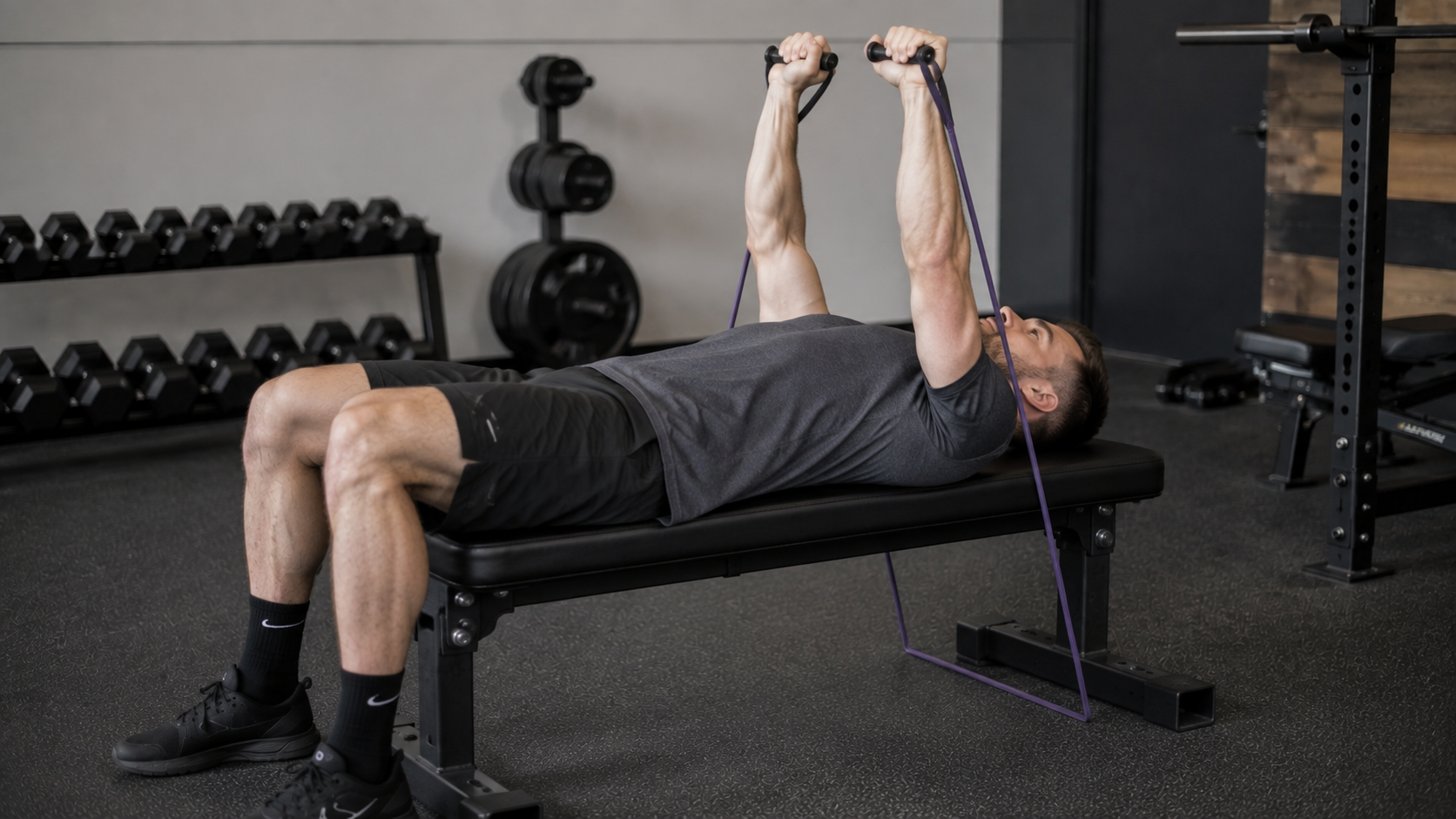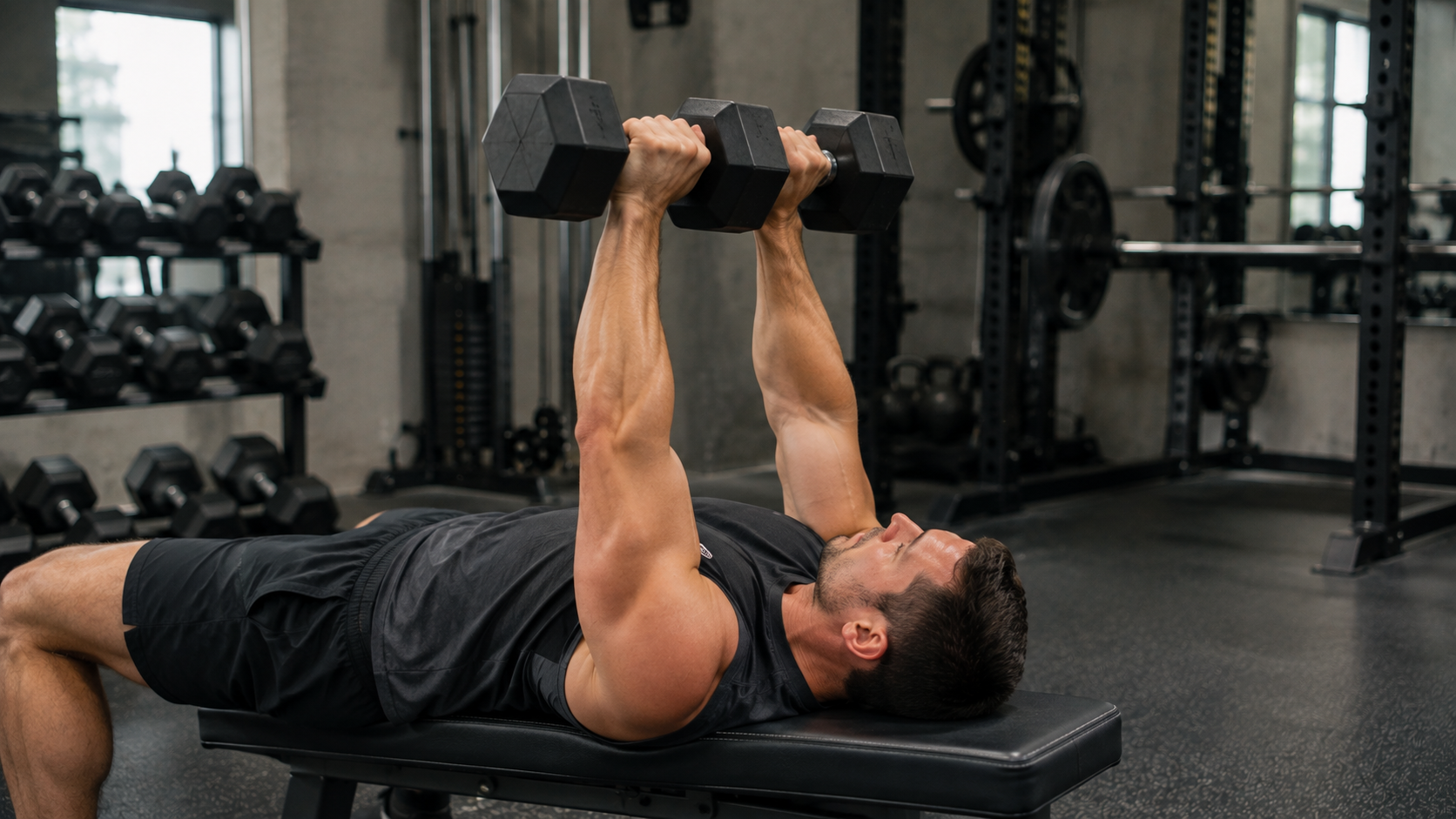
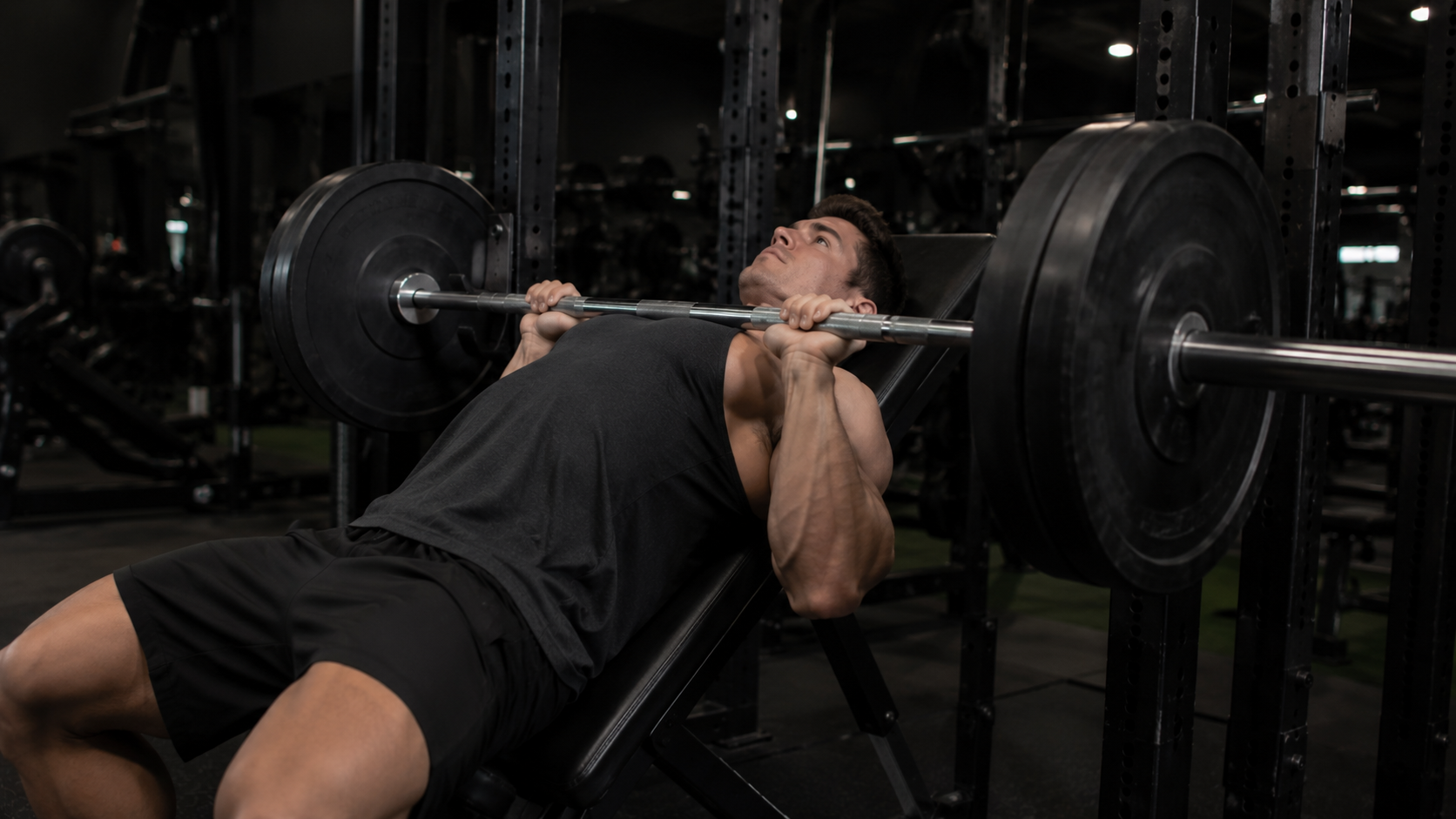
Pectorals do the main work, with shoulders and triceps assisting. It is a chest-focused press, not an isolation lift.
Why the incline changes the load
The 45-degree setup shifts the press away from a flat bench line and into a more angled path. That keeps the chest involved, but it asks the shoulders and triceps to do more of the work than they would in a flat press.
What each part of the rep asks from your body
The main work comes from your pectorals, shoulders, and triceps. The incline shifts more of the load onto the upper chest and shoulders, with the triceps helping finish the press.
The cues that change which muscles you feel
A slightly wider-than-shoulder overhand grip, elbows around 45 degrees, and a slow lower toward the chest keep the pectorals, shoulders, and triceps doing the work.
A slightly wider grip usually puts more of the load on the chest, while a closer grip shifts more of it to the triceps and shoulders. Keeping the elbows at about 45 degrees and lowering with control helps the bar stay in the chest line instead of turning the press into more of a shoulder-dominant lift.
How to tell if your reps match the target pattern
Pectorals, shoulders, and triceps do the main work here, and the rep should feel chest-driven rather than like a flat-bench clone.
The incline bench press keeps the load on the chest, shoulders, and triceps with a 45-degree bench, an overhand grip slightly wider than shoulder-width, and elbows held around 45 degrees as the bar lowers to the chest, pauses, and presses back up.
When this looks more like a shoulder press
If the rep starts moving more vertically, the load shifts toward the shoulders and triceps. A clean incline rep still keeps the bar lowered slowly to the chest, then pressed back up with the elbows near 45 degrees; once that pattern turns into a straighter overhead press, it is no longer the same lift.
Barbell Incline Bench Press: the movement, step by step
- Set up an incline bench at a 45-degree angle.
- Lie down on the bench with your feet flat on the ground.
- Grasp the barbell with an overhand grip, slightly wider than shoulder-width apart.
- Unrack the barbell and lower it slowly towards your chest, keeping your elbows at a 45-degree angle.
- Pause for a moment at the bottom, then push the barbell back up to the starting position.
- Repeat for the desired number of repetitions.
Common questions
What muscles does the barbell incline bench press work?
Pectorals do the main work, with shoulders and triceps assisting. It is a chest-focused press, not an isolation lift.
Why does the incline bench change the load?
The 45-degree setup shifts the press away from a flat bench line and into a more angled path. That keeps the chest involved, but it asks the shoulders and triceps to do more work than they would in a flat press.
How do grip and elbow position affect what you feel?
A slightly wider-than-shoulder overhand grip usually puts more of the load on the chest, while a closer grip shifts more of it to the triceps and shoulders. Keeping the elbows around 45 degrees helps the bar stay in the chest line.
When does an incline rep start looking like a shoulder press?
If the rep starts moving more vertically, the load shifts toward the shoulders and triceps. A clean incline rep still lowers to the chest and presses back up with the elbows near 45 degrees.
The hardest part of fixing any of this is that you cannot see yourself mid-rep. Corect reads your form from a phone video and shows you what actually happened on each rep of your barbell incline bench press — depth, bar path, where the breakdown starts. Try it free.