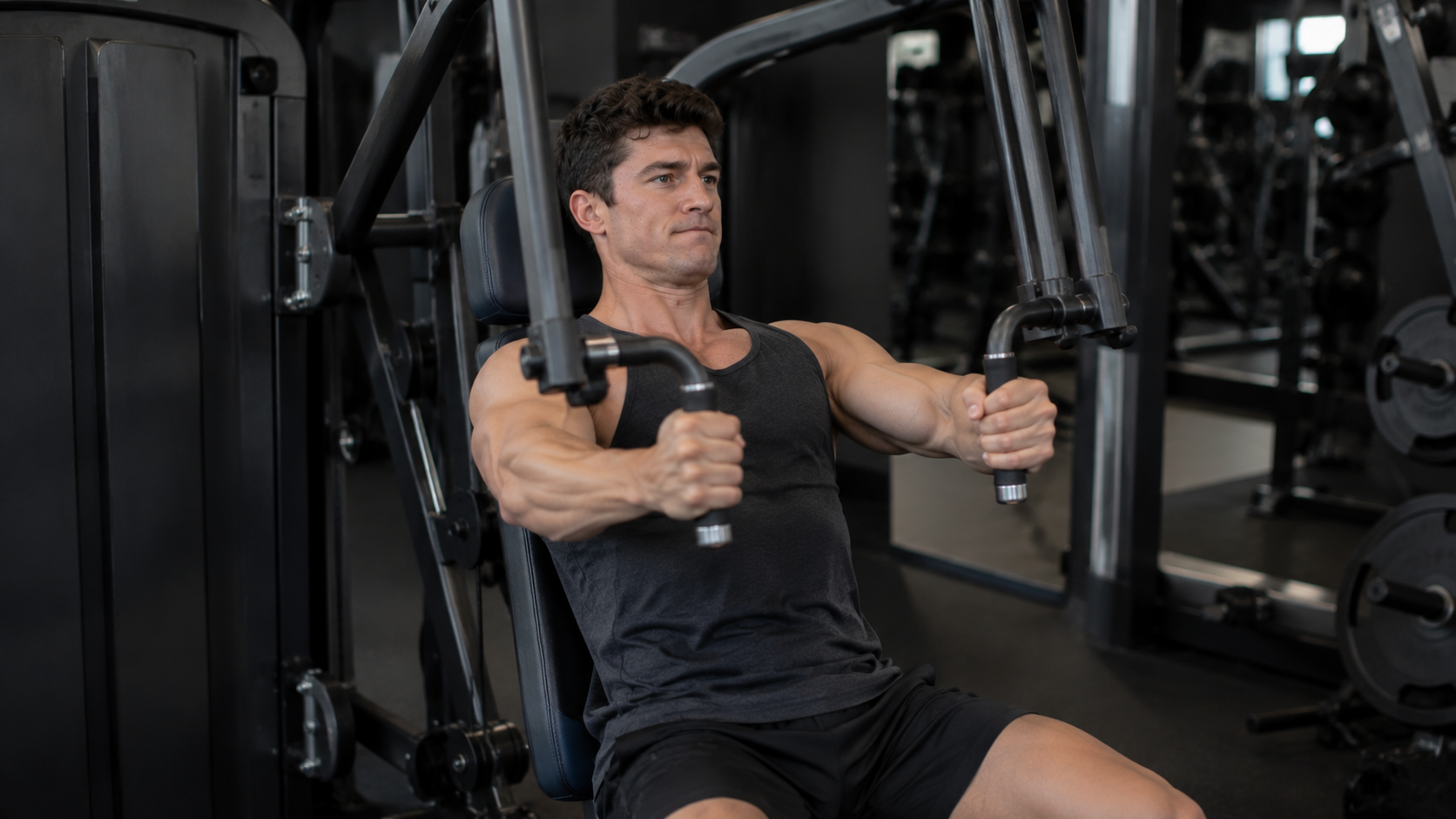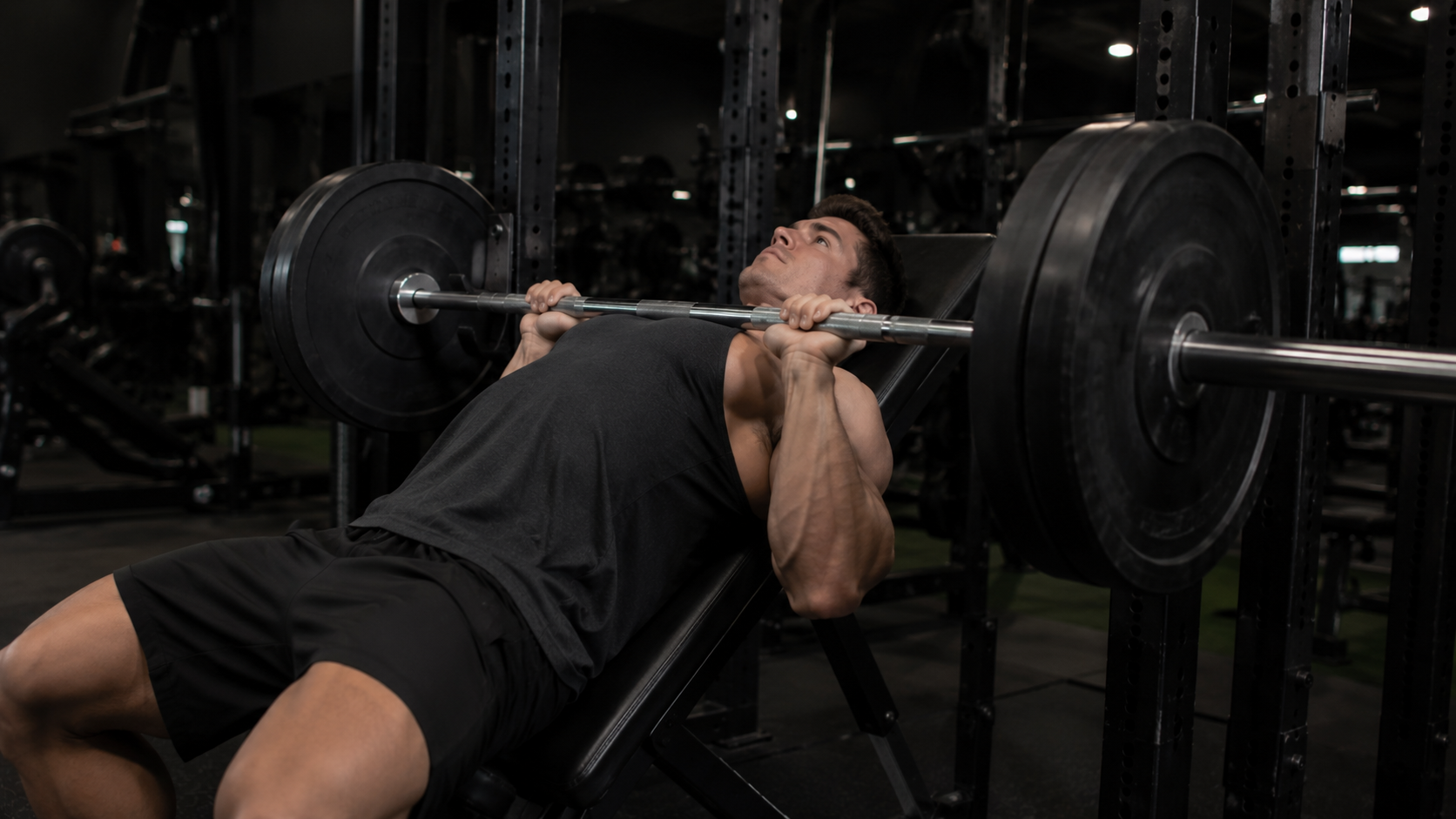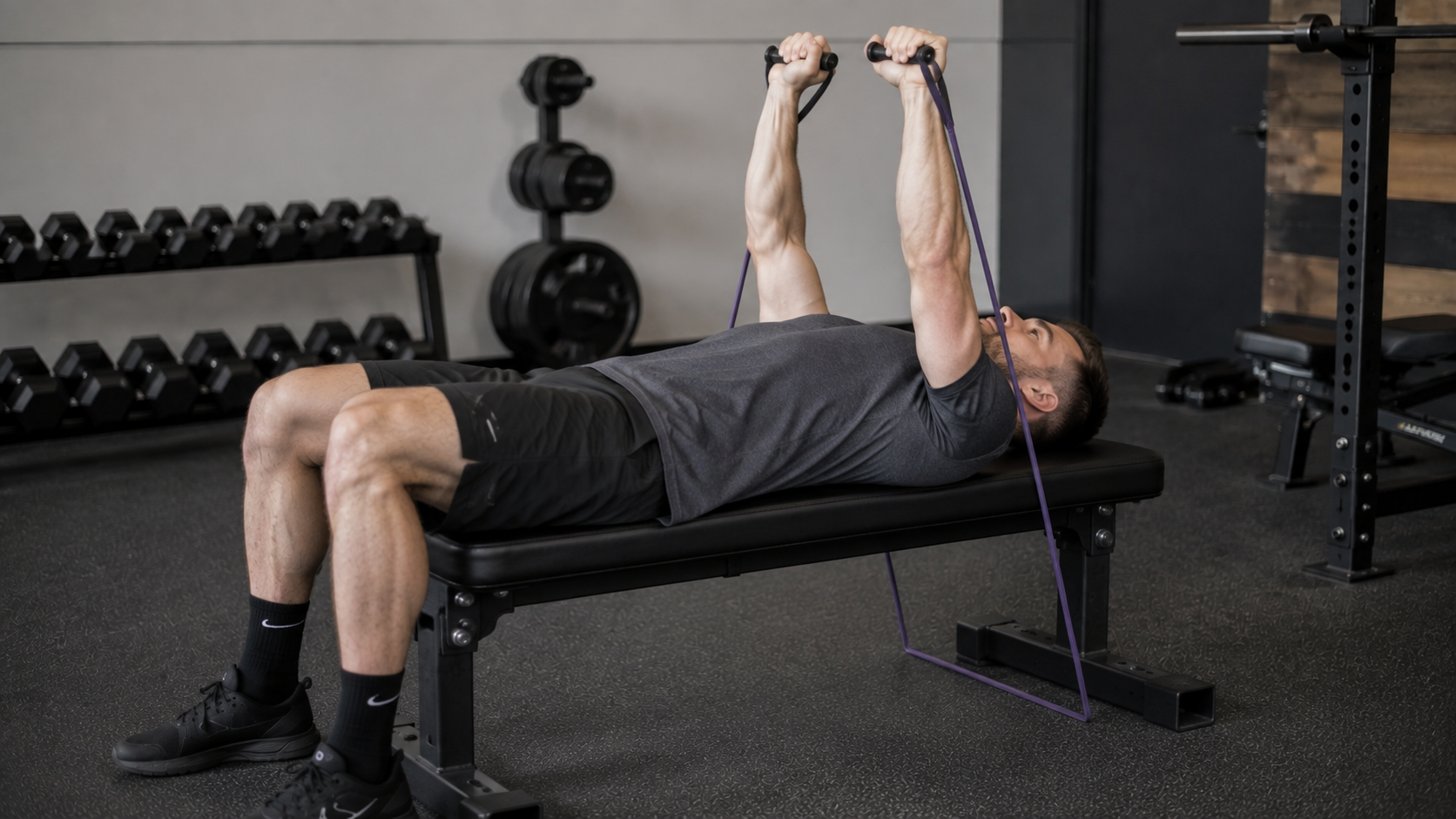
Upper Chest does most of the work here, with Front Deltoids and Triceps as the other main movers.
The upper chest is the prime mover, with the shoulders and triceps helping through the press.
Why the incline changes the emphasis
The 45-degree setup is what changes the line of force from a flat press and makes the upper chest the main target while the front delts stay involved.
That angle also changes how much shoulder contribution you feel. Keep the movement controlled and the chest stays ahead; let the press get steep or loose and the shoulders take over faster.
What the dumbbells force you to do
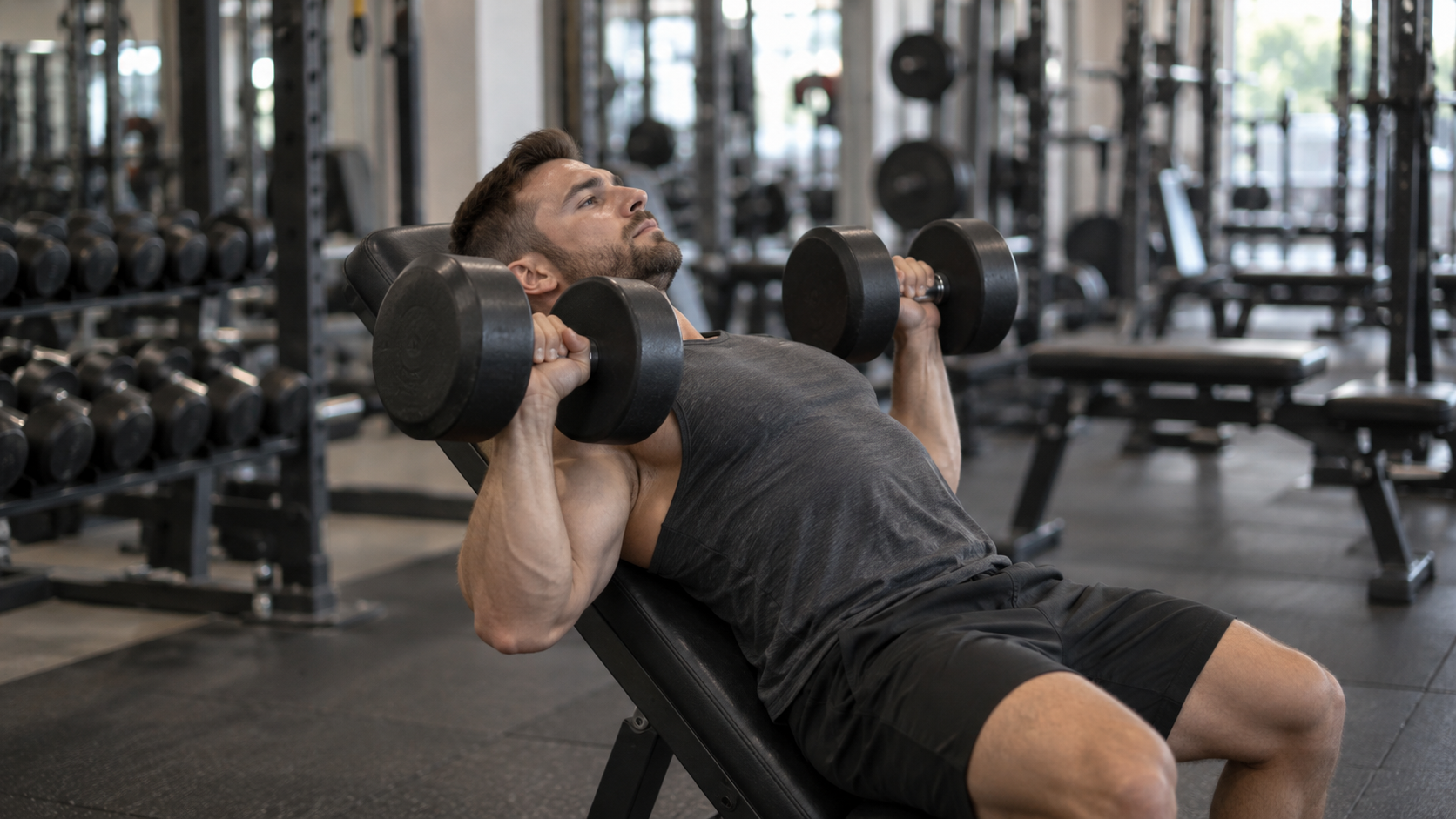
With a dumbbell in each hand, you have to match both sides yourself. Each rep starts with the weights at shoulder height, then drops to the sides of your chest with your elbows at 90 degrees. That setup keeps the upper chest leading, with the front deltoids and triceps still working, but it also asks you to keep both dumbbells moving on the same path.
How elbow angle changes the load
This press works the Upper Chest, Front Deltoids, and Triceps. The chest does most of the work, with the shoulders and triceps helping through the rep.
When the form changes, the balance shifts toward the Front Deltoids and Triceps faster than the chest.
When it turns into more shoulder than chest
When the bench is too steep, the elbows flare, or the dumbbells drift off line, the set stops looking like upper chest work and starts shifting to the front delts. You can see it rep by rep: the chest loses its lead, the shoulders take over, and the press turns into more shoulder than chest.
What Corect can see in your video
Corect can analyze this movement from a phone video and score your form. It shows when a rep shifts work away from the upper chest and toward the front deltoids and triceps as the bench angle, elbow position, or dumbbell path changes.
Related pressing questions people ask
People ask this because the same press can feel more chest-led or more shoulder-led as the bench angle changes. On a 45-degree incline, the upper chest is the main mover, with the front deltoids and triceps doing the rest.
The dumbbells also make each side work on its own, so the press can drift if the path gets loose. Keep the control tight and the load stays where it belongs: upper chest first, then front deltoids and triceps finishing the rep.
Incline Dumbbell Press: the movement, step by step
- Set up an incline bench at a 45-degree angle.
- Sit on the bench with your feet flat on the ground and your back pressed firmly against the bench.
- Hold a dumbbell in each hand, palms facing forward, and lift them to shoulder height.
- Slowly lower the dumbbells to the sides of your chest, keeping your elbows at a 90-degree angle.
- Push the dumbbells back up to the starting position, fully extending your arms.
- Repeat for the desired number of repetitions.
Common questions
What muscles does the incline dumbbell press work?
The upper chest does most of the work, with the front deltoids and triceps as the other main movers. The chest leads the rep while the shoulders and triceps help through the press.
Why does the incline change the emphasis?
The 45-degree setup changes the line of force compared with a flat press, which makes the upper chest the main target while the front delts stay involved.
When does the press become more shoulder than chest?
When the bench is too steep, the elbows flare, or the dumbbells drift off line, the movement shifts toward the front delts. The chest loses its lead and the shoulders take over faster.
What can Corect see in your video?
Corect can analyze a phone video and score your form. It shows when a rep shifts work away from the upper chest and toward the front deltoids and triceps as angle, elbow position, or dumbbell path changes.
The hardest part of fixing any of this is that you cannot see yourself mid-rep. Corect reads your form from a phone video and shows you what actually happened on each rep of your incline dumbbell press — depth, bar path, where the breakdown starts. Try it free.