
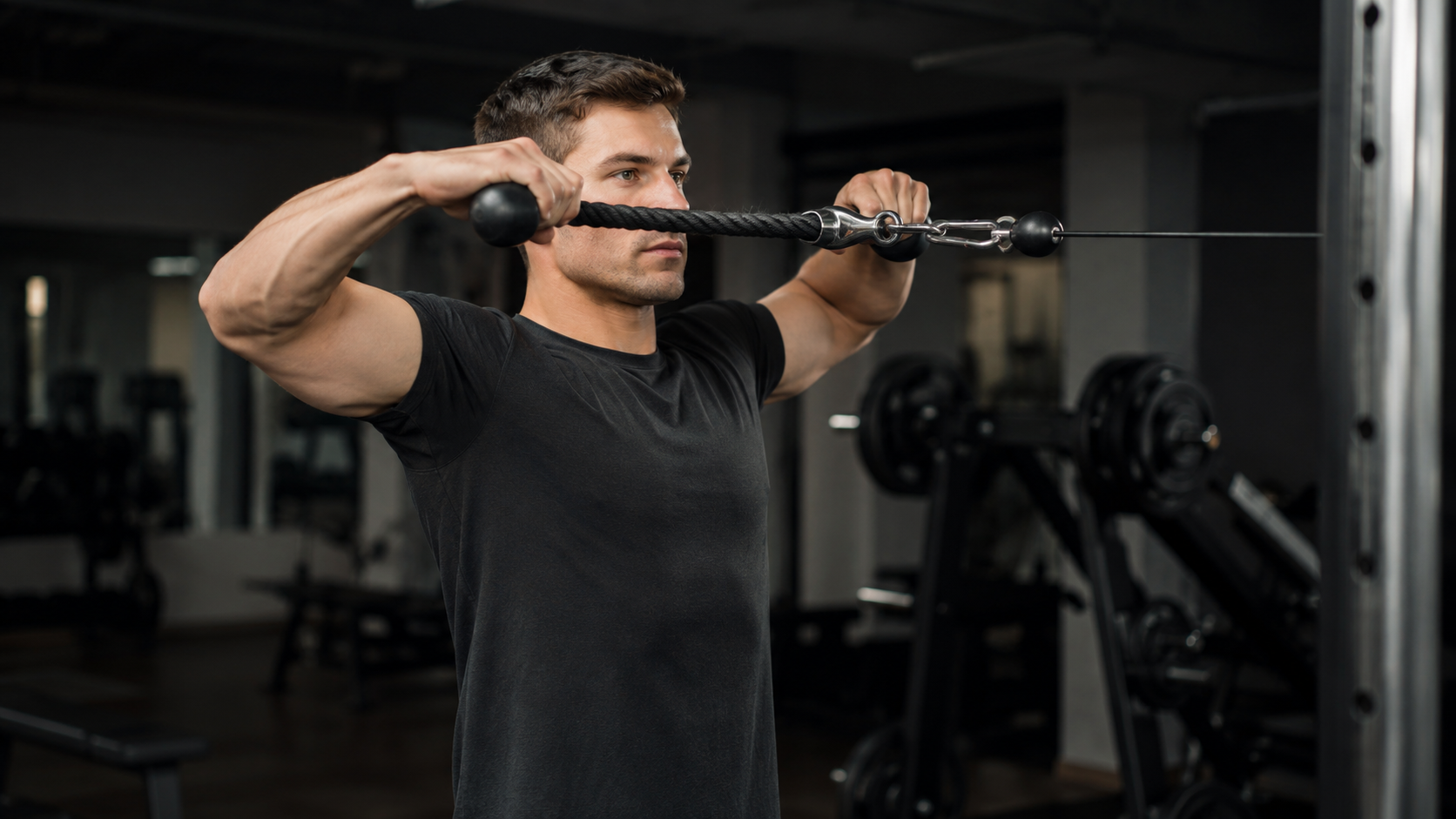
The face pull works the rear deltoids, upper back, and rotator cuff. The trapezius, rhomboids, and biceps assist. In video review, a higher finish with the elbows out shifts more work toward the rear delts and upper back, while a lower, more row-like pull leans harder on the rhomboids, trapezius, and biceps.
Why the same pull can hit different muscles
Small changes in elbow path, torso angle, grip, and finish position change what you feel most, but they do not change the movement itself. Keep the setup consistent: slight hip hinge, elbows slightly bent, rope to the chest, brief pause, then a controlled return. Corect can analyze this movement from a phone video and score your form.
What the movement should look like
Set the rope high enough that you can pull to your face or upper chest without turning it into a low row. Keep a slight hip hinge and a shoulder-width stance so the line of pull stays on the cable path instead of drifting into a straight-back row.
At the top, the shoulder blades come together under control, but that is just part of the finish, not the whole point. The elbows stay slightly bent through the pull, and the rep finishes with a brief pause before the tension comes back under control.
Where lifters usually drift off target
The rep goes off target when it starts feeling like a row, a shrug, or an arm pull. Once that happens, the cable is no longer driven by the rear deltoids and upper back the way it should be.
Keep the movement tied to the shoulders: if the chest and arms take over, you lose the point of the exercise and the load shifts away from the rotator cuff and rear delts.
What Corect looks for in video
It checks whether the shoulders and shoulder blades move cleanly, whether the elbows travel on the right path, and whether the hinge stays stable through the rep. It also reads how high the finish gets and whether the return stays controlled.
Quick answer: if you want more rear delt, do this
Keep the rope at chest height as you pull, with your elbows slightly bent and your shoulder blades squeezing together at the top. Pause briefly, then release the tension slowly back to the start.
Face Pull: the movement, step by step
- Attach a rope handle to a low pulley cable machine.
- Stand facing the machine with your feet shoulder-width apart.
- Grasp the rope handle with an overhand grip, palms facing each other.
- Bend your knees slightly and hinge forward at the hips, keeping your back straight.
- Keep your elbows slightly bent and pull the rope towards your chest, squeezing your shoulder blades together.
- Pause for a moment at the top of the movement, then slowly release the tension and return to the starting position.
- Repeat for the desired number of repetitions.
Common questions
What muscles does the face pull work?
The face pull works the rear deltoids, upper back, and rotator cuff. The trapezius, rhomboids, and biceps assist.
Why does the face pull feel different from one rep to another?
Small changes in elbow path, torso angle, grip, and finish position change what you feel most, but they do not change the movement itself.
What should the face pull look like?
Use a slight hip hinge, keep the elbows slightly bent, pull the rope to the face or upper chest, pause briefly, then return under control.
What does Corect look for in video?
It checks whether the shoulders and shoulder blades move cleanly, whether the elbows travel on the right path, whether the hinge stays stable, and how controlled the return is.
The hardest part of fixing any of this is that you cannot see yourself mid-rep. Corect reads your form from a phone video and shows you what actually happened on each rep of your face pull — depth, bar path, where the breakdown starts. Try it free.