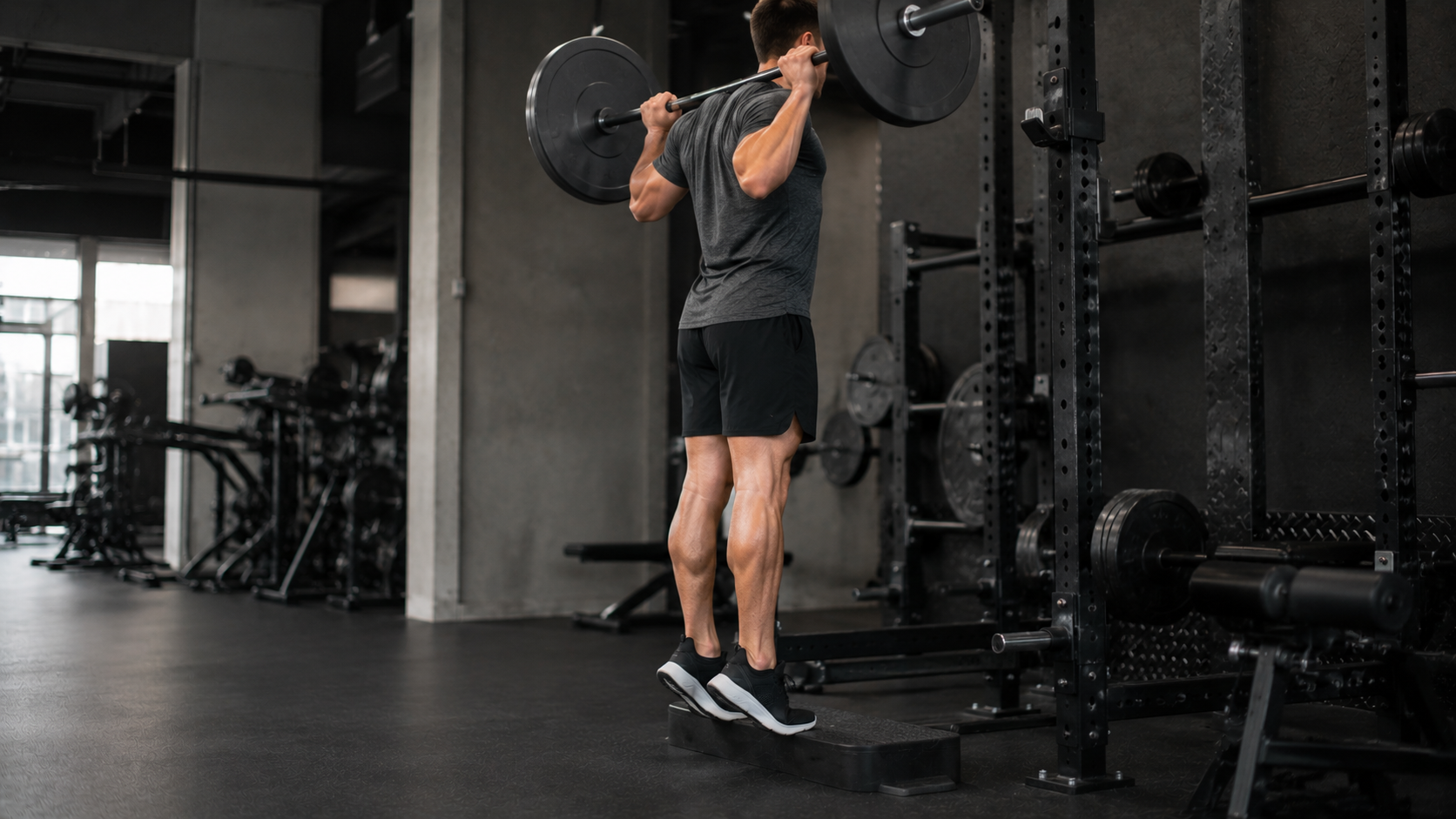
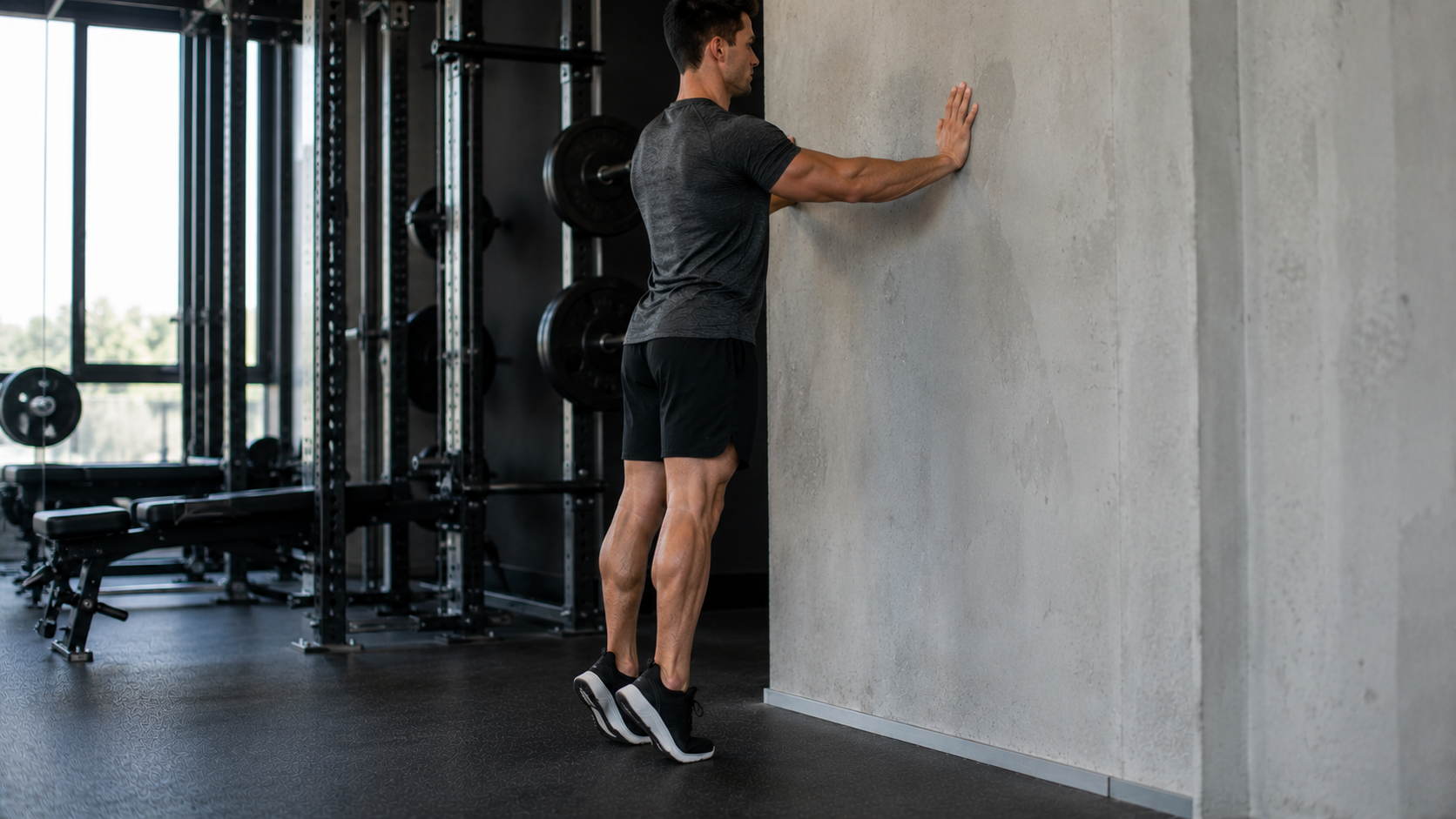
The calves do the main work. The ankles and feet help as secondary stabilizers.
Why the calves take the main load
The calves do most of the work because they are the muscles that drive the heel lift. As your weight moves onto the balls of your feet, the lower legs pick up the load, with the ankles and feet helping to steady each rep.
What the ankles and feet are doing
The calves do the main work, with the ankles and feet helping to steady the rep as you rise onto the balls of your feet.
How balance support changes the rep
The wall or stable surface gives balance support, not extra lift. It lets you stay steady while the calves do the work, with the ankles and feet helping to stabilize the lower legs. More support can make the rep feel less shaky, but it does not change which muscles are doing the main job.
What clean execution looks like in video
Clean reps reach a full heel rise, hold a brief pause at the top, and come back down slowly. In video, the top position should look high and controlled, not cut short. The lower should be deliberate, with the heels returning under control to the start.
Common ways the load gets diluted
The calves do most of the work, with the ankles and feet helping under bodyweight. The load gets diluted when you shorten the range, rush the rep, or skip the pause at the top. If your heels barely leave the floor, the calves never have to carry much of the rep. If you bounce up and drop down quickly, the work spreads out instead of staying on the lower legs.
How this compares with other standing 'muscles worked' pages
This page stays focused on the calves, with the ankles and feet helping as you lift onto the balls of your feet.
Corect can use a phone video to score whether the rep is clean.
Standing Calf Raise: the movement, step by step
- Stand with your feet shoulder-width apart, toes pointing forward.
- Place your hands on a wall or stable surface for balance.
- Slowly raise your heels off the ground, lifting your body weight onto the balls of your feet.
- Pause for a moment at the top, then slowly lower your heels back down to the starting position.
- Repeat for the desired number of repetitions.
Common questions
What muscles does the standing calf raise work most?
The calves do the main work because they drive the heel lift. The ankles and feet help steady each rep as you rise onto the balls of your feet.
Do the wall or a stable surface change which muscles work?
No. The wall or stable surface gives balance support, not extra lift. It helps you stay steady while the calves do the main job.
What does clean execution look like in video?
Clean reps reach a full heel rise, hold a brief pause at the top, and come back down slowly. The top should look high and controlled, with a deliberate lower.
What makes the load feel diluted?
Shortening the range, rushing the rep, or skipping the pause at the top dilutes the load. If the heels barely leave the floor, the calves never carry much of the rep.
The hardest part of fixing any of this is that you cannot see yourself mid-rep. Corect reads your form from a phone video and shows you what actually happened on each rep of your standing calf raise — depth, bar path, where the breakdown starts. Try it free.