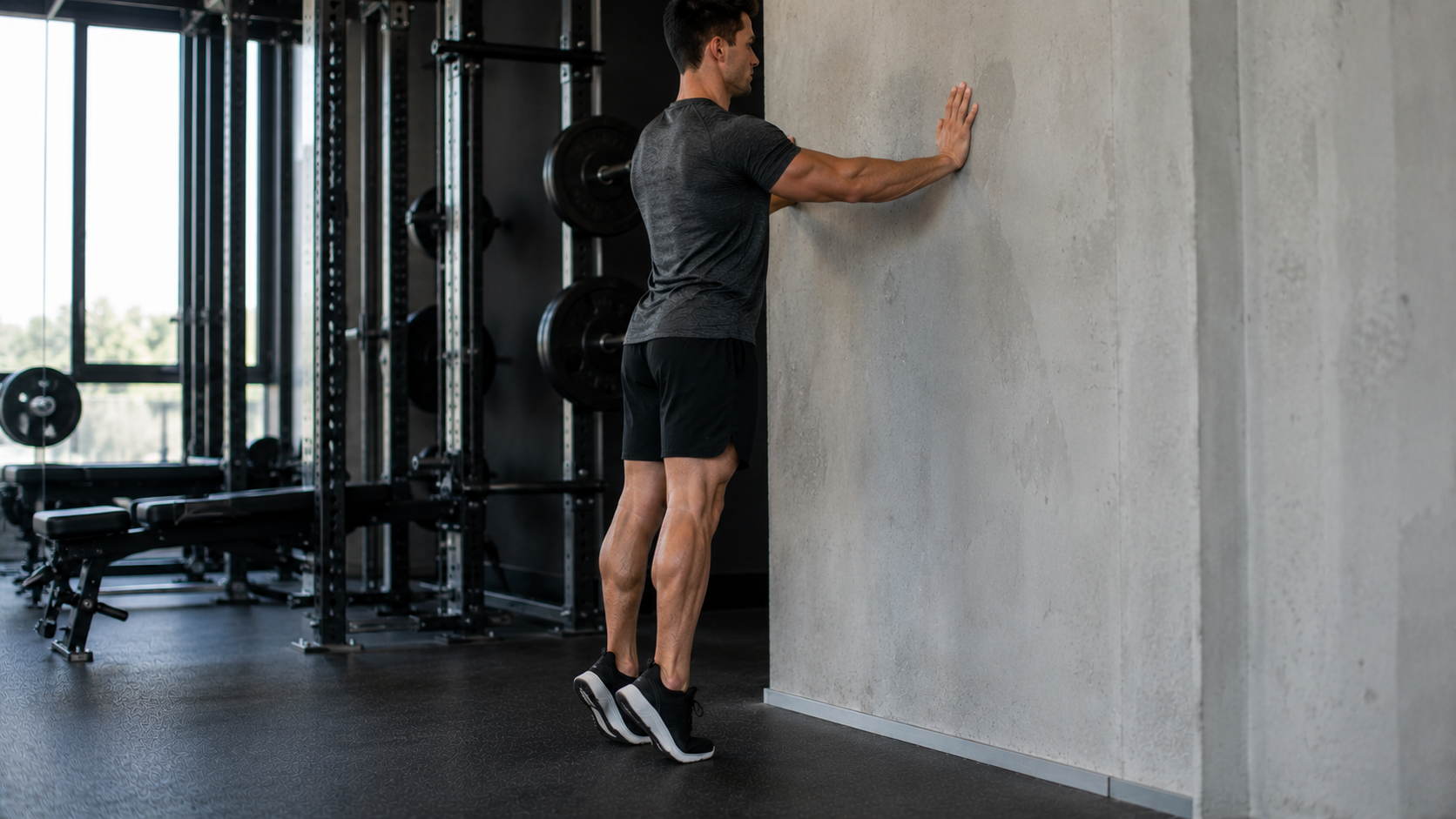
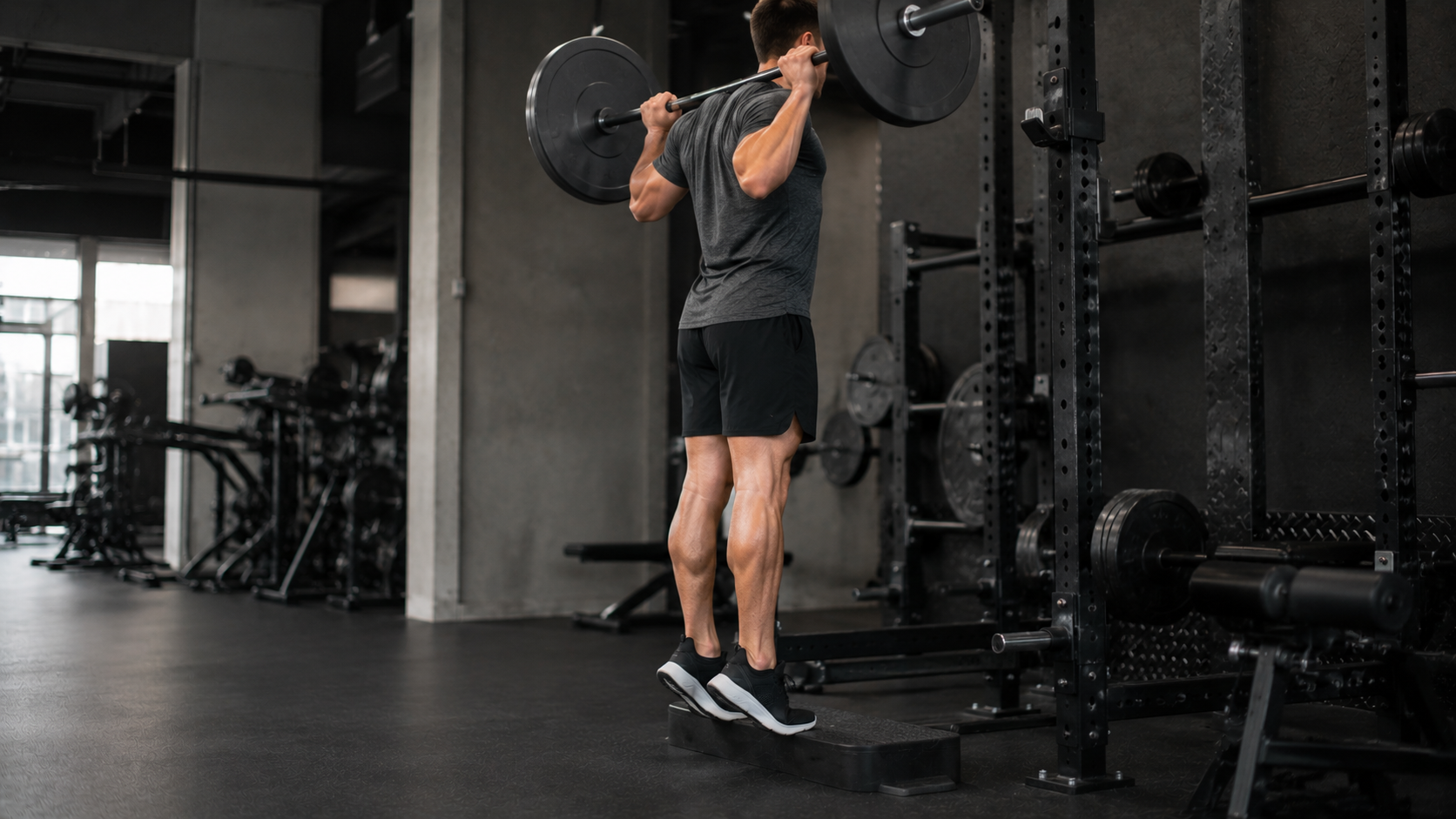
Calves are the primary muscles worked, with the hamstrings as secondary support, so this is a lower-leg exercise first. The barbell version still loads the calves most because the movement is driven by heel rise and controlled lowering through the full range. A hard pause at the top and a slow descent keep the work on the calves instead of letting balance or sloppy foot position take over.
Why the setup matters
Standing on the balls of your feet with your heels hanging off puts the load on the lower legs and lets the calves drive the heel raise.
That setup only works if you keep the rep controlled from top to bottom. A brief pause at the top and a slow lower keep the movement clean; if balance starts to take over, the work shifts away from the calves.
What the top position should feel like
The top position should show the heels lifted as high as possible, using the calves to drive the raise. That keeps the work in the lower legs.
The pause matters because it marks the top of the rep before the heels lower back down. Hold it briefly, keep balance steady if needed, and make sure each rep reaches full height before you descend.
How the lowering phase changes the stimulus
The calves do the main work here, with the hamstrings assisting. What changes the stimulus most is the lowering phase: if you drop the heels fast, you shorten the time under control and turn the rep into a bounce. A slow return keeps the work honest through the full range and makes each rep count more.
When balance changes the rep
If balance is the issue, use a stable object for support, but keep the rep full and controlled. The support is there to help you stay steady, not to turn the set into a partial or rushed lift.
If the movement shrinks or speeds up, the work starts to drift away from the calves. Keep the top pause and slow lower, and use the support only to stay balanced enough to finish cleanly.
How Corect evaluates the movement from video
Corect checks whether the rep is really coming from your calves. From video, it can score how high you drive the heels, whether you hold a brief pause at the top, how controlled the lowering phase is, and whether your reps stay consistent. That matters here because this is a lower-leg raise built around calf work, and the movement only counts if the lift stays honest.
Barbell Calf Raise: the movement, step by step
- Place a barbell on the floor in front of you.
- Stand with the balls of your feet on the edge of the barbell, with your heels hanging off.
- Hold onto a stable object for balance if needed.
- Raise your heels as high as possible, using your calves to lift your body.
- Pause for a moment at the top, then slowly lower your heels back down to the starting position.
- Repeat for the desired number of repetitions.
Common questions
What muscles does the barbell calf raise work?
Calves are the primary muscles worked, with hamstrings secondary, so it is a lower-leg exercise first.
Why does the setup matter?
Standing on the balls of your feet with your heels hanging off puts the load on the lower legs and lets the calves drive the heel raise.
How does the lowering phase change the stimulus?
A slow return keeps the work honest through the full range and makes each rep count more. If you drop the heels fast, the set turns into a bounce.
What should happen if balance is an issue?
Use a stable object for support, but keep the rep full and controlled. The support is there to help you stay steady, not to turn the set into a partial or rushed lift.
The hardest part of fixing any of this is that you cannot see yourself mid-rep. Corect reads your form from a phone video and shows you what actually happened on each rep of your barbell calf raise — depth, bar path, where the breakdown starts. Try it free.