
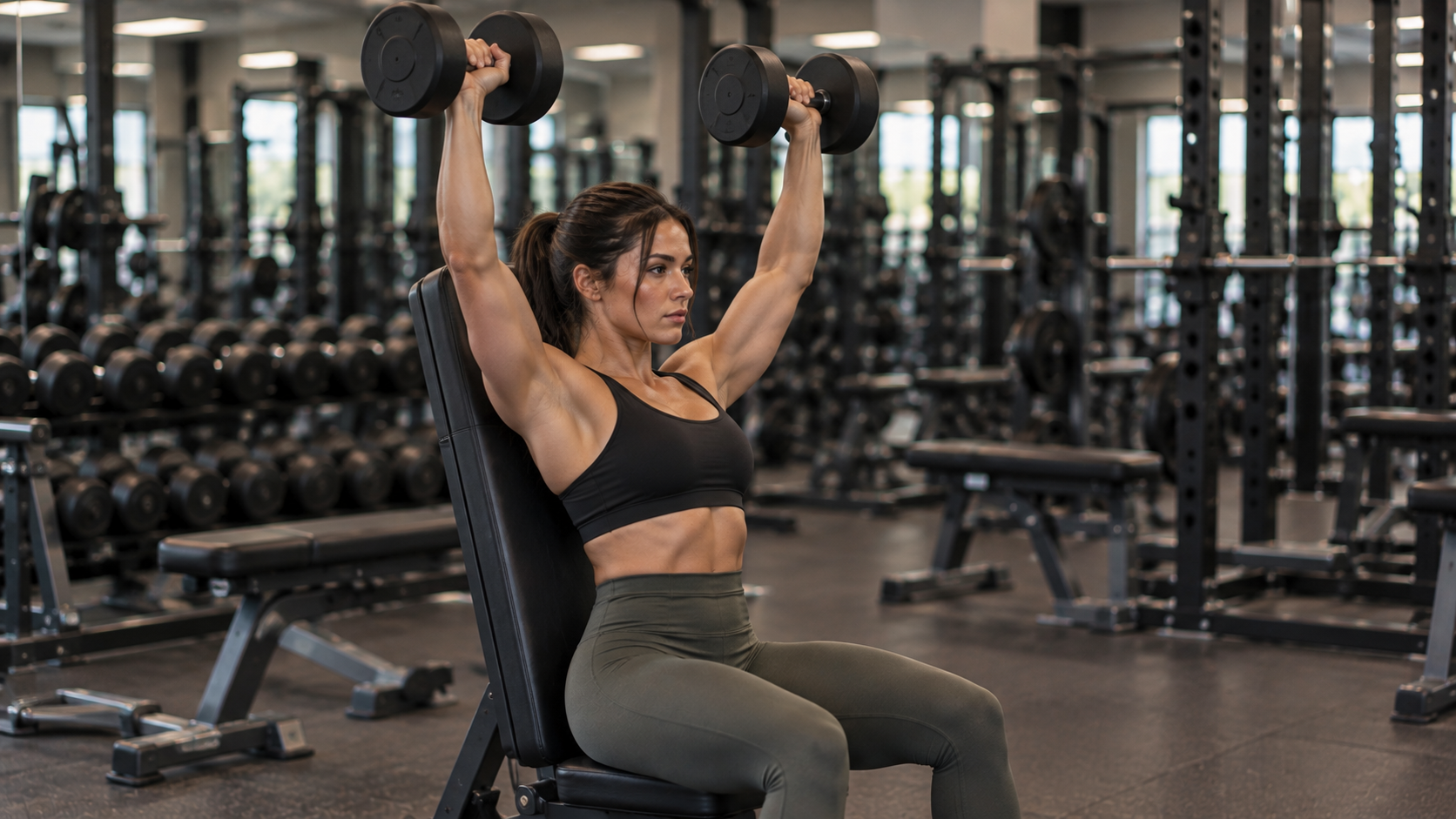
Use a dumbbell shoulder press if you want the closest swap. You keep the same dumbbells, shoulder-level start, and overhead finish, but remove the wrist rotation that can pull your elbow line outward or make one side press on a different path.
Use a seated dumbbell shoulder press if the weights drift as you press. You keep the bench support, two-dumbbell setup, and overhead lockout, but give up the palms-in start and the turn to palms-forward on the way up.
If the gym is crowded, use a machine press or cable press. A machine keeps the shoulder-and-triceps press without needing bench space or loose dumbbells, but it fixes more of the press path for you. A cable press lets the shoulder and wrist move more freely, but gives up the simple two-dumbbell setup and the clean side-to-side comparison Corect can score from video.
If you are at home with no dumbbells, use a strict pike or handstand-style press variation. It keeps the overhead shoulder-and-triceps demand, but gives up the dumbbell start at shoulder level, the wrist rotation, and the rep-to-rep dumbbell path Corect can compare from phone video.
What the Arnold Press Is Actually Doing
This is a dumbbell press that starts with your palms facing your body at shoulder level, then turns them forward as the weights move overhead. A good substitute should match the part you care about most: the overhead press, the wrist rotation, or the simple two-dumbbell setup.
The breakdown is usually visible before the top of the rep. The dumbbells drift away from your shoulder line, the elbows flare as the wrists turn, or the rotation pulls the press path off line. The right alternative keeps the shoulder and triceps work you still need while removing the part that is making the rep messy.
If You Want the Closest Match
The closest match is a seated dumbbell shoulder press with back support. You still start with dumbbells at shoulder level and press to extended arms, so the shoulder and triceps demand stays close. What it gives up is the palms-in start and the turn to palms-forward, which makes it the right swap if your video shows the rotation pulling your elbows off the press path.
A machine press is the next closest gym option. It keeps the press overhead and removes the need to control two dumbbells at once. What it gives up is the wrist rotation and side-to-side control, so it is less specific but useful when the dumbbells drift before your shoulders or triceps are the limit.
If You Only Have Dumbbells
If all you have is dumbbells, start with a seated dumbbell shoulder press. It keeps the back-supported bench setup, the shoulder-level start, and the shoulders-and-triceps press, but removes the wrist turn. That makes it the cleaner swap if your elbows flare or the dumbbells drift as your palms rotate.
If the rotation is the part you need to preserve, use a dumbbell press that turns from palms facing you at the bottom to palms forward at the top. It keeps the same hand positions and overhead finish, but gives up the cleaner press path. Your wrists can turn before the dumbbells rise, your elbows can flare as the palms open, or the dumbbells can drift away from your shoulder line before your arms reach full extension.
If You Are in a Busy Gym
If the dumbbells are taken, choose the station based on the part of the rep that breaks on video: the palms-in start, the turn to palms-forward, the elbow line, or the hand path overhead.
Use a cable press when your hands drift as you rotate out of the bottom. It keeps the shoulder press and triceps finish, but gives up the clean dumbbell turn that makes the original harder to control.
Use a machine shoulder press when the rotation is the problem. It gives you a repeatable shoulder-level start and fixed top position, but removes the wrist turn and the free dumbbell path, so it will not show whether your elbows flare or your hands wander as the palms turn forward.
If You Need a Home or No-Equipment Option
If you have dumbbells at home, use a regular dumbbell shoulder press. Keep the shoulder-level start, the overhead finish, and the triceps lockout at the top. What you give up is the palm-in to palm-forward turn, so the rep is easier to keep straight but no longer shows whether wrist rotation pulls your elbows out or changes your shoulder line.
If you have a bench with back support, use it. The supported torso makes the swap closer to the original setup and makes forward dumbbell drift easier to see on video. If you stand instead, you keep the simple dumbbell press but lose the fixed torso, so the weights can look cleaner because your body moves under them.
If you have no dumbbells, use a slow pike push-up only as a bodyweight stand-in. It keeps your shoulders and triceps pressing toward an overhead line, but your hands stay fixed on the floor instead of rotating around separate weights. You give up the seated supported setup, simple load progression, and the chance to match the rotating press path rep for rep.
How to Choose the Right Swap From Your Video
If the dumbbells stay close to your shoulders until your palms start turning, the rotation is the problem. Use a standard dumbbell shoulder press. You keep the dumbbells, the shoulder-level start, and the press to full extension, but you remove the palm-in to palm-forward turn.
If your elbows flare as your wrists rotate, choose a press where your palms do not change position mid-rep. You keep the shoulder and triceps pressing work, but you give up the rotating path that is pulling your elbows out of line.
If the dumbbells drift away from your shoulders before the press starts, pick a substitute that begins cleanly at shoulder level. You keep the same start position and pressing demand, but you remove the first half of the rotation where control is breaking down.
If the rep only breaks down near lockout, use a substitute that still finishes with your arms fully extended and palms forward. You keep the top-end shoulder and triceps work, but you lose the wrist rotation Corect would score in the original.
Common Mistakes When Replacing the Movement
A common mistake is replacing the wrist turn with a press that starts and finishes palms-forward. That can still train your shoulders and triceps, but it gives up the change from palms facing your body at shoulder level to palms facing forward overhead.
Another mistake is choosing a swap that hides the part of the rep that broke down. If your elbows flare during the turn, the dumbbells drift away from shoulder level, or one side changes line before lockout, use a simpler dumbbell press before moving to a machine or fixed bar path. You lose the rotation, but you can still see whether each weight travels cleanly from shoulder to overhead.
Simple Programming Rules for Substitutes
Use the substitute that keeps the part you need from the rep. Choose dumbbells if you want the same left-right press from shoulder level. Choose a machine if the dumbbells wobble or your elbows drift away from the press line. Choose a cable press if you want an overhead path that is not disrupted by the wrist rotation.
Match the swap to the visible failure. If the press is smooth until your palms turn forward, use a plain dumbbell shoulder press and give up the rotation. If your elbows flare as the dumbbells leave shoulder level, use a machine press and give up some dumbbell control. If the issue is only space or bench access, use a standing dumbbell press and keep the shoulder-and-triceps target close.
Keep the substitute in the same workout slot. You are replacing one shoulder-and-triceps press, not adding another overhead press on top of it. If the alternative removes the wrist rotation or fixes the press path for you, that is the trade-off.
Arnold Press: the movement, step by step
- Sit on a bench with back support and hold a dumbbell in each hand at shoulder level, palms facing your body and elbows bent.
- Press the dumbbells upward until your arms are fully extended and your palms are facing forward.
- Rotate your wrists as you lift, so that your palms are facing forward at the top of the movement.
- Pause for a moment at the top, then slowly lower the dumbbells back to the starting position.
- Repeat for the desired number of repetitions.
Common questions
What is the closest Arnold press alternative?
The closest match is a seated dumbbell shoulder press with back support. It keeps the overhead press pattern and most of the shoulder, triceps, and upper chest demand.
What should I use if I only have dumbbells?
The best fit is a seated dumbbell shoulder press. If you want the closer match, use a dumbbell press with a controlled rotation through the lift.
What is best in a crowded gym?
A cable press is the easier choice when you want quick setup and a smoother handoff from set to set. A machine shoulder press is better when you want the same position and load every rep with less adjustment.
What can I do at home with no equipment?
Use a slow pike push-up or wall handstand hold only as a bodyweight stand-in. You keep overhead loading, but you give up the same load progression and the dumbbell rotation.
The hardest part of fixing any of this is that you cannot see yourself mid-rep. Corect reads your form from a phone video and shows you what actually happened on each rep of your arnold press — depth, bar path, where the breakdown starts. Try it free.