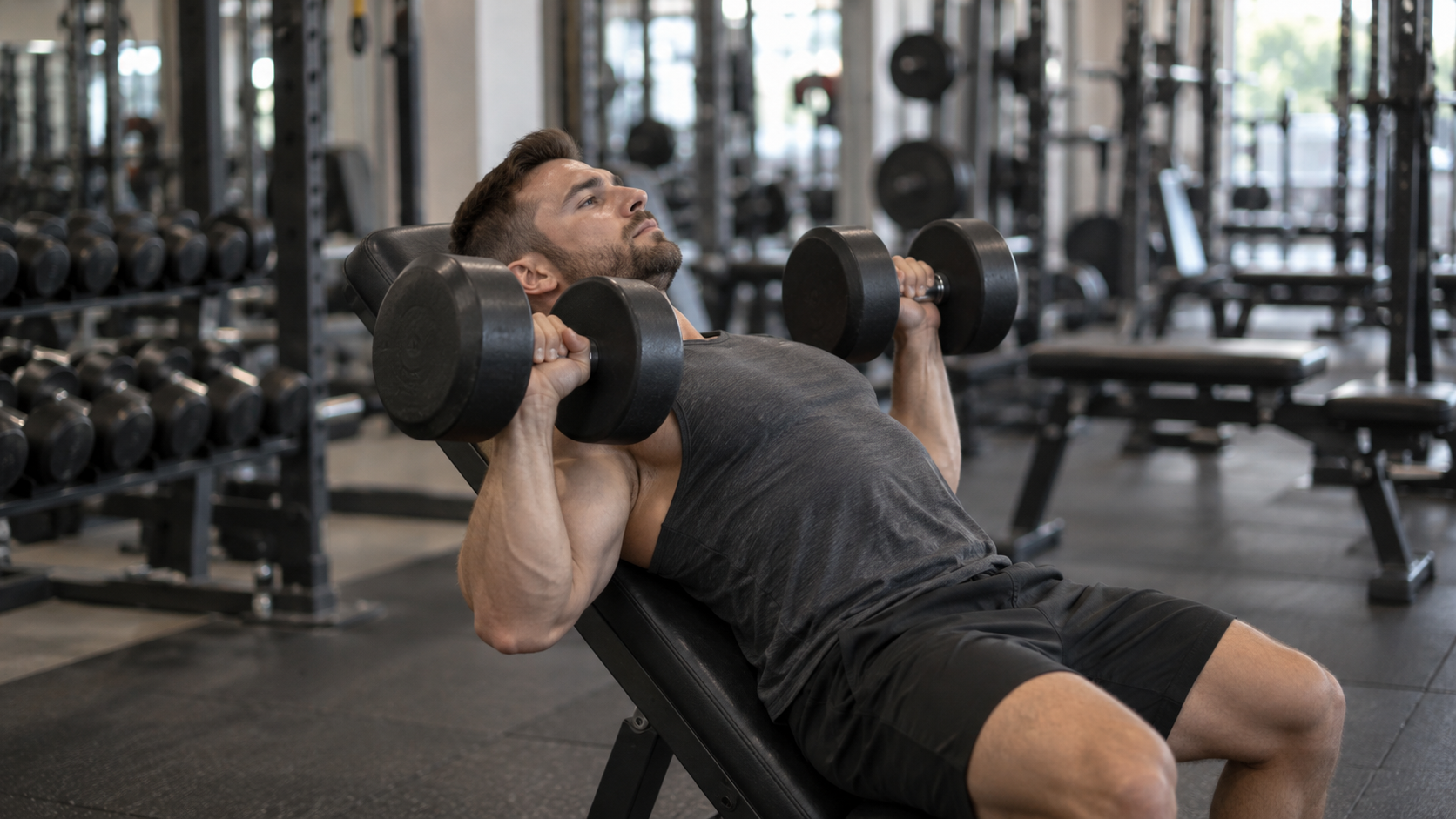
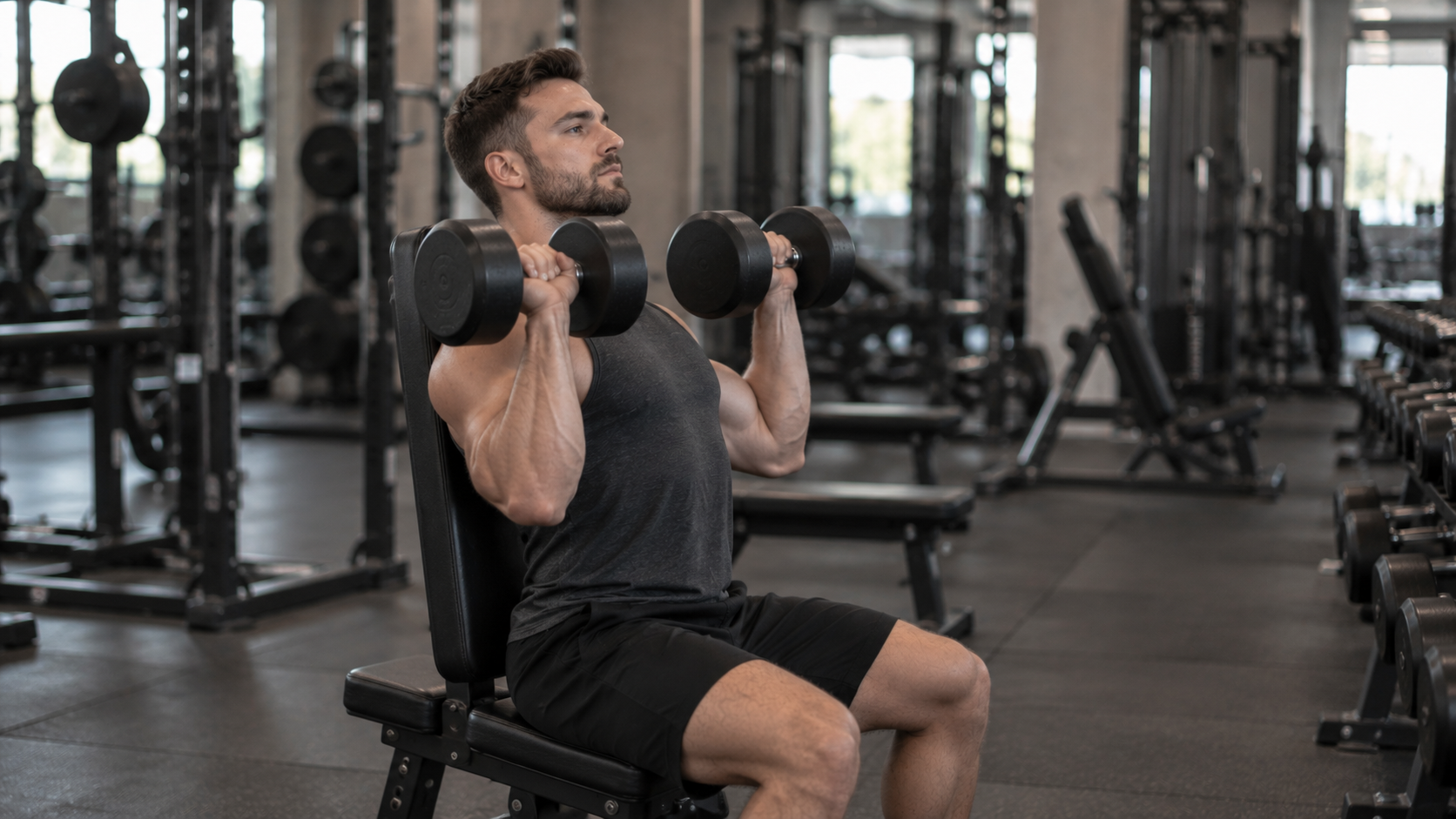
This is a dumbbell shoulder press with rotation, so the rep should feel like one continuous path from palms facing you to palms facing forward overhead. Your shoulders drive the press, your triceps finish the lockout, and the upper chest helps as the dumbbells move from in front of your body into the overhead line.
The back support keeps the press honest. If your ribs flare or the dumbbells drift forward, you are turning the rep into a lean-back press instead of keeping the load over your shoulders.
The rotation should happen as the dumbbells rise, not before the press starts. If your palms turn forward while the weights are still at shoulder level, you lose the smooth rotating press pattern and the rep becomes a normal shoulder press.
On video, the main breakdowns are clear: your hands start too low, your wrists rotate too early, one dumbbell tracks wider than the other, or the lowering phase no longer mirrors the way up. Corect can score those details rep by rep from a phone video, including your start position, press path, top lockout, tempo, and descent.
Setup and starting position
Sit against the back support before you bring the dumbbells up. If your ribs flare or your torso shifts before the first rep, the rotation has to happen on top of a moving base, and the dumbbells usually stop matching each other.
Start with both dumbbells at shoulder level, palms facing your body, elbows bent. This is the closed position the press opens from. If the dumbbells start too high, you have already skipped part of the press. If they start too far forward, the first movement tends to become a wrist turn instead of the dumbbells rising.
Before you press, check the frame: same dumbbell height, same elbow bend, both palms facing in. If one hand is already turning out, or one dumbbell is drifting away from the shoulder, that side will usually finish on a different path at the top. Corect can flag that mismatch before the rep reaches lockout.
The press path and wrist rotation
The press and rotation happen together. Start with the palms facing you, then let the hands turn as the dumbbells rise so the top position finishes with palms forward, arms fully extended, and both weights stacked evenly overhead.
A clean rep feels like one continuous press, not a curl-to-press. The dumbbells climb at the same speed, the elbows extend as the wrists rotate, and the turn is finished by the time you reach lockout. If the rotation happens late, you will see a small twist near the top instead of a smooth path.
Watch the dumbbells from the front or slightly angled view. One weight racing ahead, drifting wider, or finishing higher usually means the press path has split between sides. The top should look even: both palms forward, both arms fully extended, and no bounce before you lower.
Lower in the same pattern you used to press. The palms turn back toward you as the dumbbells return to shoulder level, and the next rep should start from the same position instead of from a rushed drop or a shortened range.
What the lowering phase should feel like
At the top, finish the press before you let the dumbbells come down. Your palms should be facing forward, your arms extended, and the bells should still sit close enough over your shoulders that you can pause without them drifting forward or out wide.
Hold that pause for a beat. If your elbows bend again, one dumbbell shakes away from the other, or your upper chest has to chase the weight forward, you have lost the top position before the lowering phase has started.
Lower by unwinding the press, not by letting the bells drop. Your wrists should rotate back as the dumbbells travel down, so your palms face your body again when the bells return to shoulder level. On video, a clean descent shows both dumbbells turning and lowering together. A broken rep usually shows one side falling faster, the wrists rotating late, or the dumbbells dropping straight down instead of returning to the starting hand position.
Common mistakes
Most bad reps start before the dumbbells reach the top. The rotation gets late, rushed, or different side to side, so the lift turns into a press, then a twist, then a shove to finish.
Watch the dumbbells from shoulder level: your palms should turn as the weights travel up, not after your elbows have already locked out. When it is right, both dumbbells climb on matching paths and arrive overhead with your palms facing forward. When it is wrong, one wrist turns first, one elbow flares out, or one dumbbell drifts forward while the other stays cleaner.
The top position should look the same every rep. Your arms finish fully extended, the dumbbells are level, and you do not add an extra reach or shrug to fake the last inch. If one side finishes higher, farther forward, or later than the other, your lockout is changing instead of repeating.
Do not let the lowering phase turn into a drop. Reverse the rotation slowly enough that the dumbbells return to shoulder level under control, with no bounce at the bottom and no shortcut in the range. On video, check whether both dumbbells follow the same path down, whether the palms turn back at the same time, and whether the next rep starts from the same shoulder-level position; Corect can review those details rep by rep and score whether the pattern stays consistent.
How to cue cleaner reps
Think “press and rotate together.” The rep should look like one shoulder press with a smooth wrist turn, not a curl-position start, a separate twist, then a press.
Start with the dumbbells at shoulder level, palms facing you, and keep the front of the rep tight. If your elbows drift behind your body, the press usually starts by opening the shoulder instead of driving the bells up. If your wrists turn before the dumbbells rise, one bell often flares outward or reaches the top early. The cue is to press first, then let the palms turn forward as the bells travel.
At the top, finish with extended arms and palms forward without letting the dumbbells drift apart. A clean lockout looks quiet on video: both bells stop at the same height, over the same line, with no last-second wobble. If the top feels like you are catching the weights, the rotation or press path probably rushed ahead of your control.
Lower by reversing the same pattern. The dumbbells should come back to shoulder level as the palms turn inward, not drop straight down with the rotation added late. Film from the front or slight front angle and check three things: both bells rise together, both wrists finish turning at the top, and every rep starts from the same shoulder-level position.
How to check your form in video
On video, the rep should start with each dumbbell at shoulder level, palms facing you, and elbows bent. If the weights dip low in front of your chest before you press, the rotation starts from the wrong place and the first part of the lift turns into a reset instead of a press.
As the dumbbells rise, the wrists should rotate during the lift, not before it and not after it. From the side or front, you should see the palms turn forward gradually so they face forward by the time your arms reach full extension. If the palms are already forward near the bottom, you have skipped the Arnold part of the press. If they only turn at the top, the press path usually looks choppy.
At the top, both arms should finish fully extended with the dumbbells stacked cleanly over the press, not wobbling forward. A short pause should look steady. If your shoulders jump toward your ears or your chest leans back to finish the rep, the lockout is no longer matching the intended pattern.
Watch the descent as closely as the press. The dumbbells should return to shoulder level on the same path, with the wrist rotation reversing smoothly. The common miss is dropping fast, letting the palms snap back at the bottom, then rebuilding the start position before the next rep. Corect can score each rep from a phone video by checking the start position, rotation timing, dumbbell tracking, lockout, and controlled return.
Arnold press vs other shoulder presses
Compared with a straight dumbbell shoulder press, this version starts with the dumbbells in front of your shoulders, palms facing you, then turns into a palms-forward press as the weights rise. The difference is not just the wrist turn; it is whether the dumbbells rotate while they keep moving upward, instead of twisting first and pressing after.
At the start, your elbows should sit bent under control with the weights at shoulder level. If the dumbbells begin too wide, the rep already looks like a normal press. If they begin too low or loose, the first part of the lift turns into a curl-like swing instead of a controlled shoulder press.
The top should still look like a clean dumbbell press: arms fully extended, palms forward, weights stacked over your shoulders. Your triceps finish the lockout, but the dumbbells should not drift wide or forward to find it. If the rotation happens too early, the rep loses the front-to-overhead path. If it happens too late, the dumbbells wobble near the top because your wrists are still turning while your arms are trying to lock out.
Lower the weights by reversing the same route. The palms turn back in as the dumbbells come down to shoulder level, not after they have already dropped. On video, a good rep looks like one continuous press-turn-lower pattern; a bad one looks like separate pieces stitched together. Corect can check that rep by rep: start position, timing of the turn, top lockout, and whether the descent follows the same track back down.
Arnold Press: the movement, step by step
- Sit on a bench with back support and hold a dumbbell in each hand at shoulder level, palms facing your body and elbows bent.
- Press the dumbbells upward until your arms are fully extended and your palms are facing forward.
- Rotate your wrists as you lift, so that your palms are facing forward at the top of the movement.
- Pause for a moment at the top, then slowly lower the dumbbells back to the starting position.
- Repeat for the desired number of repetitions.
Common questions
How should the Arnold press start?
Start seated on a bench with back support, holding a dumbbell in each hand at shoulder level with your palms facing your body and your elbows bent. The start should look still and controlled.
What should happen at the top of the rep?
The dumbbells should finish overhead with the palms facing forward. The top should look settled, with a brief pause and no bounce or shrug.
How should the lowering phase feel?
The lowering should feel like you are carrying the dumbbells back into position, not letting them fall. The descent should be slow enough to keep the path controlled back to shoulder level.
What are the most common mistakes?
Rushing the pause, letting one dumbbell finish higher than the other, and drifting out of the same path from rep to rep are common mistakes. Early wrist turning and elbows drifting too far back also make the rep look messy.
The hardest part of fixing any of this is that you cannot see yourself mid-rep. Corect reads your form from a phone video and shows you what actually happened on each rep of your arnold press — depth, bar path, where the breakdown starts. Try it free.