This lift targets the upper chest first, with the front delts and triceps helping finish each rep. Use it for a dumbbell chest press you can do at home or in the gym.
Set the bench and body first
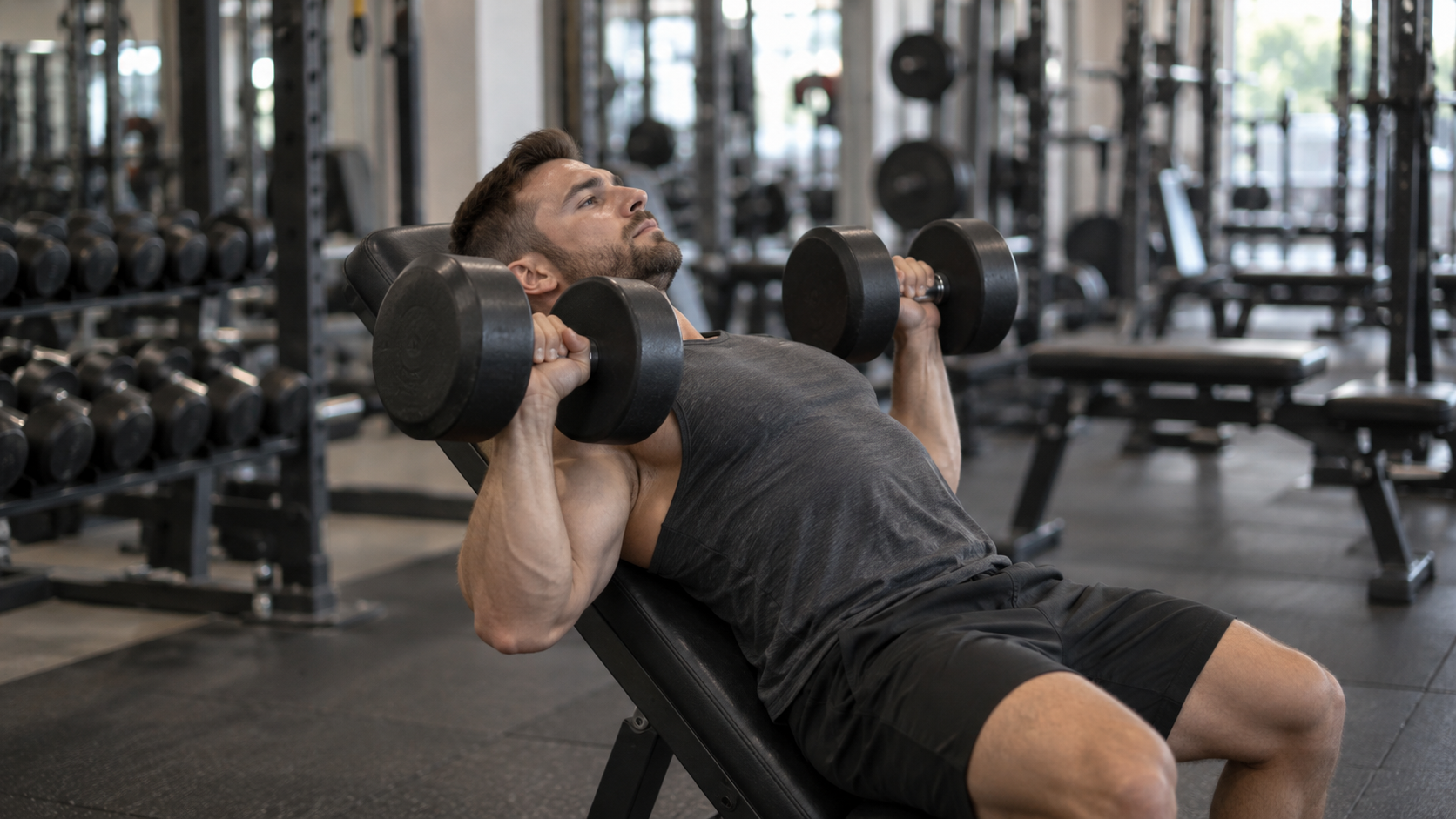
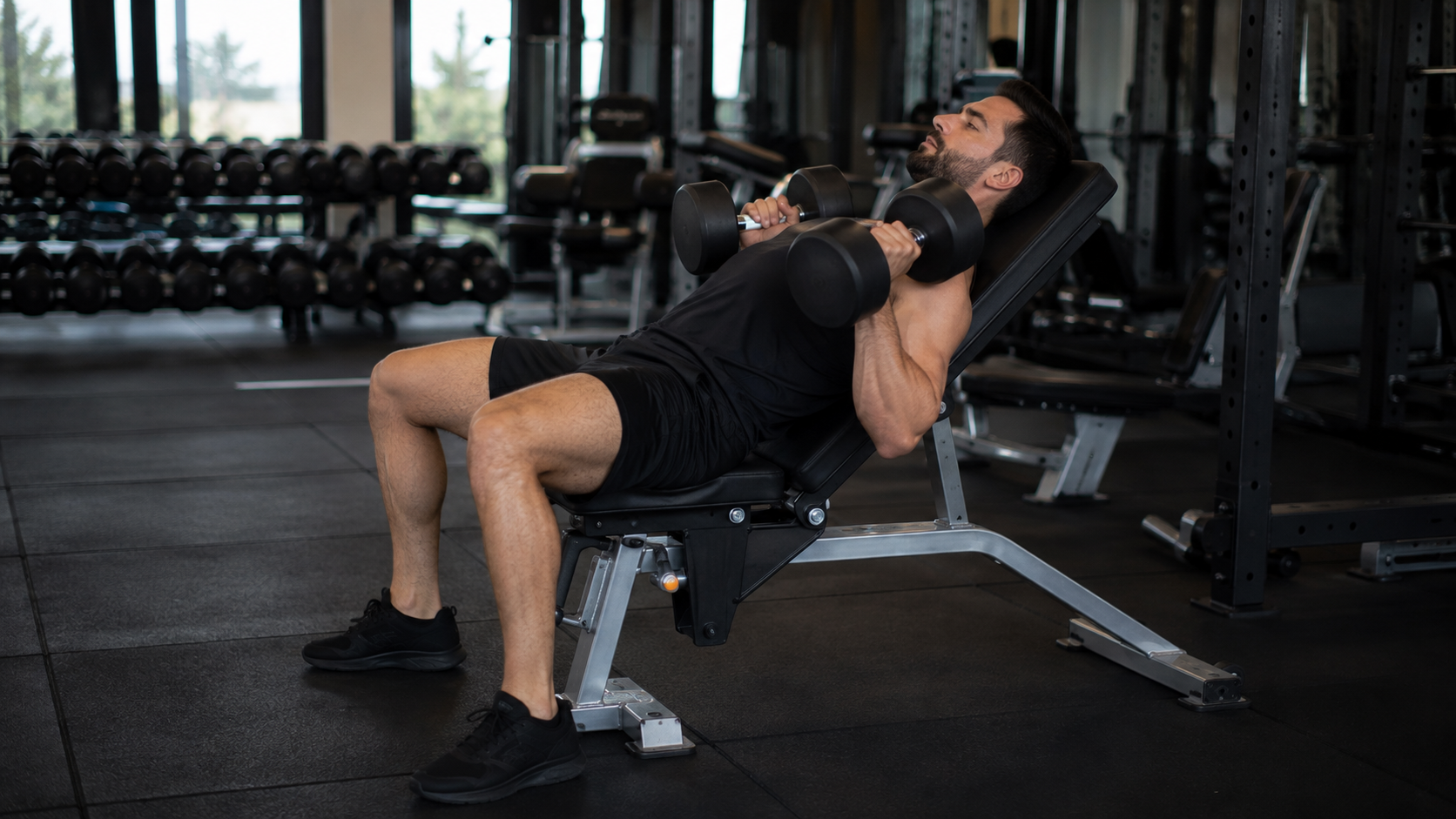
Set the bench at 45 degrees. That angle is what keeps the press on the upper chest instead of turning it into a flat press or a shoulder press.
Sit with your feet flat and your back pressed firmly into the bench. Keep your upper body fixed so the dumbbells move cleanly, not your torso.
Get the dumbbells into the start position
You already set the weights at shoulder height with your palms forward. From here, keep them steady and start the first descent under control.
Lower with control
Lower with control so the dumbbells come down to the sides of your chest, not out over the shoulders. Keep the elbows at about 90 degrees as you lower, then stop at the same depth on both sides.
The descent should feel steady and even. If one dumbbell drops faster, the elbows flare unevenly, or the weights miss the sides of the chest, the rep has already drifted off line.
Press back to the top
Press the dumbbells straight back to the top until your arms are fully extended. Keep both sides rising together so neither bell gets ahead of the other.
Finish with the dumbbells level over your shoulders, then stop at lockout without losing control.
Common mistakes to fix on video
If the incline is too steep, the press turns into more of a shoulder movement. If it is too flat, you lose the upper-chest focus and the rep stops matching the lift.
Watch the back position first. Your back should stay pressed firmly against the bench as you lower the dumbbells to the sides of your chest. If you lose that contact, the press gets loose and the dumbbells stop moving together. Keep your elbows near 90 degrees; if they flare hard, the shoulders take over.
Depth should match on both sides. One dumbbell dropping lower than the other usually means you are twisting or shifting on the bench. On the way up, both arms should finish together with full elbow extension. If one side lags, the lockout is shaky.
How to tell if your reps are clean
Clean reps are the ones that repeat the same path and finish in the same place. If one dumbbell starts drifting higher, the lowering path changes, or the press comes back up crooked, the rep is already off.
On video, look for the same 45-degree bench setup, back staying planted, feet flat, and both dumbbells moving together from shoulder height to the sides of the chest and back. The rep should look smooth and controlled, not rushed or uneven.
When this press feels off
If it feels awkward, the issue is usually not effort. It is the movement losing a clean chest load and turning into a shoulder-heavy grind.
If the discomfort keeps showing up or becomes pain, have it checked by a professional.
Incline Dumbbell Press: the movement, step by step
- Set up an incline bench at a 45-degree angle.
- Sit on the bench with your feet flat on the ground and your back pressed firmly against the bench.
- Hold a dumbbell in each hand, palms facing forward, and lift them to shoulder height.
- Slowly lower the dumbbells to the sides of your chest, keeping your elbows at a 90-degree angle.
- Push the dumbbells back up to the starting position, fully extending your arms.
- Repeat for the desired number of repetitions.
Common questions
What bench angle should I use for the incline dumbbell press?
Set the bench at 45 degrees. That angle keeps the press on the upper chest instead of turning it into a flat press or a shoulder press.
Where should the dumbbells lower on each rep?
Lower the dumbbells under control to the sides of your chest, not out over the shoulders. Keep the descent even so both sides match.
What are the most common mistakes on video?
A bench that is too steep or too flat, losing back contact with the bench, flaring the elbows hard, and letting one side drop lower or finish later than the other.
The hardest part of fixing any of this is that you cannot see yourself mid-rep. Corect reads your form from a phone video and shows you what actually happened on each rep of your incline dumbbell press — depth, bar path, where the breakdown starts. Try it free.