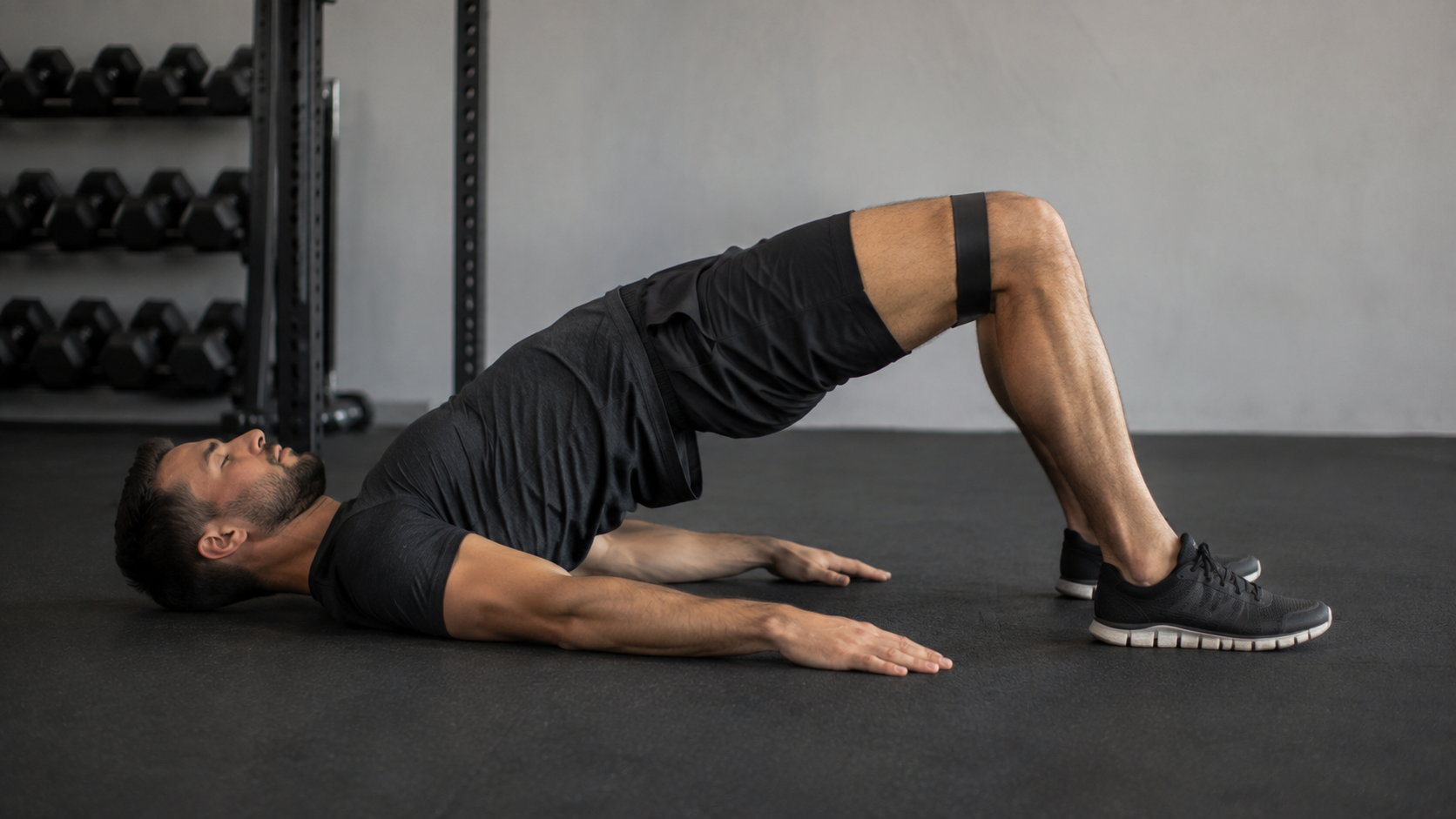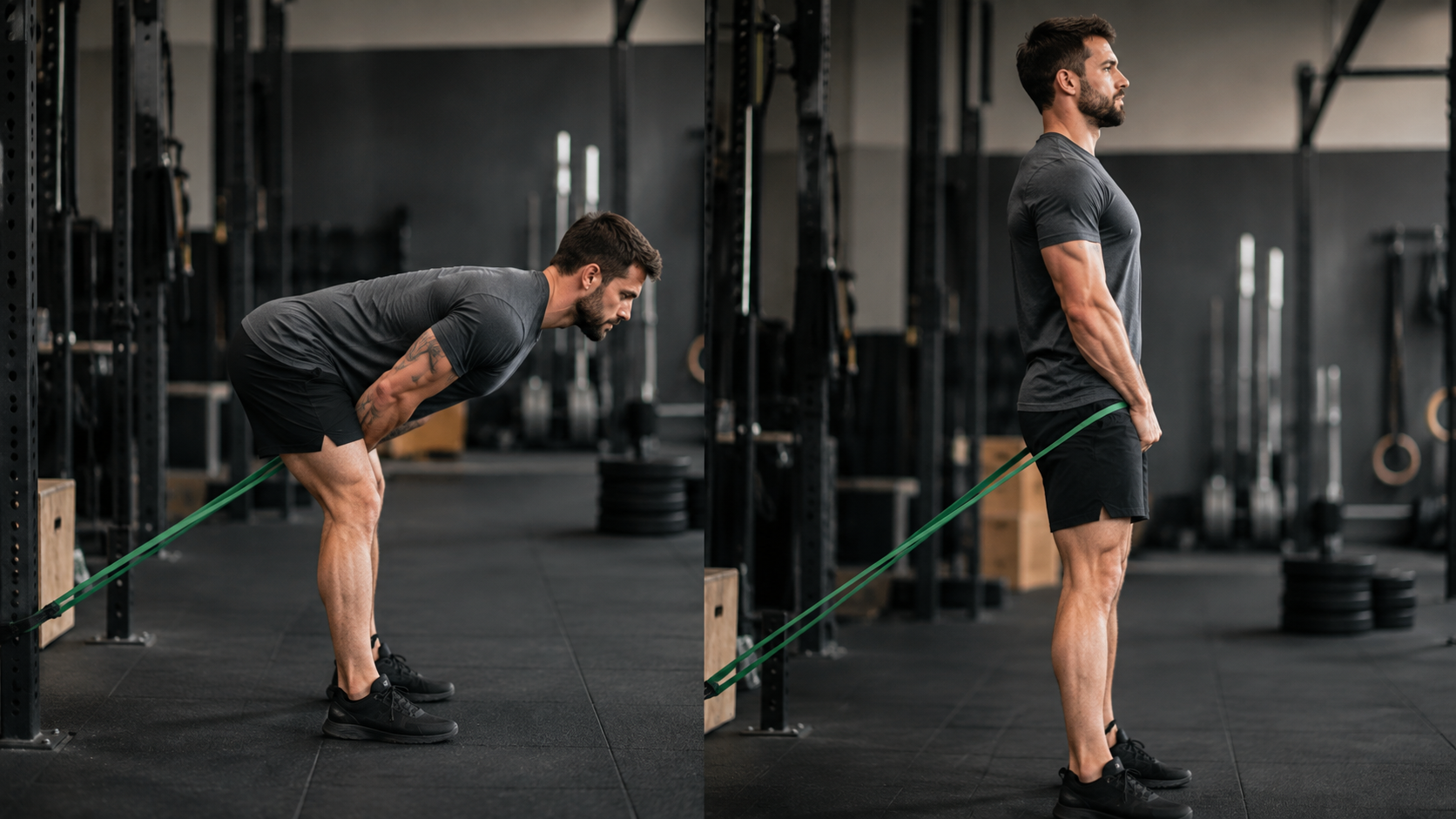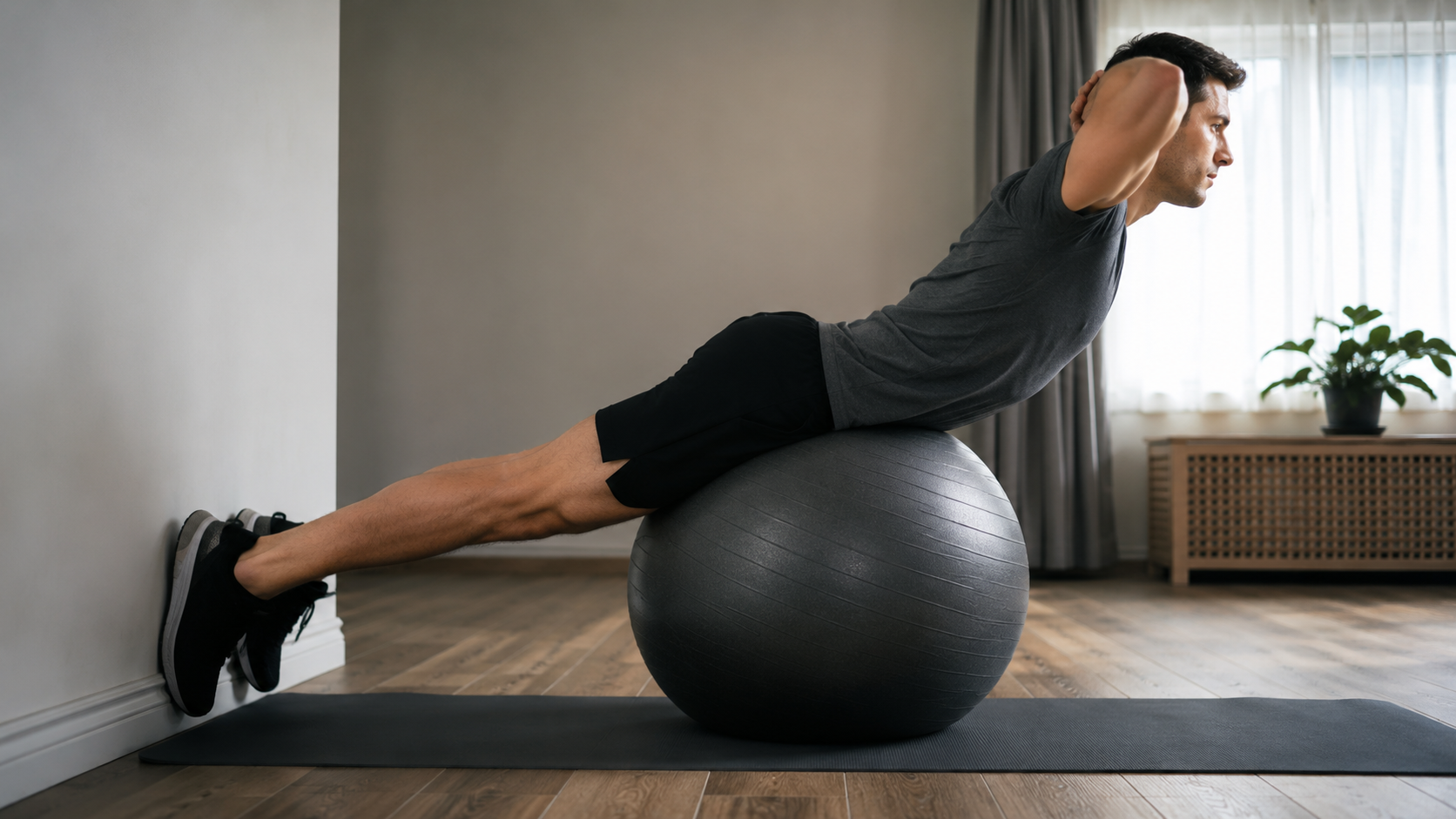
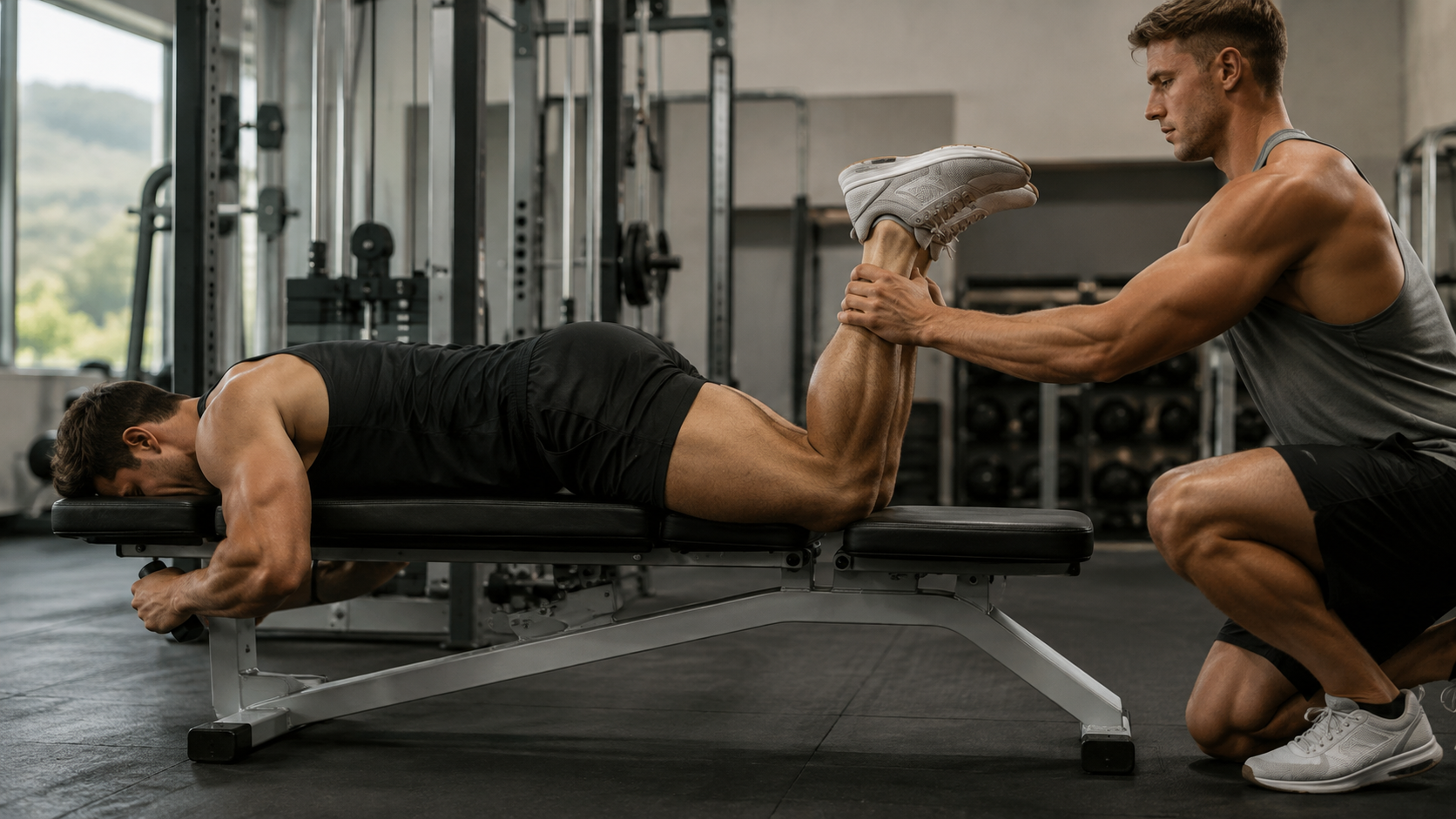
This movement targets the hamstrings, with the glutes and lower back assisting as your legs lift from a prone position. Keeping the knees straight and lowering under control keeps the work on the upper legs instead of letting momentum or the lower back take over.
Why the prone setup shifts the load
Lying face down with the ankles secured makes the rep hinge on your hamstrings pulling the lower legs up toward your glutes. Keep the knees straight and the lift stays on the back of the upper legs, with the glutes and lower back helping as you raise and lower under control.
Where the glutes and lower back fit in
The hamstrings do most of the work, with the glutes and lower back helping near the top if the movement stays controlled. Keep the lift coming from the legs, not from arching the low back or tipping the pelvis. A brief pause at the top keeps tension on the working muscles, and a slow lowering phase keeps the rep under control.
How assistance changes the feel
Partner or band assistance changes the effort without taking the hamstrings out of the lift. You still have to drive the legs up from the prone position, and the straight-knee path keeps the work on the upper legs.
The support mainly changes how the rep feels. It can make it easier to keep the glutes and lower back working cleanly through the range.
What straight knees are doing
Keeping the knees straight makes the hamstrings do the work of lifting the legs, with the glutes and lower back helping from the prone position. If the knees bend, the rep loses that clean line and becomes easier to cheat with swing or lumbar movement.
That straight-knee position also makes the top pause and slow lowering phase matter. If the knees fold, the bodyweight load is no longer asking the hamstrings to control the legs cleanly, and the lower back can start to take over.
What a clean rep looks like
A clean rep keeps the hamstrings doing the work, with the glutes and lower back staying supportive instead of taking over. The top pause should feel like tension held in the back of the upper legs, then the slow lowering keeps that load on the target muscles instead of letting it drop.
If the assistance takes over or the legs start arcing, the rep stops matching the intended tension.
Common form leaks that shift the work
If the lift starts coming from the low back instead of the hamstrings, the rep stops staying on the target muscles and turns into a compensation pattern. A rushed top position or an unsteady setup makes the movement sloppy, while a controlled lower keeps the work where it belongs.
How to tell if you are feeling the right muscles
If the work stays on target, the back of your upper legs carries it through the lift, with the glutes helping and the lower back not taking over. If the effort shifts into your lower back or starts to feel like a torso swing, stop short of diagnosing it and treat the rep as off.
Assisted Prone Hamstring: the movement, step by step
- Lie face down on a mat or bench with your legs fully extended.
- Have a partner or use a resistance band to secure your ankles.
- Engage your hamstrings and lift your legs towards your glutes, keeping your knees straight.
- Pause for a moment at the top, then slowly lower your legs back down to the starting position.
- Repeat for the desired number of repetitions.
Common questions
What muscles does the assisted prone hamstring work?
The hamstrings do most of the work, with the glutes and lower back assisting as the legs lift from a prone position.
Why does keeping the knees straight matter?
Keeping the knees straight keeps the work on the back of the upper legs. If the knees bend, the rep becomes easier to cheat with swing or lumbar movement.
What should a clean rep feel like?
A clean rep keeps tension in the back of the upper legs, with the glutes helping and the lower back not taking over. A brief top pause and slow lowering help maintain that tension.
How does assistance change the exercise?
Partner or band assistance changes how hard the rep feels, but it does not take the hamstrings out of the lift. The straight-knee path still keeps the work on the upper legs.
Corect analyses your lifting form from a phone video and shows you what changed rep to rep. See how it works.