The band pull through works your glutes, hamstrings, and lower back, with the upper legs doing most of the work in a hip-dominant hinge. It is a good fit when you want to load the back side of your hips without turning it into a squat.
Why the band changes the feel of the rep
The band makes the rep feel lighter at the start and tighter as you come up, so the top demands a harder finish. That changing pull is what makes the lockout feel different from the stretch at the bottom, even when the movement stays smooth.
What a clean setup looks like
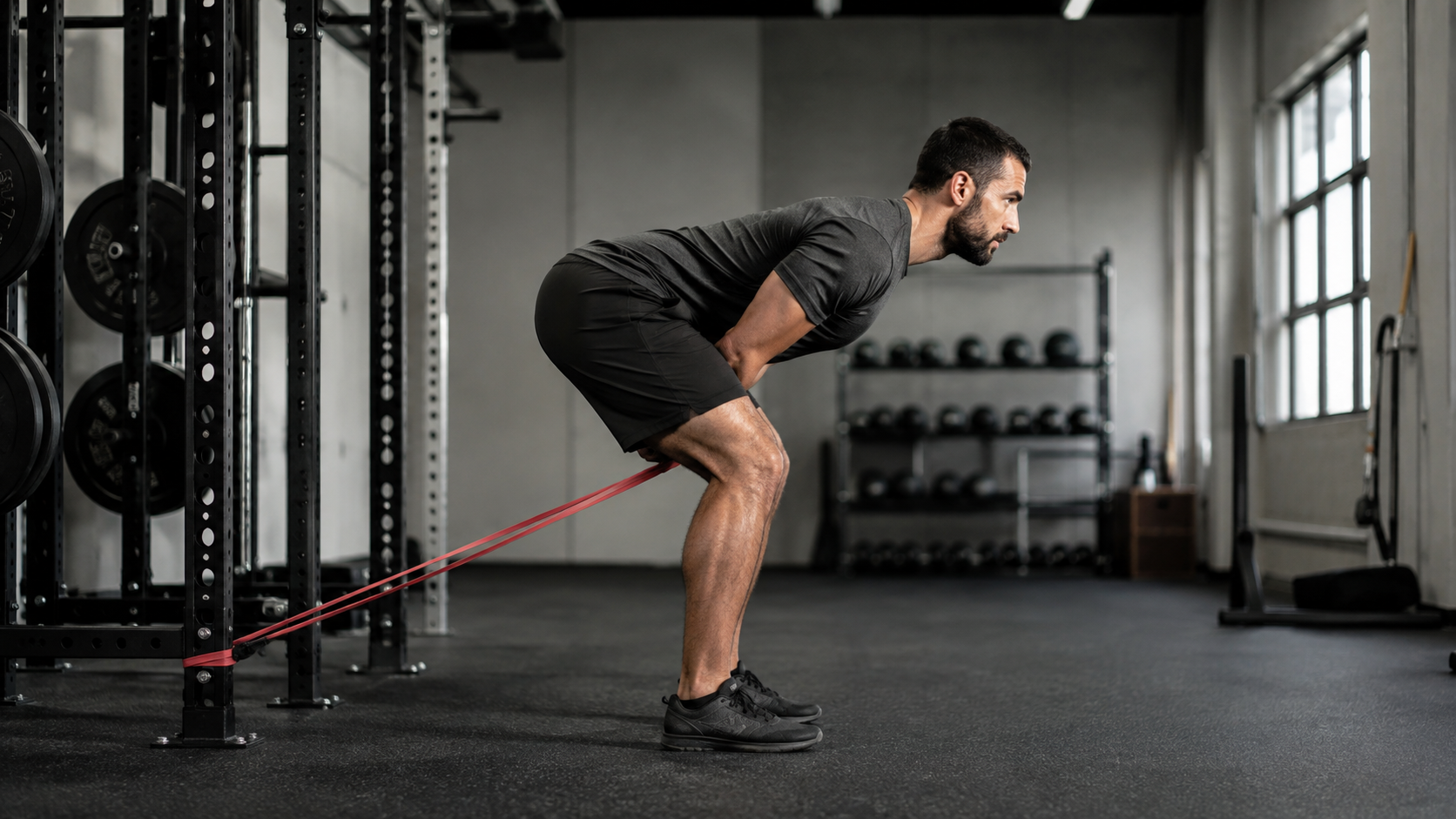
A clean setup gives you band tension before the first rep and leaves you in a true hinge, not a squat. You should feel the band loaded, the stance stable, and a small knee bend holding while your hips can travel back without the setup collapsing. If the anchor is wrong or you step too far, you lose that hinge before the movement even starts.
How the hinge loads the right muscles
The key advantage here is tension: the band stays loaded through the whole hinge, not just at the top. Keeping the torso folded at the hips with a slight knee bend lets the hamstrings stay stretched while the glutes drive the finish. If you rise early or turn it into a squat, that constant pull drops off.
What should finish the rep
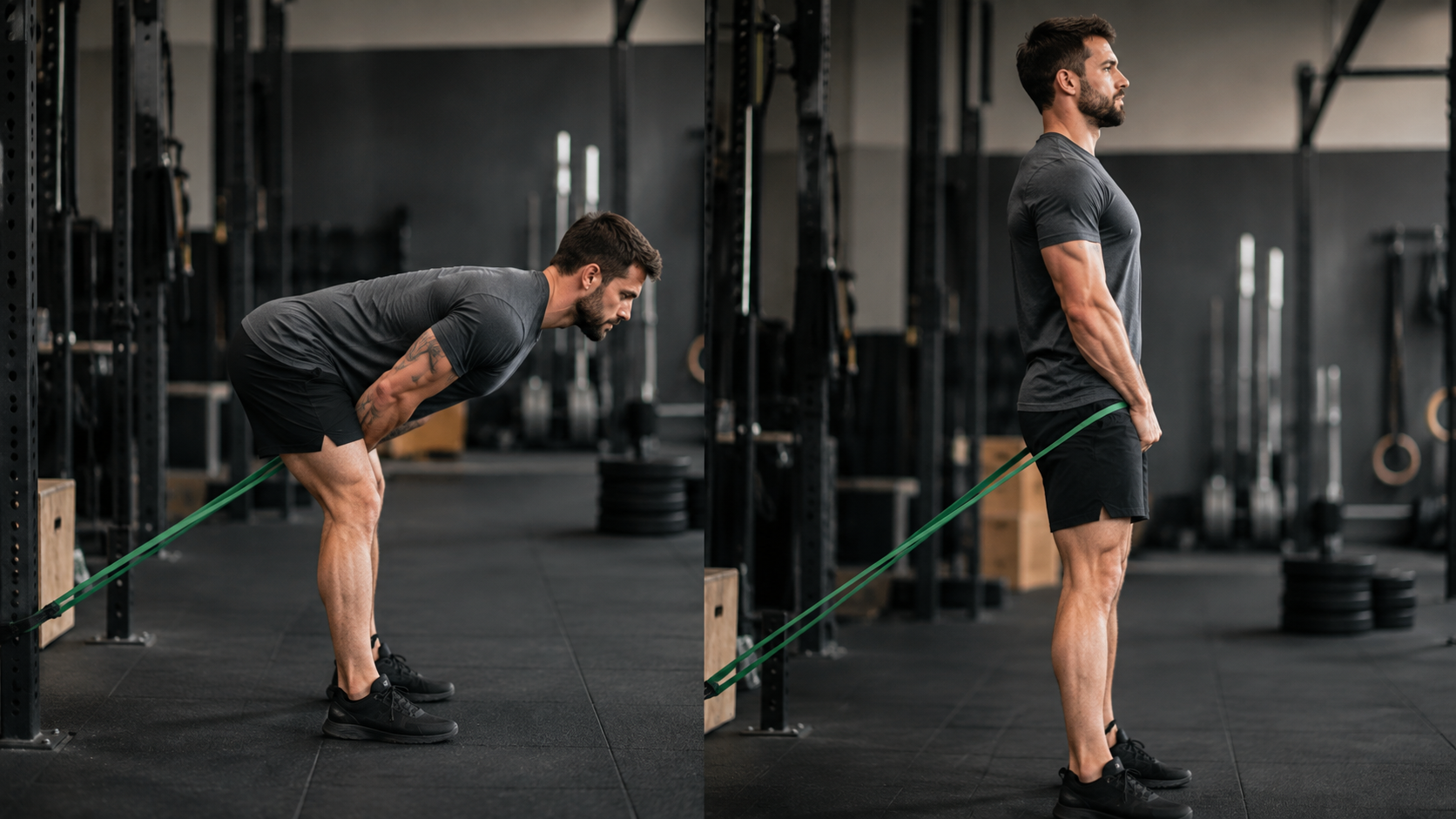
The rep ends when you drive the hips forward and squeeze the glutes, not when you lean back. Keep the lower back braced so it stabilizes the finish instead of taking over. If your torso is still folded or your knees drift, the glutes are not closing the rep. The hamstrings help through the stretch and the pull back to standing, but the top is where the glutes finish.
Why people feel it in the lower back
If you feel it more in your lower back, the load is shifting there instead of staying on the glutes and hamstrings.
The lower back should stabilize the rep, not drive it. Overextending at the top or turning the movement into a squat shifts more work into the lower back.
What the video should show rep to rep
The video should show a clean hinge, not a squat. Your hips should move back, your knees stay slightly bent, and your torso stay fixed as it folds forward. At the bottom, you want a clear hamstring stretch under load. On the way up, the hips drive through to finish, with the band tightening smoothly and the lower back staying stable.
Who this works best for
This fits best if you want a simple hinge pattern you can use at home or in a gym. It suits lifters who want one clean way to practice driving the hips back and forward without making the movement more complicated than it needs to be.
Band Pull Through: the movement, step by step
- Attach a resistance band to a sturdy anchor point at ground level.
- Stand facing away from the anchor point with your feet shoulder-width apart.
- Step forward to create tension in the band, keeping your knees slightly bent.
- Hinge at the hips and push your glutes back, maintaining a slight bend in your knees.
- Lower your torso until it is parallel to the ground, feeling a stretch in your hamstrings.
- Drive your hips forward and squeeze your glutes to return to the starting position.
- Repeat for the desired number of repetitions.
Common questions
What muscles does the band pull through work?
The band pull through works your glutes, hamstrings, and lower back. The upper legs do most of the work in a hip-dominant hinge.
Why does the band pull through feel different from other hinge exercises?
The band makes the rep feel lighter at the start and tighter as you come up, so the lockout feels harder than the stretch at the bottom.
Why do I feel the band pull through in my lower back?
If you feel it more in your lower back, the load is shifting there instead of staying on the glutes and hamstrings. The lower back should stabilize the rep, not drive it.
What should the rep look like on video?
The video should show a clean hinge, not a squat. Your hips should move back, your knees stay slightly bent, and your torso stay fixed as it folds forward.
Corect analyses your lifting form from a phone video and shows you what changed rep to rep. See how it works.