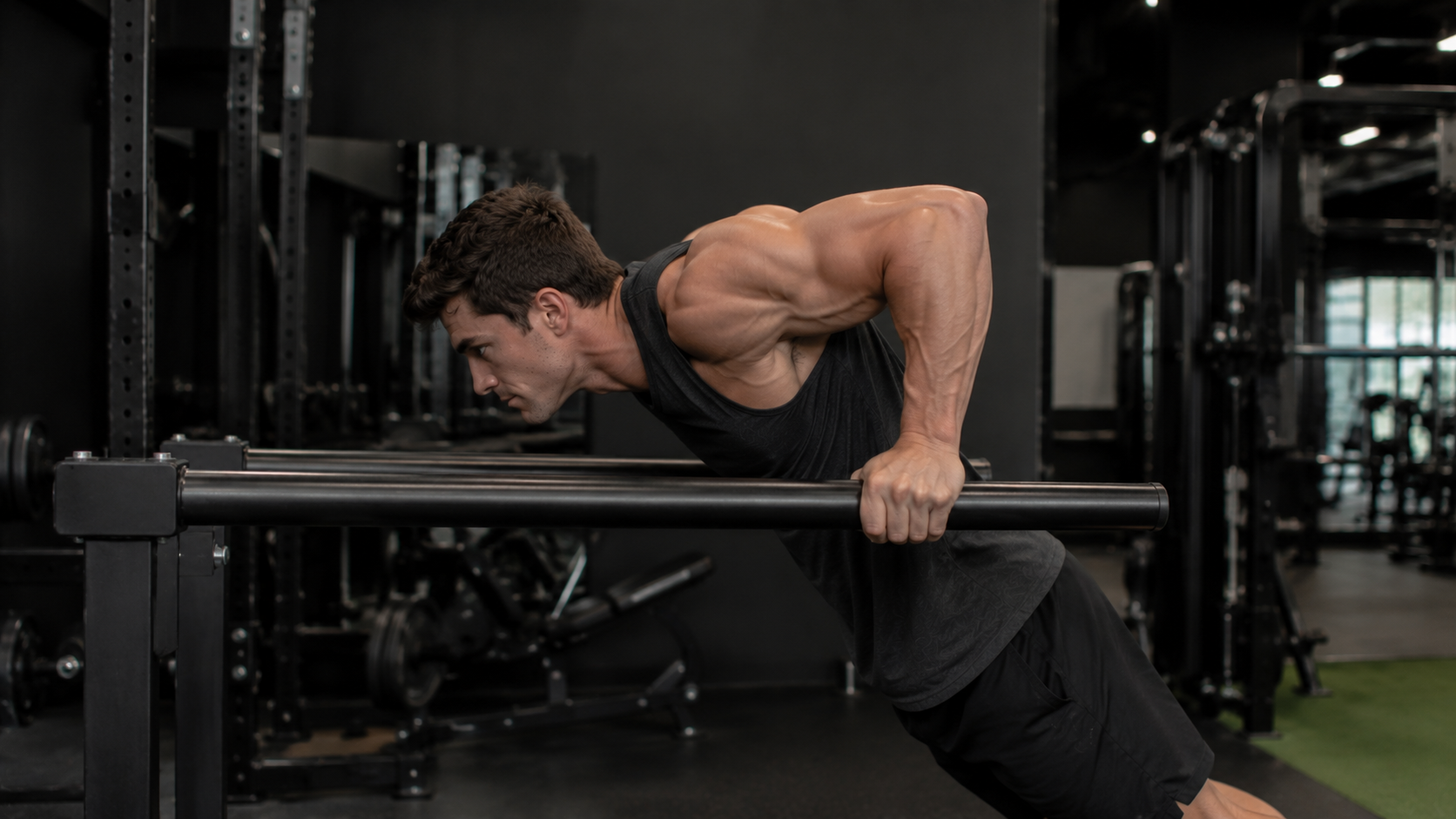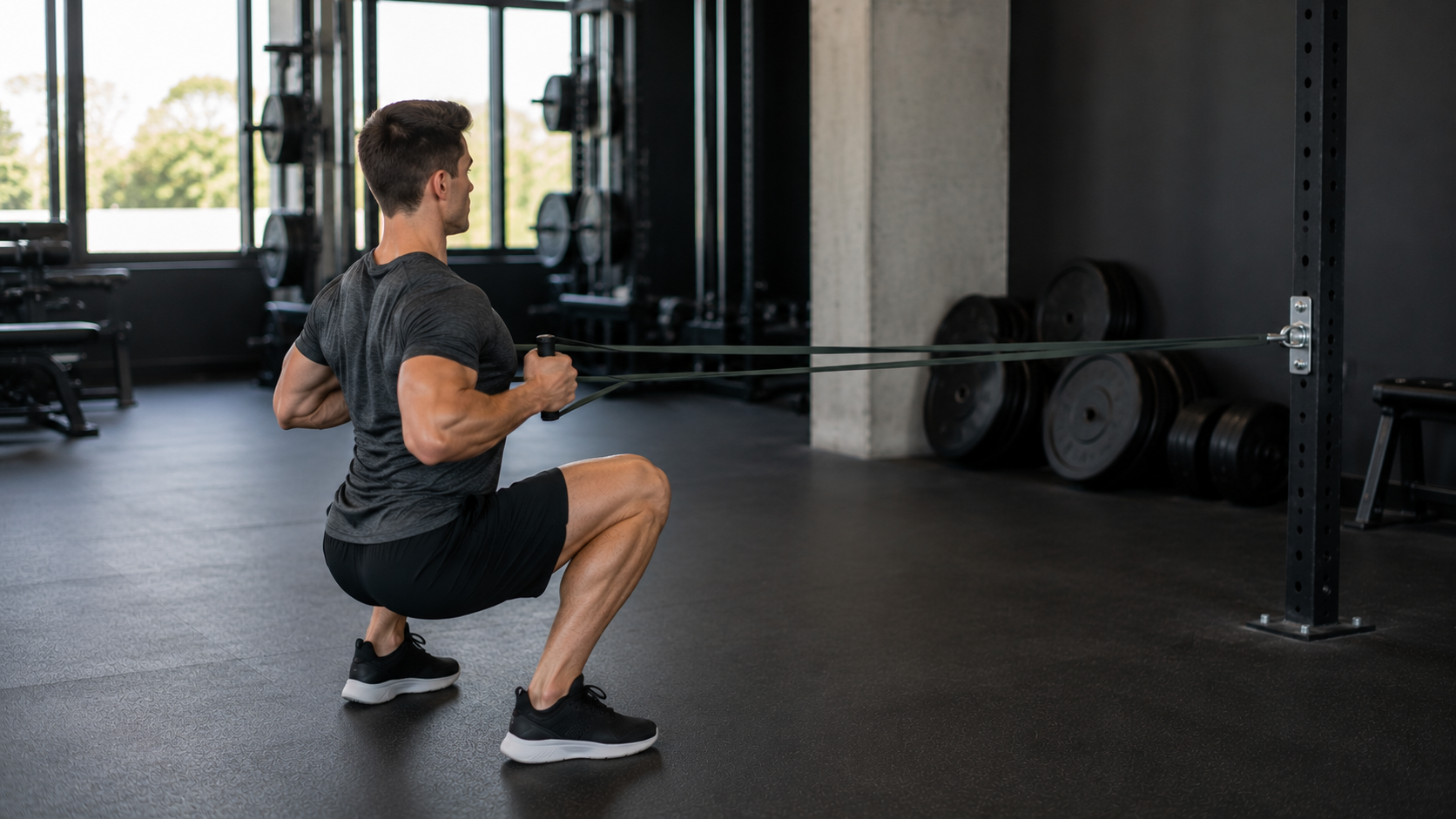
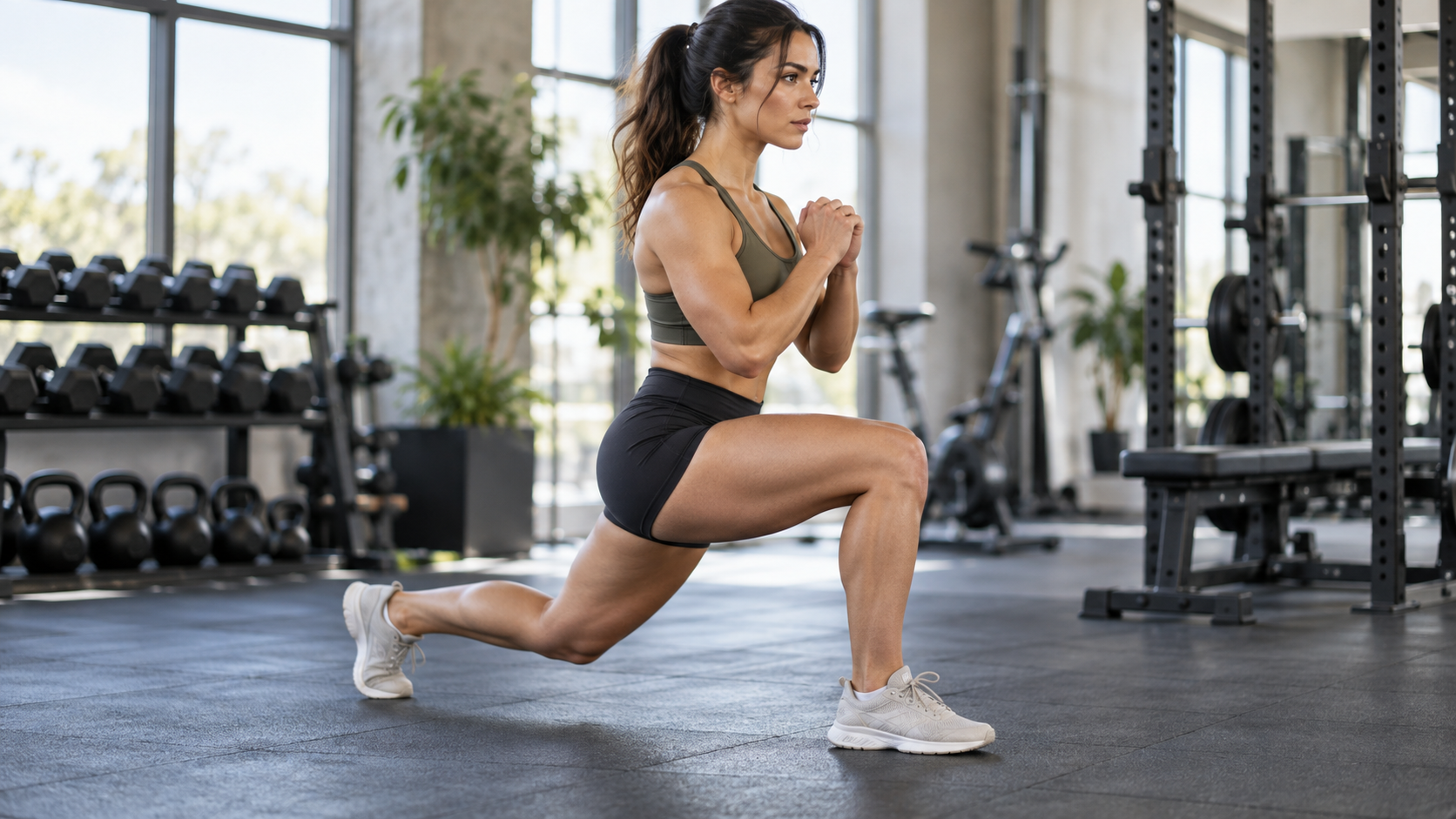
It works your Cardiovascular System, Quadriceps, Hamstrings, and Glutes first, with the calves joining in as secondary movers.
Each step keeps the work moving between legs, so your quads, hamstrings, and glutes all stay under load while your heart rate climbs.
Why the load shifts with each step
The work shifts from step to step. As you lower into the lunge, the front leg has to control your bodyweight, so the quadriceps usually take more of the load. On the push-off, the back leg and ankle contribute more, with the calves helping you return to standing. Then the other side takes over on the next rep.
What changes when you move faster or slower
Moving faster makes the transitions feel sharper and less controlled. You have less time in each lunge position, so balance and coordination matter more and the Cardiovascular System works harder.
Slowing down gives you more control in each rep. Each step and push-off feels more deliberate, with less overall breathlessness and more time to feel the working leg doing the work.
How step length changes the emphasis
Step length changes where the effort shows up in the movement. A longer step makes you sink farther into the lunge before you push back, while a shorter step keeps the motion closer to the start position.
If you step farther forward, the lowering and push-off feel more demanding through the back leg and hips. A shorter step keeps more of the work near the front of the body.
The calves stay involved either way, and the cardiovascular demand stays high when you keep alternating legs at a steady pace.
What a clean rep should feel like
A clean rep should feel like your quadriceps, hamstrings, and glutes doing most of the work while your cardiovascular system keeps the pace up. The calves help with the push and stabilization, and the load should feel evenly spread between both legs as you alternate.
Common ways the feel gets off
If the movement starts to feel uneven, the work shifts out of the intended cardio pattern and into one leg. A short step keeps you upright and pushes more of the lowering onto the quadriceps. A long step makes the return harder and asks more from the glutes and hamstrings. If the pace gets rushed, you lose the steady back-and-forth rhythm and the reps stop feeling clean.
Back And Forth Step: the movement, step by step
- Stand with your feet shoulder-width apart.
- Step forward with your right foot, bending your knee and lowering your body into a lunge position.
- Push off with your right foot and step back to the starting position.
- Repeat the movement with your left foot, alternating legs with each step.
- Continue stepping back and forth, maintaining a steady pace.
- Repeat for the desired duration or number of repetitions.
Common questions
What muscles does the back and forth step work?
It works your cardiovascular system, quadriceps, hamstrings, and glutes first, with the calves joining in as secondary movers.
Why does the load shift with each step?
As you lower, the front leg controls your bodyweight and the quadriceps take more of the load. On the push-off, the back leg and ankle contribute more, with the calves helping you return to standing.
What changes when you move faster or slower?
Moving faster makes the transitions sharper and less controlled, with more cardiovascular demand. Slowing down gives you more control, less breathlessness, and more time to feel the working leg.
How does step length change the exercise feel?
A longer step makes you sink farther into the lunge and can feel more demanding through the back leg and hips. A shorter step keeps the motion closer to the start position and puts more work near the front of the body.
Corect analyses your lifting form from a phone video and shows you what changed rep to rep. See how it works.