
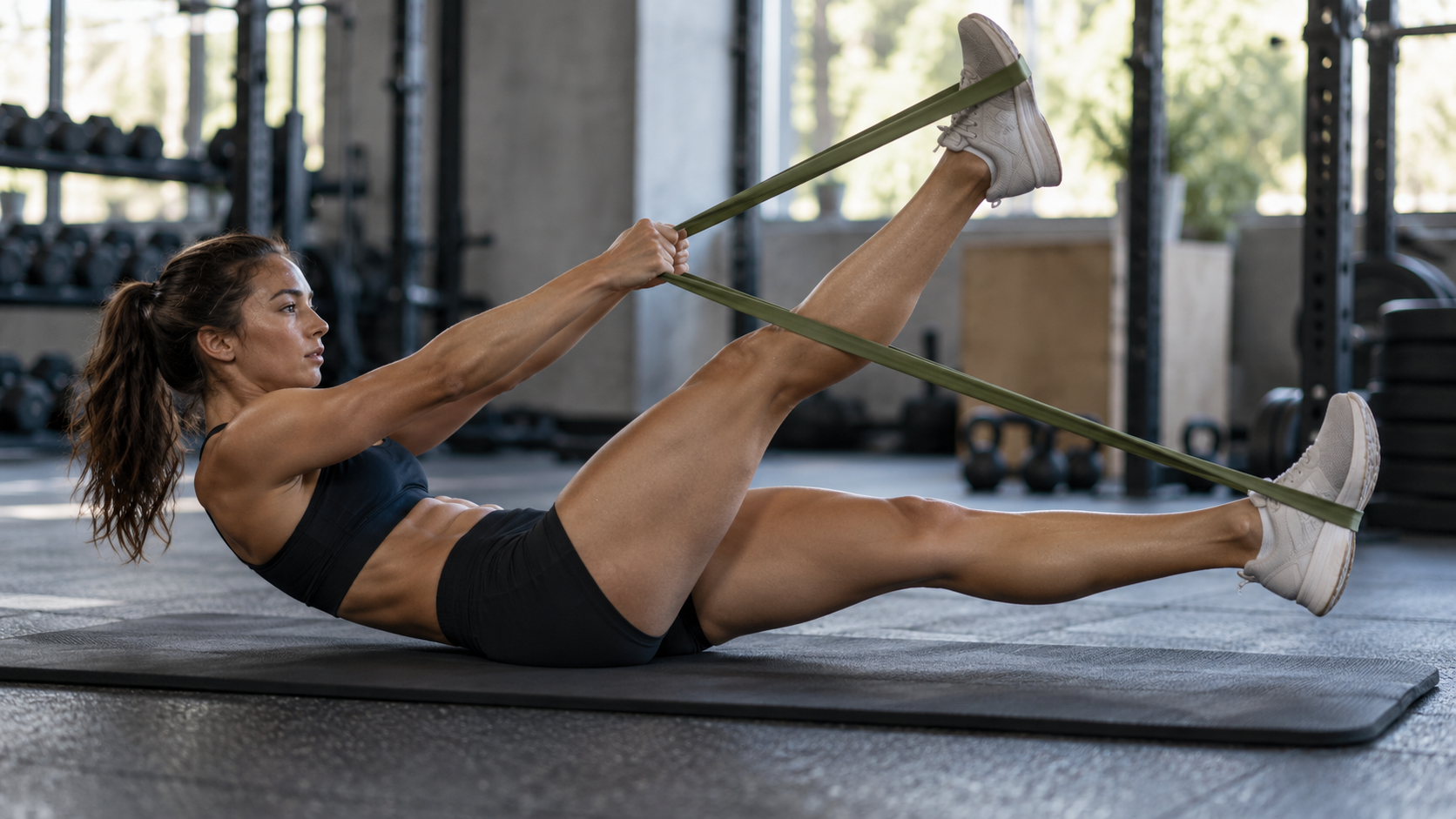
Your abs do the main work here, folding the torso and keeping the midline tight as you lift. The hip flexors help bring the legs up and keep the alternating leg position moving rep to rep.
How the band changes the rep
The band makes the hardest part the reach and the return, not just the top. You start under tension, then have to lift and lower against it while the leg switch keeps each rep from feeling identical.
If the torso folds early, the legs swing, or the range stays short, the band stops loading the movement cleanly and the rep gets sloppy.
What you should feel
You should feel the abs and hip flexors working together from the first rep. The effort should stay tight through the waist, not turn into a loose swing.
At the top, the trunk folds while the legs lift. As you lower, the alternating leg position should stay controlled, with no side taking over and no collapse through the middle.
Where the form usually breaks down
The form breaks when momentum starts doing the work. If the trunk folds early, the legs swing, or the range gets short, the abs and hip flexors stop carrying the rep and the band just gets moved around.
Uneven alternating legs is the other fault. Each rep should switch cleanly; if one side crosses higher, drops faster, or drifts off the pattern, the work stops being even from rep to rep.
How Corect judges the video
Corect can score a phone video for how closely the rep matches the intended work in the abs and hip flexors.
It looks at the banded setup, the range you use, and whether each repetition stays consistent from one rep to the next.
Who this is for
This is for you if you want a home-or-gym core drill that works the abs and hip flexors in the same rep. The band and alternating leg action make it useful when you want the waist to stay braced while the legs and upper body move together.
Use it when you want direct work for the abs and hip flexors, especially as an accessory movement that keeps the trunk under control through each repetition. If the torso collapses early or one side starts doing a different job from rep to rep, the rep is no longer doing what it should.
Band Alternating V-up: the movement, step by step
- Lie flat on your back with your legs straight and your arms extended overhead, holding the band.
- Engage your abs and lift your legs and upper body off the ground simultaneously, reaching your hands towards your toes.
- As you lower your legs and upper body back down, switch the position of your legs, crossing one over the other.
- Repeat the movement, alternating the position of your legs with each repetition.
- Continue for the desired number of repetitions.
Common questions
What muscles does the band alternating V-up work?
Your abs do the main work by folding the torso and keeping the midline tight. The hip flexors help bring the legs up and keep the alternating leg position moving rep to rep.
How does the band change the exercise?
The band makes the hardest part the reach and the return, not just the top. You start under tension and have to lift and lower against it while the leg switch keeps each rep from feeling identical.
What should I feel during the rep?
You should feel the abs and hip flexors working together from the first rep. The effort should stay tight through the waist, not turn into a loose swing.
When does the form break down?
Form breaks when momentum starts doing the work. If the trunk folds early, the legs swing, the range gets short, or one side starts taking over, the rep stops doing what it should.
The hardest part of fixing any of this is that you cannot see yourself mid-rep. Corect reads your form from a phone video and shows you what actually happened on each rep of your band alternating v-up — depth, bar path, where the breakdown starts. Try it free.