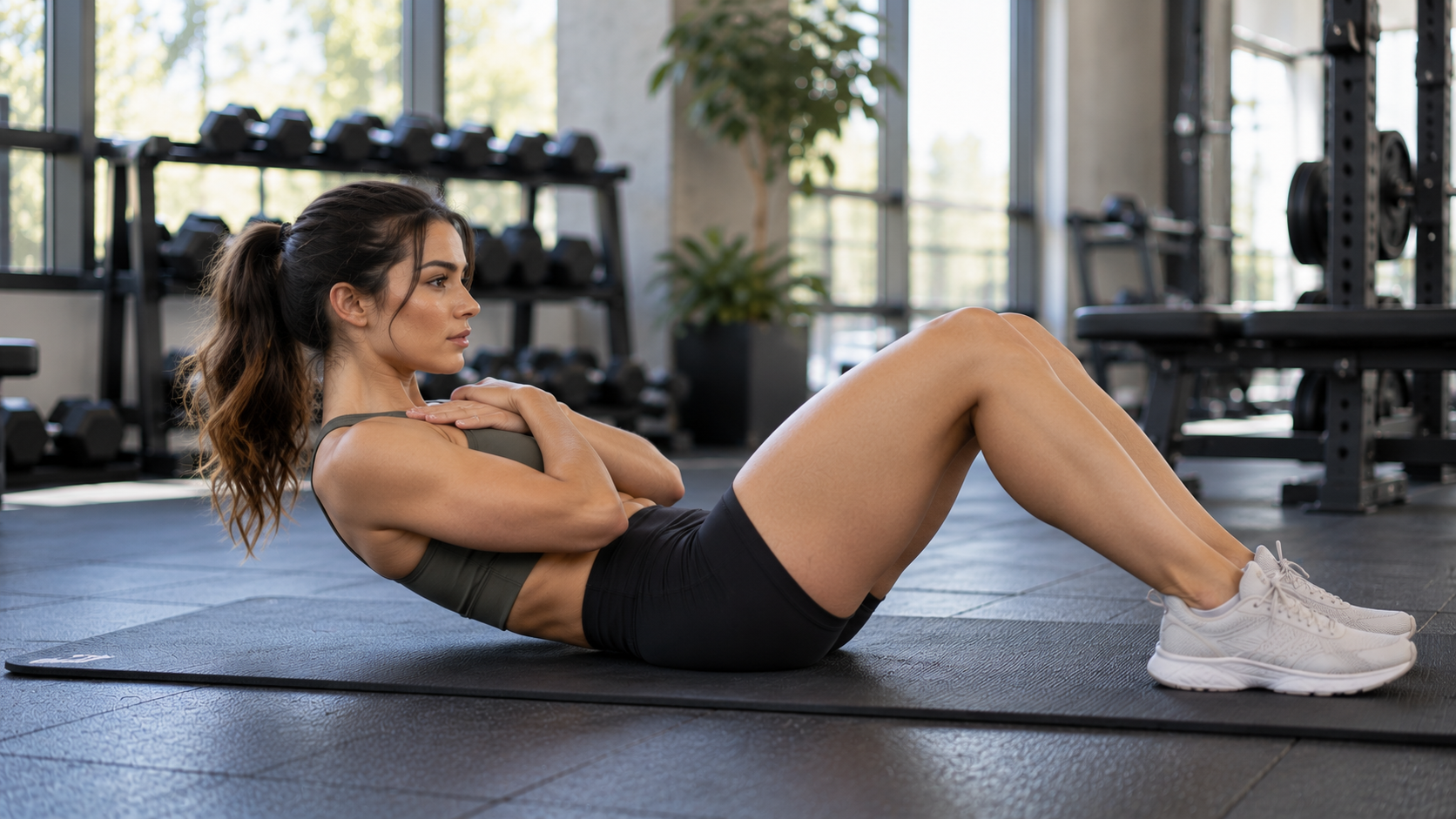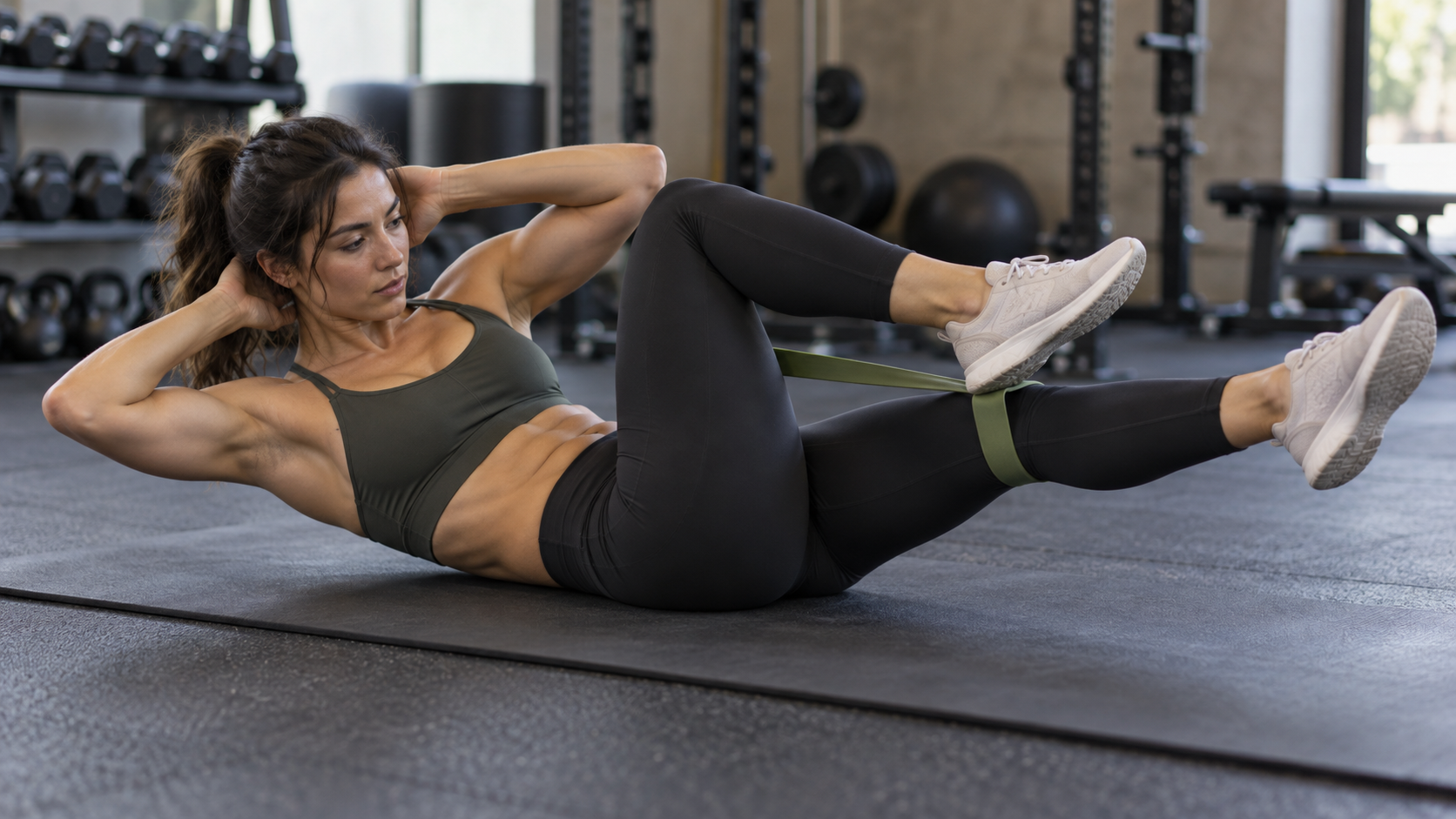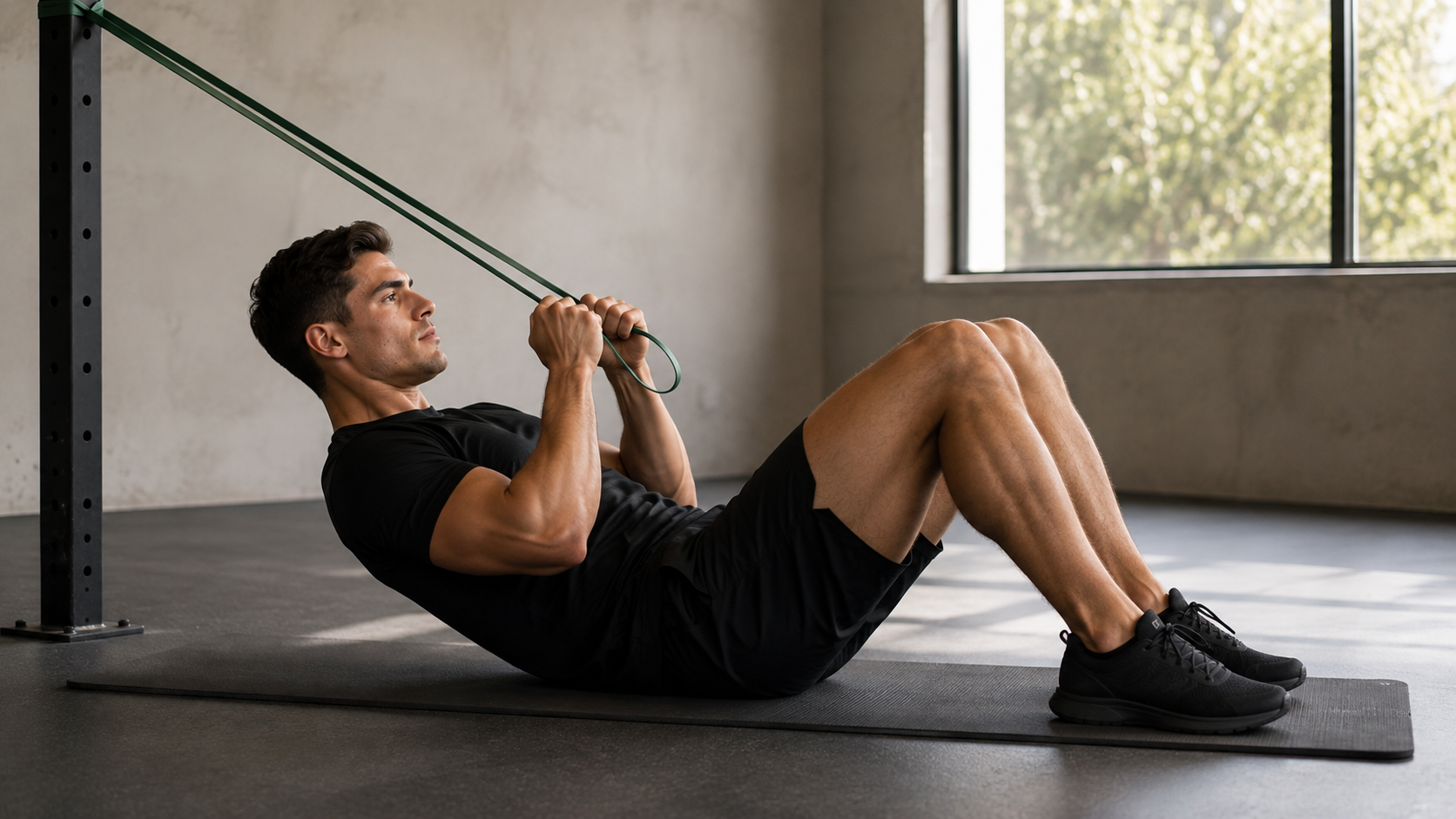
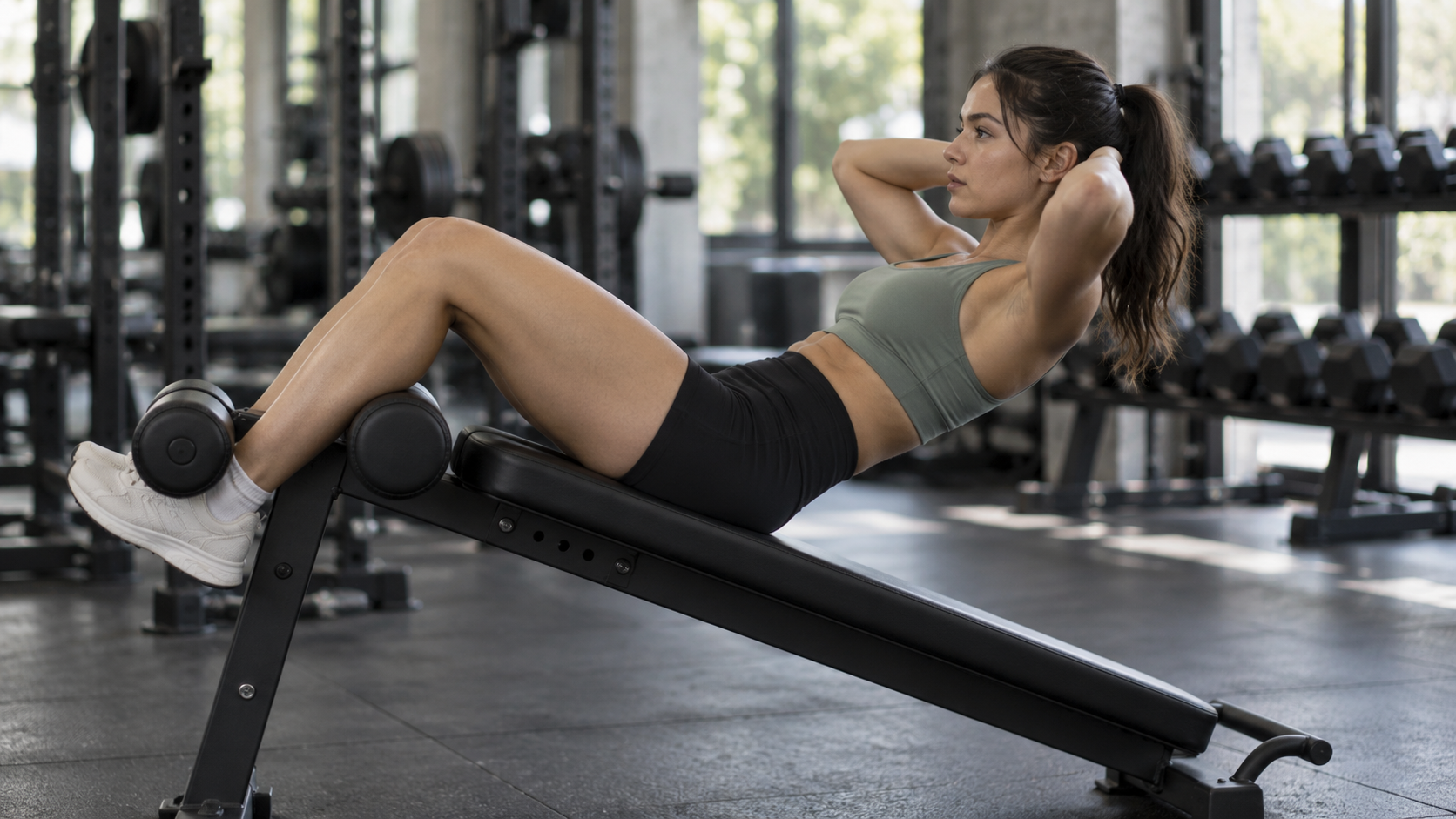
Abs and hip flexors do the work here. The abs start the curl, and the hip flexors help bring you up once your feet are anchored and the torso has to keep moving toward the top.
Why the setup matters
With the feet fixed, the legs stop stealing the rep and the trunk has to do the curling.
That anchor is what makes this variation harder to fake.
Where the rep shifts from abs to hips
The shift shows up in how you finish the curl. If your torso keeps folding forward under control, the abs are still doing the job. If the rep turns into a hip-driven lift and the body starts swinging, the hip flexors have taken over.
What the top position should look like
The top position should be short and controlled, with the torso finished at about 45 degrees. That is where the abs and hip flexors are doing the work, and the pause shows you can hold the contraction instead of rushing through it.
What the lowering phase should feel like
On the way down, the rep should stay controlled instead of dropping back to the floor. The torso returns as one unit, with the abs staying engaged until you reach the start.
How to tell if the rep is clean from video
Abs and hip flexors do the main work. A cleaner rep shifts more of the effort into the abs; if the torso barely curls and the hips drive most of the motion, the load has moved toward the hip flexors.
Assisted Sit-up: the movement, step by step
- Sit on the edge of a bench or have someone hold your feet down.
- Lie flat on your back with your knees bent and feet flat on the ground.
- Place your hands behind your head with your elbows pointing outwards.
- Engaging your abs, slowly lift your upper body off the ground, curling forward until your torso is at a 45-degree angle.
- Pause for a moment at the top, then slowly lower your upper body back down to the starting position.
- Repeat for the desired number of repetitions.
Common questions
What muscles does the assisted sit-up work?
Abs and hip flexors do the main work. The abs start the curl, and the hip flexors help bring you up once your feet are anchored and the torso has to keep moving toward the top.
Why does the setup matter?
With the feet fixed, the legs stop stealing the rep and the trunk has to do the curling. That anchor is what makes this variation harder to fake.
Where does the rep shift from abs to hips?
The shift shows up in how you finish the curl. If your torso keeps folding forward under control, the abs are still doing the job; if the rep turns into a hip-driven lift and the body starts swinging, the hip flexors have taken over.
What should the top position look like?
The top position should be short and controlled, with the torso finished at about 45 degrees. That is where the abs and hip flexors are doing the work, and the pause shows you can hold the contraction instead of rushing through it.
The hardest part of fixing any of this is that you cannot see yourself mid-rep. Corect reads your form from a phone video and shows you what actually happened on each rep of your assisted sit-up — depth, bar path, where the breakdown starts. Try it free.