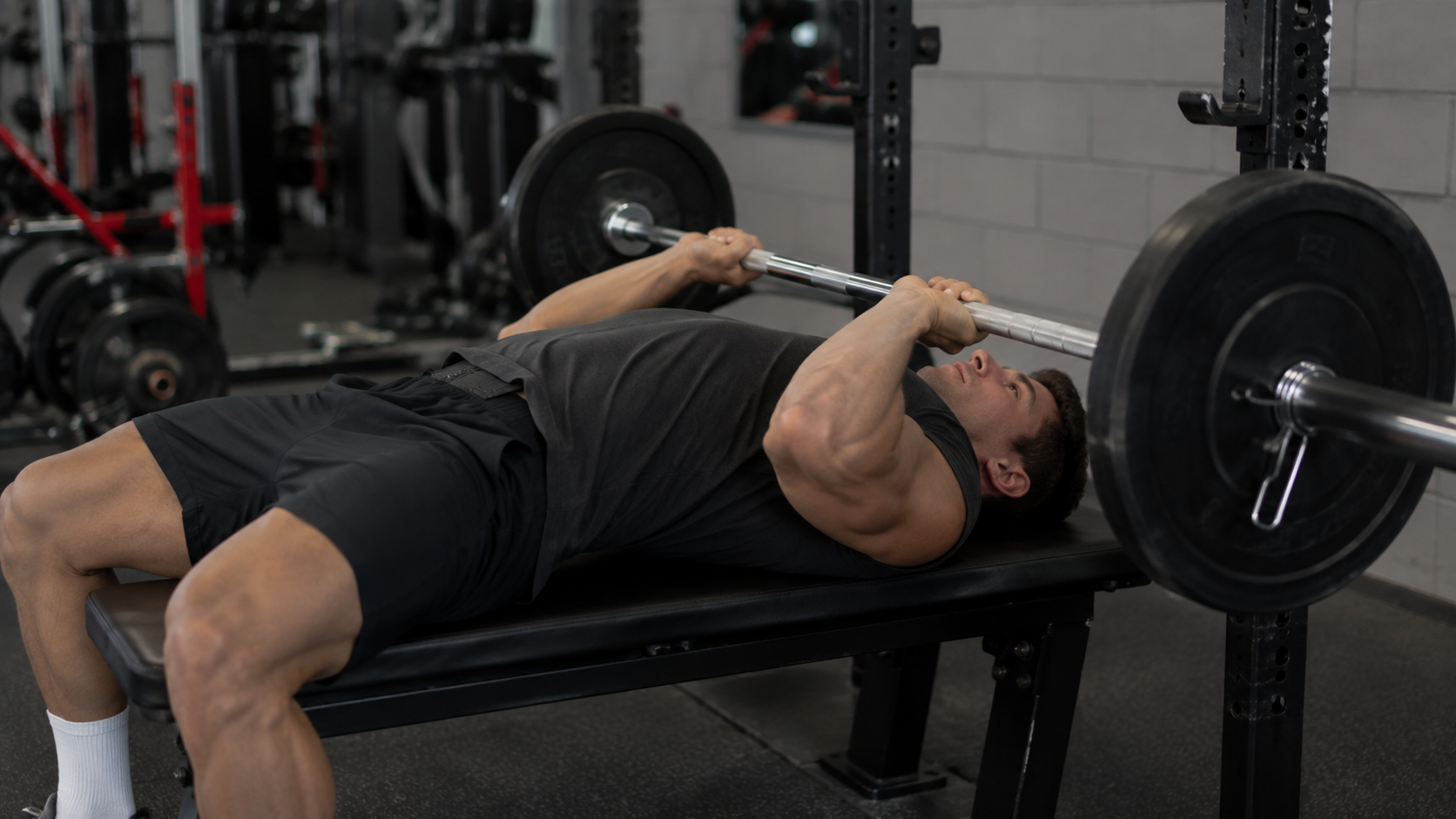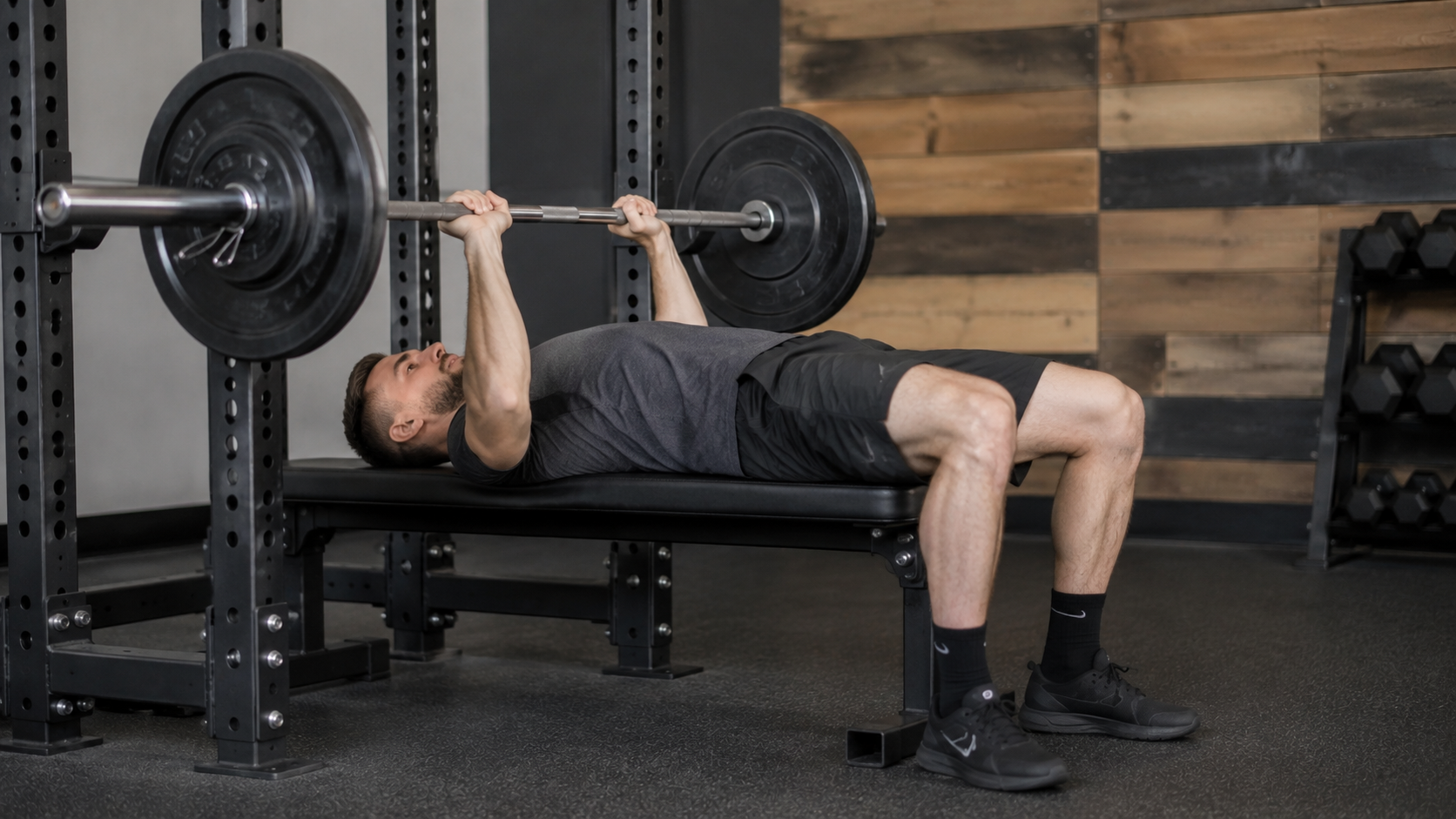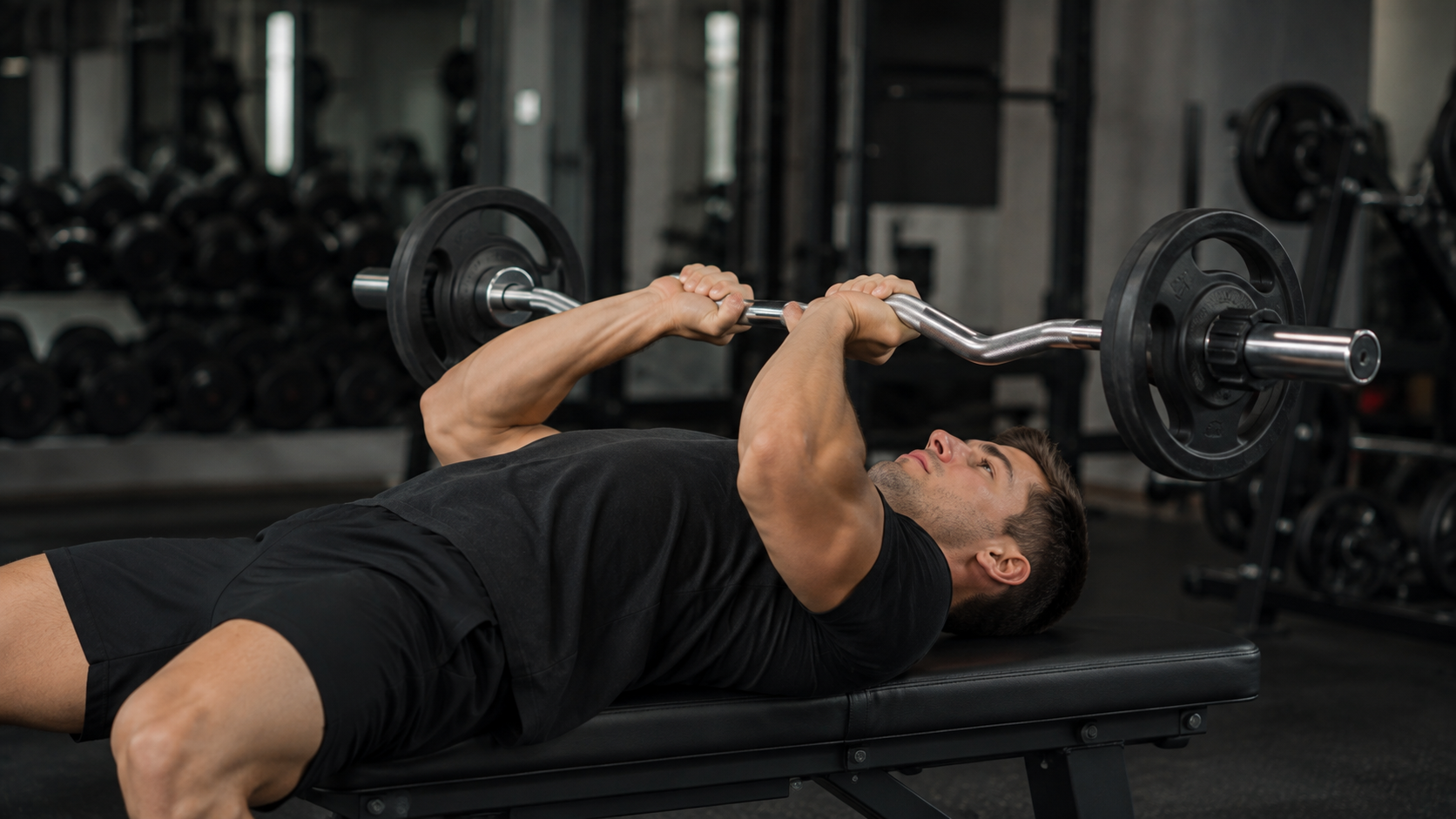
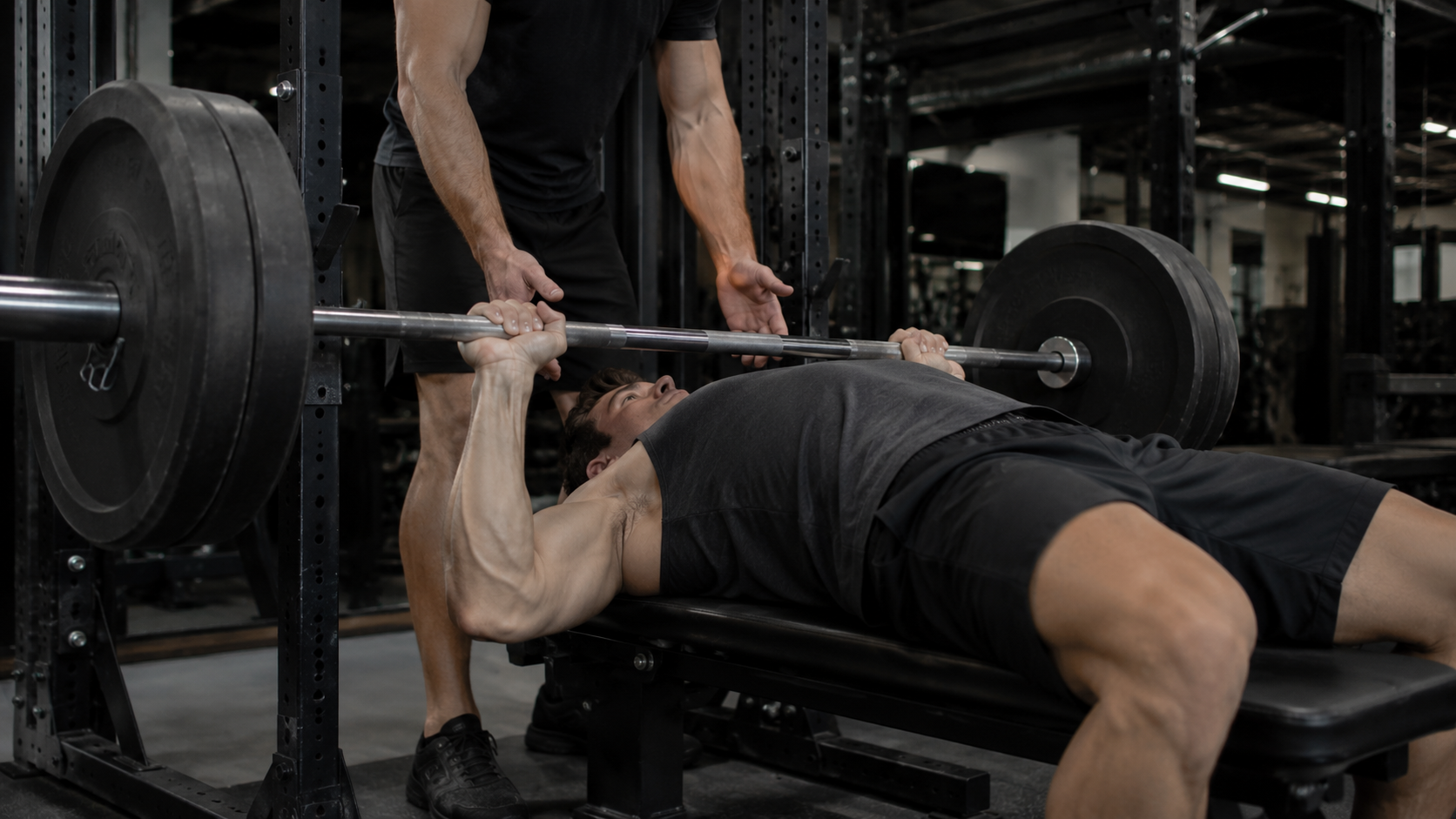
The bench press mainly works the chest, triceps, and front delts, with the shoulders and triceps assisting. It is a chest-first press, but the load does not stay on one muscle from start to finish.
Why the chest is the main mover
The chest is the main mover because the bar is lowered to the chest and pressed back up from there. The triceps and front delts help, but the chest has the biggest job at the bottom when the bar is paused and has to leave the chest cleanly.
Where the triceps take over
The triceps do more of the finishing work as the bar moves through the last part of the rep and your elbows straighten to lock out. This is where the press turns from getting the bar moving to finishing the lift cleanly.
Why the front delts matter
The front delts are one of the main muscles in the press, alongside the chest and triceps. They become easier to see in a video when the bar path and elbow position shift the work toward the shoulders.
How grip width and elbow position change the feel
A slightly wider grip usually shortens the range a bit and lets you keep more force on the bar through the bottom. Tucked elbows keep the press tighter and make the bar track more directly over the chest. If the elbows flare, the press often feels less stable and the bar can drift out of a cleaner groove.
What the pause on the chest changes
Chest, triceps, and front delts do the work on a bench rep, with the chest usually driving the press off the bottom and the triceps and shoulders taking more as you finish toward lockout.
The pause makes the rep stricter because you have to keep everything tight and start from dead still, so the bar has to move without help. The cleaner the pause, the more honest the rep.
How to read muscle emphasis from video
Video can show where the rep changes shape, but it cannot prove which muscle is the limiter. Use it to spot visible differences in bar path, elbow position, and touch point, then score the rep form from there.
Common questions about what the bench press works
The chest, triceps, and front delts do the work.
A wider grip and a tucked elbow path usually shift the press more toward the chest. A narrower grip puts more on elbow extension and the triceps.
A pause at the chest removes rebound, so the start has to come cleanly from the bottom. If the bar slows off the chest, the chest is usually the limiter; if it slows near lockout, the triceps are.
Barbell Bench Press: the movement, step by step
- Lie flat on a bench with your feet flat on the ground and your back pressed against the bench.
- Grasp the barbell with an overhand grip slightly wider than shoulder-width apart.
- Lift the barbell off the rack and hold it directly above your chest with your arms fully extended.
- Lower the barbell slowly towards your chest, keeping your elbows tucked in.
- Pause for a moment when the barbell touches your chest.
- Push the barbell back up to the starting position by extending your arms.
- Repeat for the desired number of repetitions.
Common questions
What muscles does the bench press work?
The bench press mainly works the chest, triceps, and front delts. The chest usually drives the press off the bottom, while the triceps and shoulders help more as you finish.
Why does the bench press feel different at the bottom and near lockout?
The chest does the biggest job at the bottom when the bar has to leave the chest cleanly. The triceps take more of the finishing work as the elbows straighten near lockout.
How do grip width and elbow position change the press?
A slightly wider grip usually shortens the range a bit and can keep more force on the bar through the bottom. Tucked elbows keep the press tighter, while flared elbows can make it feel less stable.
What does a pause on the chest change?
A pause makes the rep stricter because you have to start from dead still. It removes rebound, so the bar has to move cleanly from the bottom.
The hardest part of fixing any of this is that you cannot see yourself mid-rep. Corect reads your form from a phone video and shows you what actually happened on each rep of your barbell bench press — depth, bar path, where the breakdown starts. Try it free.