Triceps do most of the work, with the chest and shoulders assisting.
This press is built around the upper arms. The triceps drive the lift first, and the chest and shoulders help as you lower the bar to the chest and press it back up.
Why the triceps take so much of the load
The triceps do most of the work here, with the chest and shoulders helping through the press.
The tucked-elbow press and full lockout keep the load centered on elbow extension. If the elbows drift out, the chest and shoulders take more of it. Keep the elbows in and the back of the upper arms stays under the biggest strain.
Where the chest contributes
The chest is still one of the primary muscles here, working with the triceps and shoulders through the press instead of disappearing once the lockout starts.
Where the shoulders fit in
The shoulders support the press, but they are not the main drivers; the triceps and chest do most of the work.
Their role rises when the rep gets less controlled and falls when you keep the elbows tucked and the bar close to a straight, efficient path.
How grip and elbow position change the emphasis
The slightly wider overhand grip keeps the triceps doing the main work while the chest and shoulders assist. Tucking the elbows close keeps that stress centered on the upper arms instead of spreading it more to the shoulders.
If the elbows flare, the shoulders take over more and the triceps lose some of that emphasis. A tighter tuck and a full lockout keep the upper arms under the most load, especially through the finish.
What a clean rep looks like in video
The triceps do most of the work here, with the chest and shoulders helping throughout.
When the movement stops matching its intent
Triceps, chest, and shoulders take the load first, but the emphasis shifts once the elbows flare or the press turns into a shoulder-led finish. Keep the movement tight and the rep stays closer to triceps work; let the elbows wander and the chest and shoulders take more of it.
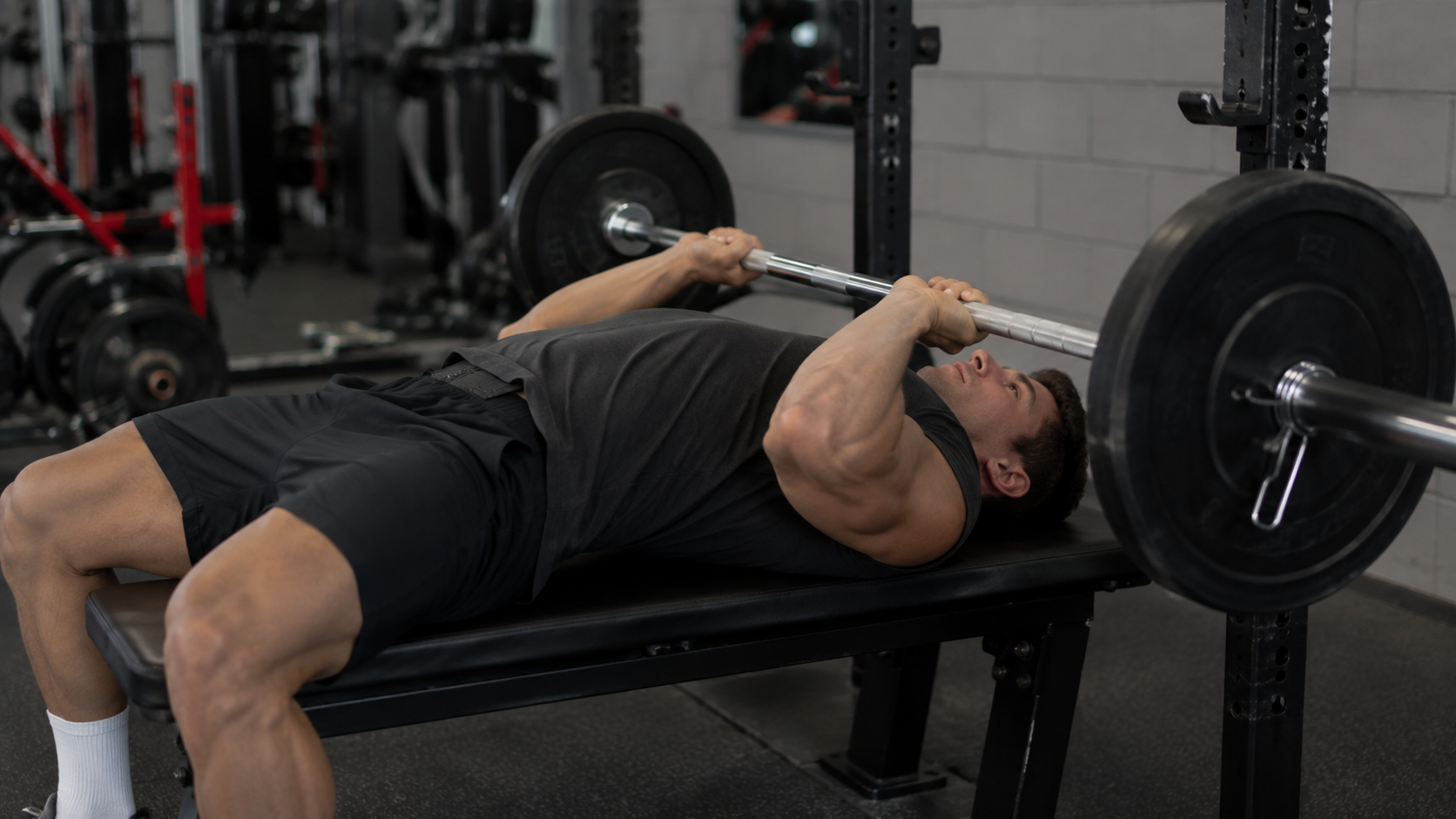
Barbell Jm Bench Press: the movement, step by step
- Lie flat on a bench with your feet flat on the ground and your back pressed against the bench.
- Grasp the barbell with an overhand grip, slightly wider than shoulder-width apart.
- Lower the barbell to your chest, keeping your elbows tucked in close to your body.
- Push the barbell back up to the starting position, fully extending your arms.
- Repeat for the desired number of repetitions.
Common questions
Which muscles do the barbell JM bench press work most?
The triceps do most of the work here, with the chest and shoulders helping through the press.
How does elbow position change the emphasis?
Keeping the elbows tucked keeps the stress centered on elbow extension and the upper arms. If the elbows flare, the shoulders take over more and the triceps lose some of that emphasis.
Where do the chest and shoulders fit in?
The chest is still one of the primary muscles, working with the triceps and shoulders through the press. The shoulders support the lift, but they are not the main drivers.
The hardest part of fixing any of this is that you cannot see yourself mid-rep. Corect reads your form from a phone video and shows you what actually happened on each rep of your barbell jm bench press — depth, bar path, where the breakdown starts. Try it free.