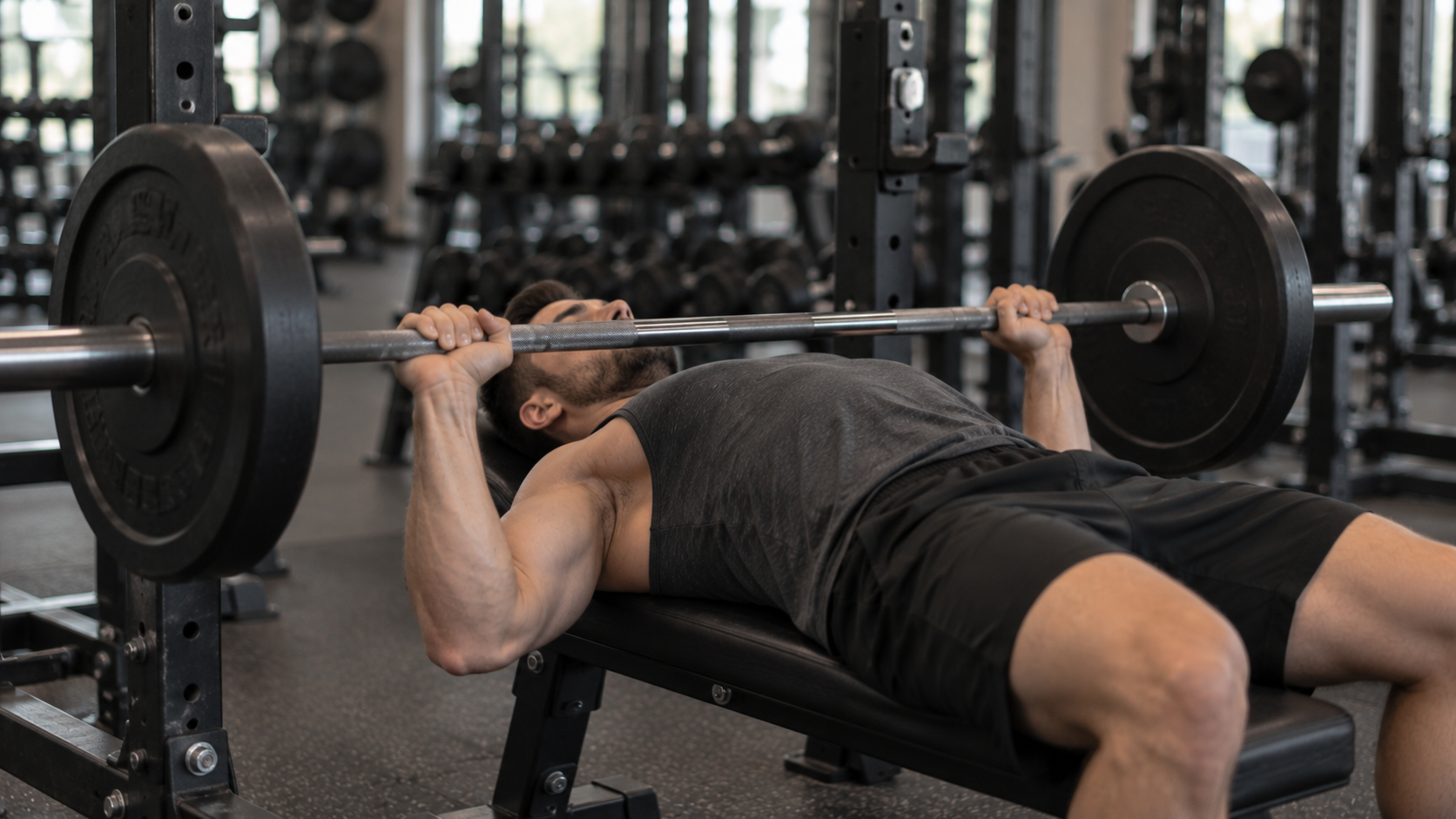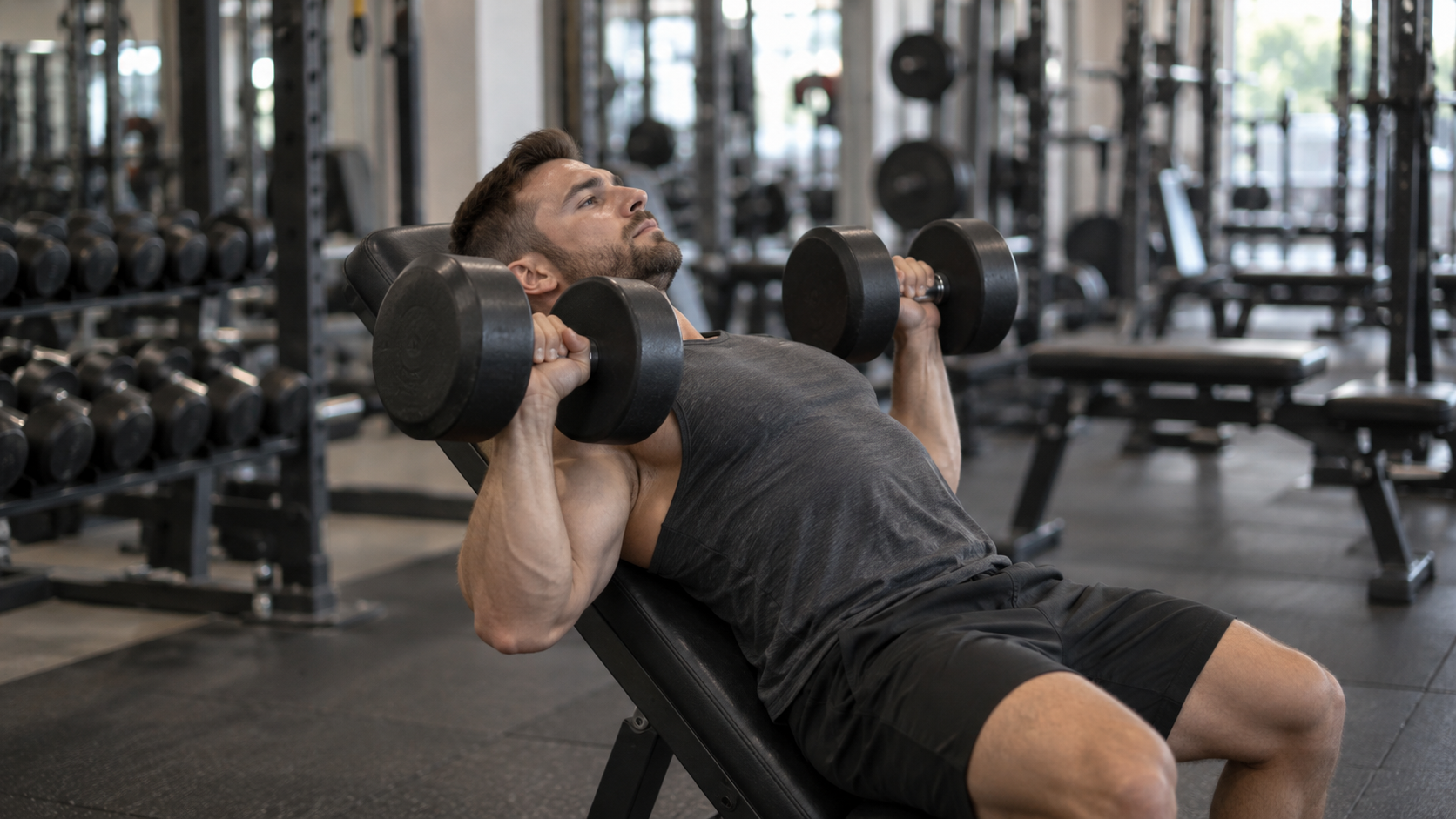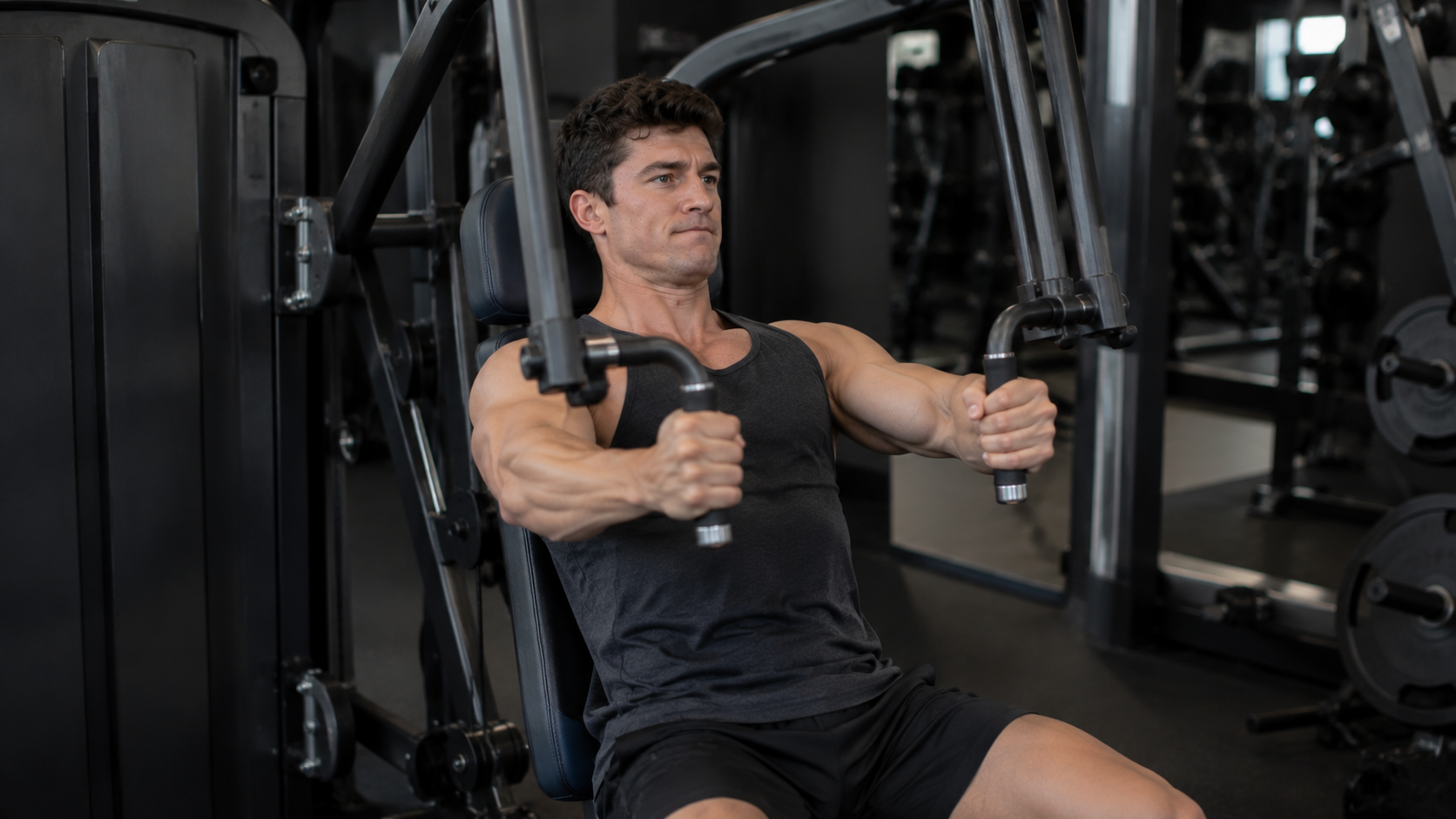
The pectorals do most of the work here, with the deltoids and triceps helping through the rep. On the floor, the chest is still the main driver, while the shoulders and triceps assist as you lower and bring the bar back up.
Why the floor changes the load
The floor cuts off the deepest part of the lowering phase, so the stretch stops sooner and the rep stays tighter through the middle. The chest still does the main work, with the deltoids and triceps helping as you lower slowly, pause, and press the bar back up under control.
What the rep should feel like
You should feel the pectorals doing the main work, with the deltoids and triceps assisting. The chest stretch is strongest near the bottom, then the brief pause keeps the rep still before the chest squeezes the bar back to the start.
Where people shift the work into the shoulders
If the chest stops leading the rep, the Deltoids and Triceps take over. The Pectorals are still the main work, but once the front of the shoulder starts carrying the load, the movement shifts away from the chest.
A rep that stays in the chest feels like the Pectorals doing the squeeze and the arms just following through. When the shoulders or triceps start to dominate, the chest no longer gets the same share of the work.
What to check on video
On video, look for the same shape every rep: the bar moves in a smooth arc, the elbows keep a slight bend, and the hands stay overhand as the bar lowers and returns. The shoulders should stay set, not roll forward at the bottom.
How to make the chest do more of the work
Pectorals do most of the work here, with the deltoids and triceps assisting.
To shift more of the effort to the chest, keep the lowering phase controlled and finish each rep by squeezing the chest to bring the bar back up; don’t let the shoulders or elbows take over the return.
Who this movement is for
Use it in a chest session when you want a floor-based barbell fly that keeps the range tight and the chest loaded without the deepest bottom position. The floor changes the feel by stopping the bar early, so the rep stays controlled and the shoulders never get that full open stretch.
Floor Fly (with Barbell): the movement, step by step
- Lie flat on your back on the floor with your knees bent and feet flat on the ground.
- Hold a barbell with an overhand grip, arms extended straight up over your chest.
- Slowly lower the barbell out to the sides, keeping a slight bend in your elbows.
- Lower the barbell until your arms are parallel to the floor, feeling a stretch in your chest.
- Pause for a moment, then squeeze your chest muscles to bring the barbell back to the starting position.
- Repeat for the desired number of repetitions.
Common questions
What muscles do the floor fly with barbell work?
The pectorals do most of the work here, with the deltoids and triceps helping through the rep. The chest is still the main driver on the floor.
Why does the floor change the load?
The floor cuts off the deepest part of the lowering phase, so the stretch stops sooner and the rep stays tighter through the middle.
What should the rep feel like?
You should feel the pectorals doing the main work, with the deltoids and triceps assisting. The chest stretch is strongest near the bottom, then the brief pause keeps the rep still before the chest squeezes the bar back to the start.
How can I make the chest do more of the work?
Keep the lowering phase controlled and finish each rep by squeezing the chest to bring the bar back up. Don’t let the shoulders or elbows take over the return.
The hardest part of fixing any of this is that you cannot see yourself mid-rep. Corect reads your form from a phone video and shows you what actually happened on each rep of your floor fly (with barbell) — depth, bar path, where the breakdown starts. Try it free.