Chest, triceps, shoulders, and core are the main movers in a push-up. The triceps, deltoids, and core also work as support muscles.
Why the load shifts with your setup
Hand width and body position change where the effort lands, but the rep should still feel centered through your chest, triceps, shoulders, and core.
A slightly wider hand position usually lets the chest do more. A narrower setup asks more of the triceps and shoulders. If your hips sag or your body line breaks, the core drops out and the rep gets sloppy.
Chest, triceps, shoulders, and core: what each one does
Chest starts the press, triceps finish the elbows, shoulders keep the path steady, and core stops the body from breaking shape. When any one of them drops out, the rep gets sloppy fast.
What clean reps look like
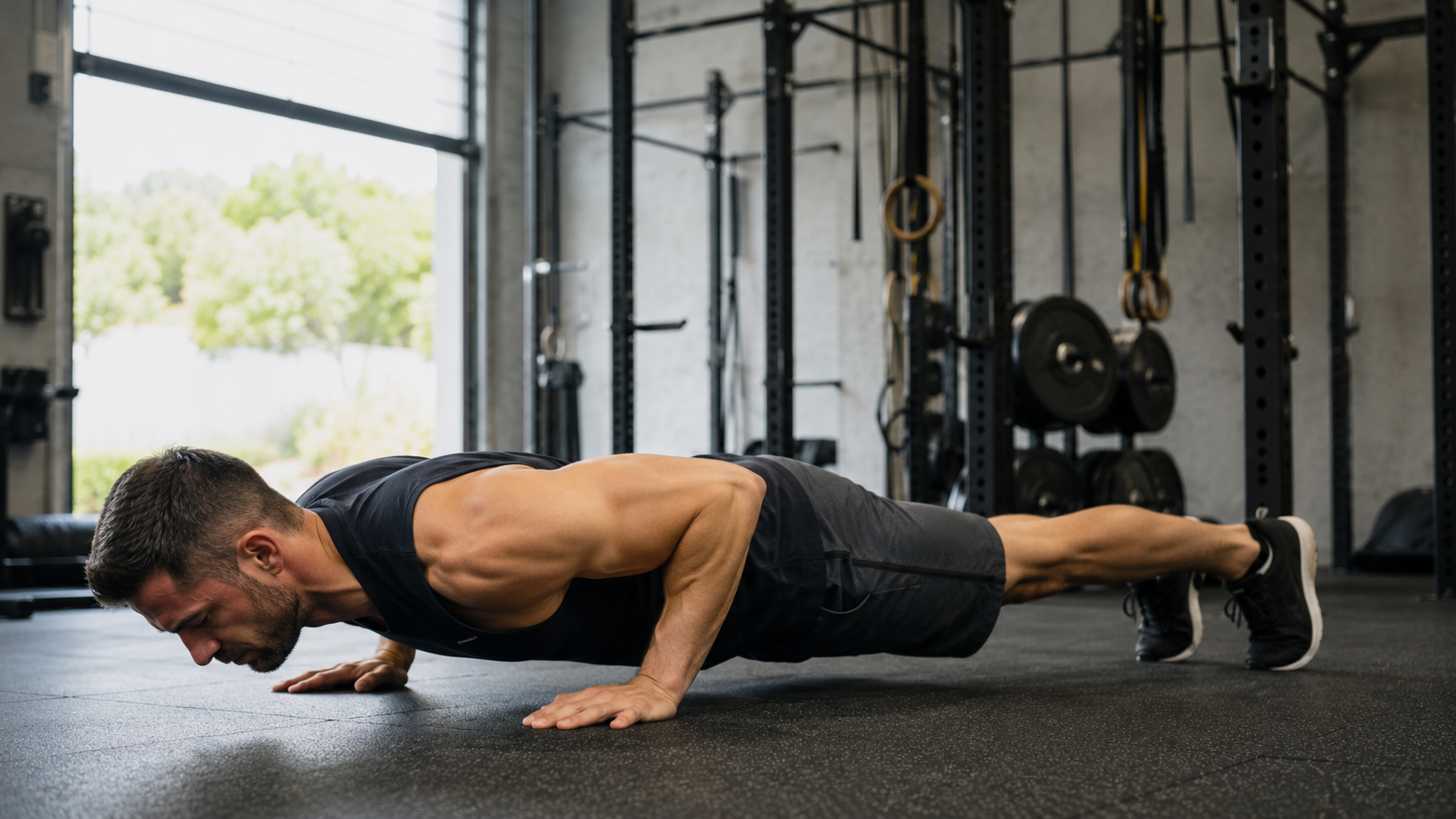
Clean reps keep the chest, triceps, shoulders, and core doing the work together. At the bottom, the pause should still feel controlled, with the chest and shoulders loaded instead of the rep collapsing into the floor.
What changes when form breaks down
Sagging hips or a loose core shift the effort out of the chest and make the shoulders and triceps do more of the work to hold the body in line. A deeper rep, with the chest close to the floor, loads the muscles through a fuller range of motion. Short reps cut that demand and change what gets emphasized.
How Corect judges the rep from video
Push-ups train the chest, triceps, shoulders, and core. From phone video, Corect can analyze the movement and score its form by checking whether the body stays in a straight line, the elbows bend as you lower, and the chest comes close to the ground before you press back up.
Common questions about muscle emphasis
Yes: it is mainly chest, triceps, shoulders, and core work, with the core helping keep the body rigid throughout the rep.
If the movement feels chest-heavy or triceps-heavy, that usually comes down to how well you keep a straight line and control the lowering phase.
Push-Up: the movement, step by step
- Start in a high plank position with your hands slightly wider than shoulder-width apart and your feet together.
- Engage your core and lower your body towards the ground by bending your elbows, keeping your body in a straight line.
- Pause for a moment when your chest is just above the ground, then push yourself back up to the starting position by straightening your arms.
- Repeat for the desired number of repetitions.
Common questions
What muscles do push-ups work most?
Push-ups train the chest, triceps, shoulders, and core. The triceps, deltoids, and core also work as support muscles.
How does hand position change a push-up?
A slightly wider hand position usually lets the chest do more. A narrower setup asks more of the triceps and shoulders.
What happens when push-up form breaks down?
Sagging hips or a loose core shift the effort out of the chest and make the shoulders and triceps do more of the work to hold the body in line.
How does Corect judge a push-up from video?
Corect checks whether the body stays in a straight line, the elbows bend as you lower, and the chest comes close to the ground before you press back up.
The hardest part of fixing any of this is that you cannot see yourself mid-rep. Corect reads your form from a phone video and shows you what actually happened on each rep of your push-up — depth, bar path, where the breakdown starts. Try it free.