The step-up mainly works your quadriceps and glutes. Your hamstrings and calves assist as you rise onto the step and control the way back down.
Your lead foot decides where the rep goes. If the whole foot is planted and you push through the heel, the working leg has to drive the lift instead of letting the back leg bounce you up. If the heel lifts or the foot is only partly on the step, you lose a clean push from the quadriceps and glutes.
The top of the rep matters too. Straightening the working leg is where the quadriceps and glutes finish the job. If you step up but never stand fully tall, you cut that work short.
On the descent, control keeps the work on the lead leg. Dropping quickly turns the rep into a fall that the hamstrings and calves have to catch instead of a smooth lower from the upper leg.
Why the load shifts with form
The step-up mainly trains your quadriceps and glutes, with your hamstrings and calves assisting.
Your lead foot sets the rep before you move. Plant the whole foot on the bench or step; if your heel hangs off or only the front of the foot is secure, the working leg has less stable contact and the rep turns into a reach instead of a push.
Drive through the heel as the working leg straightens. If you push off the floor with the back leg, the quadriceps and glutes on the lead side do less of the climb.
Stand fully upright at the top. If the working leg stays bent, the quadriceps and glutes never finish the push. Step down under control so the working leg still manages the return instead of dropping through it.
What each phase does
The step-up mainly trains your quadriceps and glutes, with the hamstrings and calves assisting as you climb and lower.
On the way up, the lead foot has to be fully planted before you drive. If only the toes or outside edge are loaded, the rep turns into a push from the floor leg instead of a climb from the working leg. Drive through the heel, straighten the working leg, and stand fully upright before the other foot joins it.
Your quads take more of the work as the lead knee straightens. Your glutes take more of the work when the lead leg starts from a deeper bend. The hamstrings and calves assist the climb, but they should not be the muscles saving the rep.
On the way down, the same leg has to lower you instead of letting you drop. A controlled descent keeps the quads and glutes loaded longer. If you fall off the step, rush the foot back to the floor, or skip full lockout at the top, the rep stops matching the muscle list.
What good reps look like on video
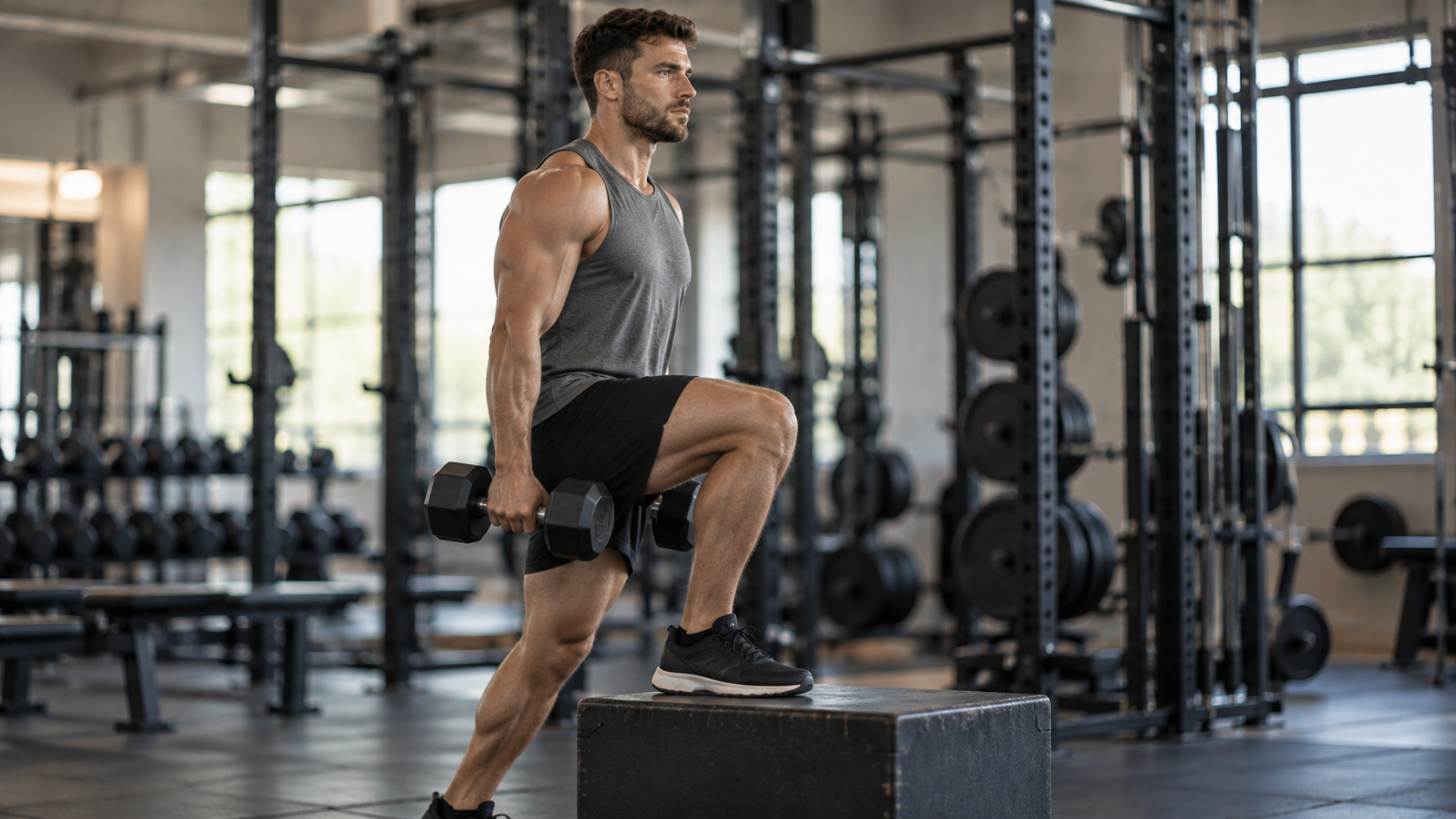
Good reps show your whole lead foot on the step, pressure staying through the lead heel, and the lead knee and hip extending until the working leg is straight. That is where the quadriceps and glutes do the main work, with the hamstrings and calves assisting instead of taking over.
Corect can flag the breakdowns that change the load: the lead foot hanging off the edge, the heel lifting as you push, the back leg giving you a jump, or the descent dropping instead of staying controlled. A higher step only shifts more work into the upper legs if you stay upright, keep the lead foot planted, and finish the rep by standing through the working side.
Common breakdowns that change the target muscles
Quadriceps and glutes do most of the work, with hamstrings and calves assisting. If your whole lead foot is not on the bench or step before you push, the rep starts from a small, unstable base instead of loading cleanly through the lead thigh and hip.
Weak heel drive shifts the ascent away from the working leg. You start to rise, but the push does not stay anchored through the lead foot, so the quadriceps and glutes do less of the job of lifting you onto the step.
If the working leg does not straighten at the top, the rep ends before the quadriceps and glutes finish their work. You reach the bench, but you never fully stand up on the lead leg.
A rushed step-down changes the rep on the way back down. If you drop instead of lowering under control, your upper legs spend less time controlling the descent, and the video shows a fall back to the floor rather than a clean return.
Step-up vs other lower-body patterns
The step-up mainly trains your quadriceps and glutes, with your hamstrings and calves helping as you climb and lower.
Compared with a regular two-leg lower-body pattern, it exposes whether one lead leg can actually do the work. Your whole lead foot needs to stay on the bench or step, then you need to drive through the heel and straighten that working leg at the top. If your back leg kicks you upward, the quadriceps and glutes on the lead side get less of the rep.
The descent shows the same thing in reverse. If you step down under control, the lead-side quadriceps and glutes keep working as you return to the floor. If you drop off the bench, the rep ends early and the load disappears instead of being controlled.
When the movement belongs in your training
The step-up mainly trains your quadriceps and glutes, with your hamstrings and calves assisting as you rise onto the bench and control the step back down.
It fits well at home or in the gym when you want upper-leg work without putting a bar on your back. The exercise only stays focused on the working leg if your lead foot is fully planted, you push through the heel, and that leg actually straightens at the top.
If you push off hard from the floor leg, land on the front of the lead foot, or drop back down without control, the load shifts away from the quadriceps and glutes you are trying to train. Corect can flag those breakdowns from your video so you can see whether each rep is being driven by the lead leg or borrowed from momentum.
Step-Up: the movement, step by step
- Stand in front of a bench or step with a dumbbell in each hand, palms facing your body.
- Place your right foot on the bench or step, ensuring your entire foot is in contact with the surface.
- Push through your right heel and lift your body up onto the bench or step, straightening your right leg.
- Bring your left foot up onto the bench or step, standing fully upright.
- Step back down with your left foot, followed by your right foot, returning to the starting position.
- Repeat for the desired number of repetitions, then switch legs.
Common questions
What muscles does the step-up work most?
The step-up mainly works the quadriceps and glutes. The hamstrings and calves assist, but the upper legs take most of the load.
How does foot placement change a step-up?
Keep the whole foot planted and drive through the heel so the rep stays clean. If the heel lifts or the foot feels unstable, the effort leaks and the rep gets harder to control.
What part of the step-up does the real work?
The ascent does the work, because one leg has to raise you onto the step. The descent should stay controlled so the upper legs keep taking the load.
Is the step-up more knee-dominant or hip-dominant?
It fits a knee-dominant upper-leg pattern more than a hip-dominant one. The quadriceps and glutes do most of the work, with the hamstrings and calves assisting.
The hardest part of fixing any of this is that you cannot see yourself mid-rep. Corect reads your form from a phone video and shows you what actually happened on each rep of your step-up — depth, bar path, where the breakdown starts. Try it free.