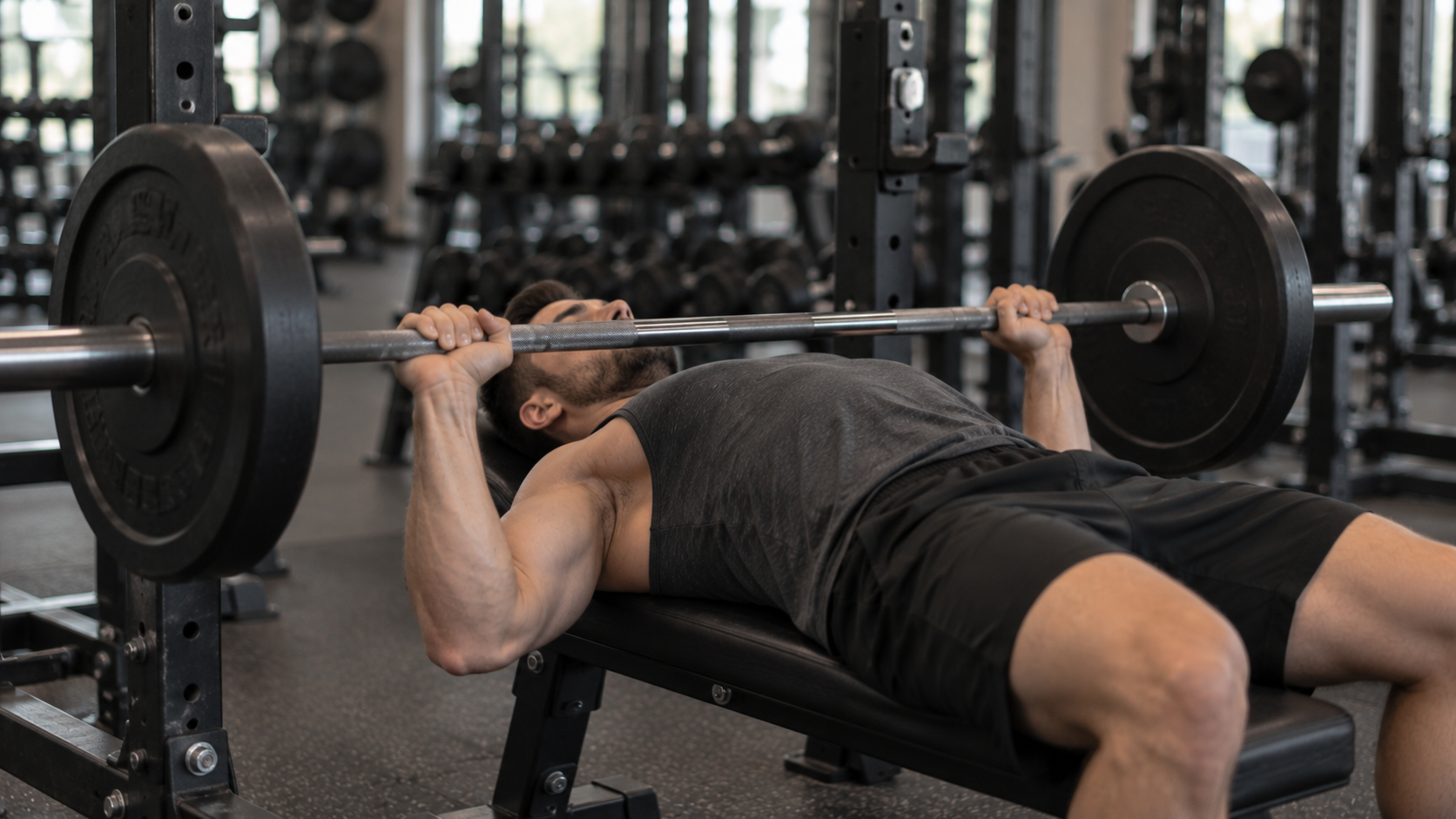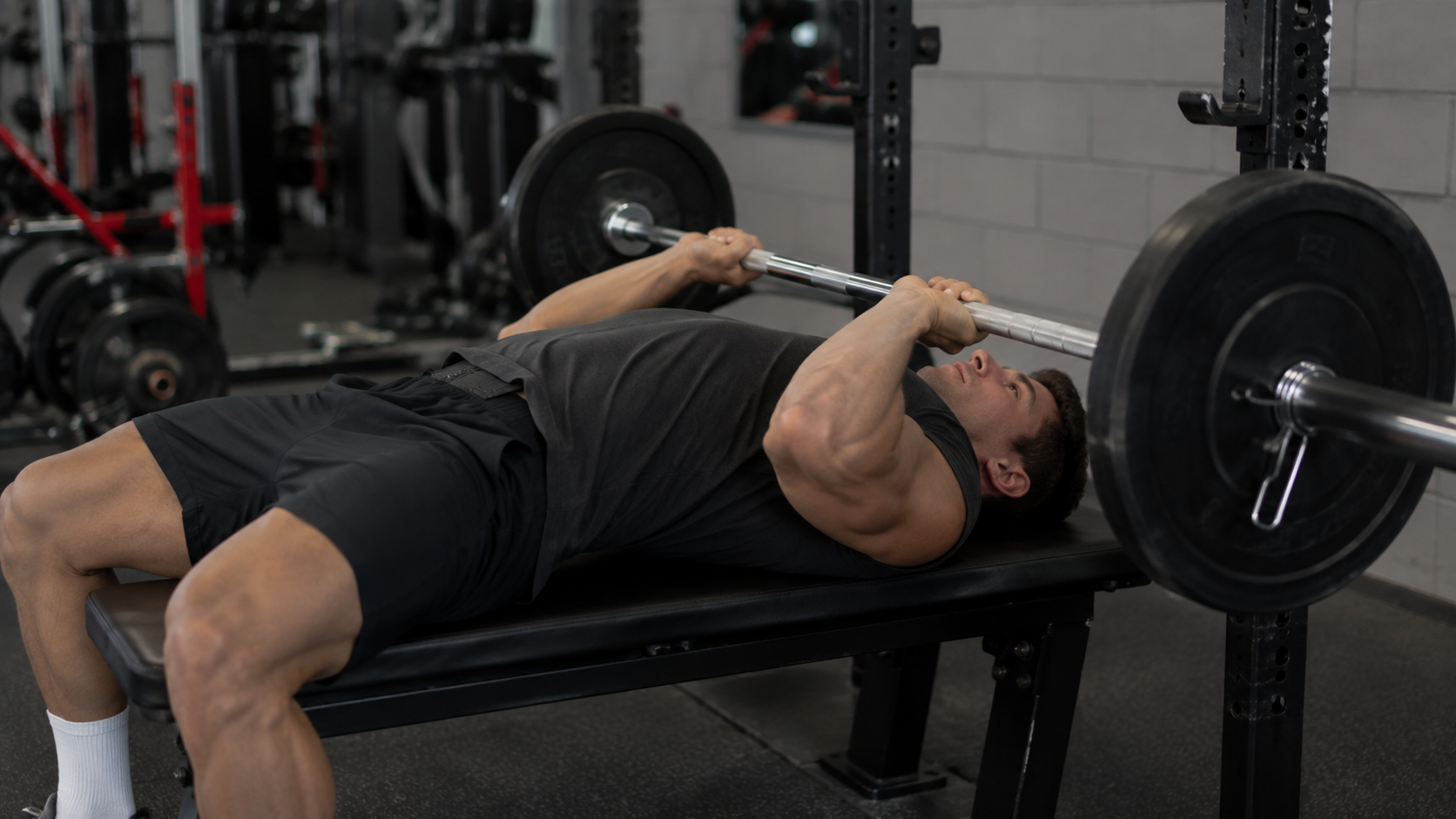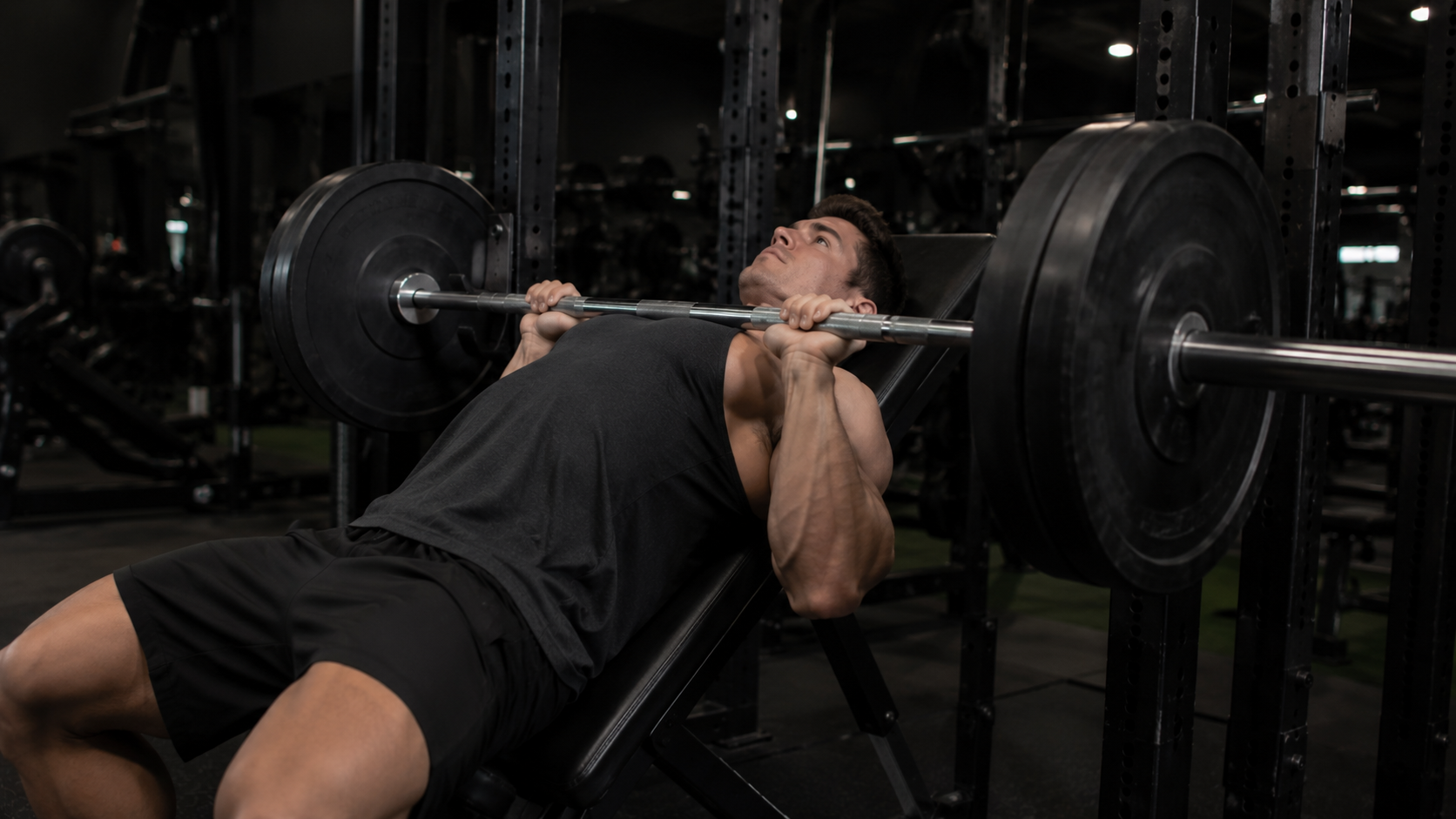
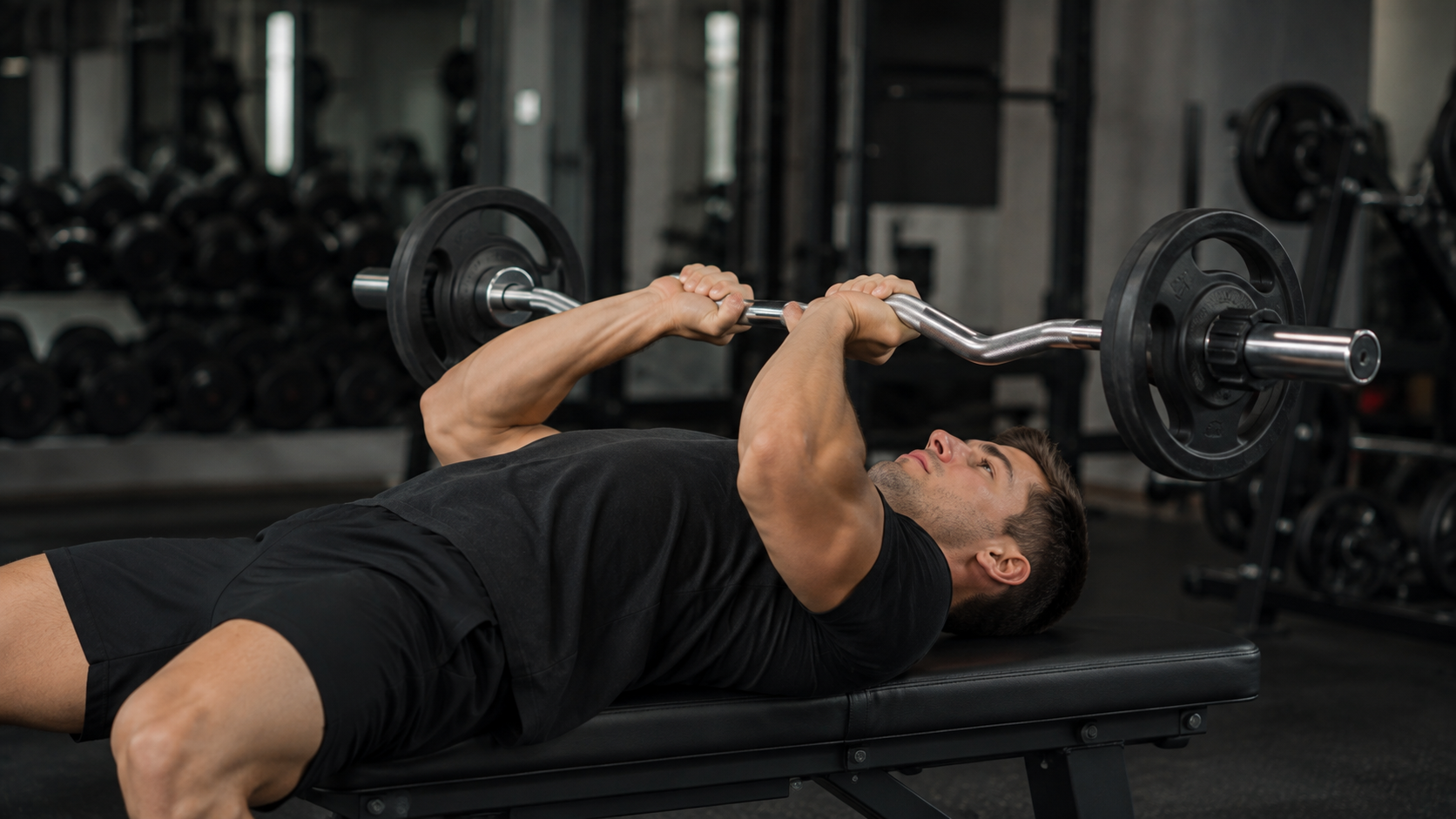
This lift mainly works the triceps, with the chest and shoulders also involved. It is focused on the upper arms, and Corect can score the movement from a phone video.
Why the elbow position changes the feel
Tucking your elbows keeps the work more on the upper arms, so the triceps do more of the extending while the chest and shoulders stay involved but do less of the work. That tighter line is why the rep feels more triceps-led than a wider press.
What the bar path tells you
The bar should lower to the chest under control, touch cleanly, and come back up on a direct line to the start. If the path stays tidy, the load lands where you want it instead of wandering forward or bouncing off the chest.
How the setup affects muscle emphasis
A slightly wider-than-shoulder-width overhand grip, feet flat, and your back pressed into the bench set the position for the rep.
With your elbows tucked as you lower the bar to your chest and drive it back to full arm extension, the triceps, chest, and shoulders all stay involved.
Which muscles do what through the rep
The triceps, chest, and shoulders all contribute through the rep, with the triceps and upper arms doing more of the visible work as the elbows stay tucked.
On the way down, you lower the bar to your chest under control. At the bottom, the tucked elbow position keeps the load close. As you press back up and fully extend your arms, the triceps, chest, and shoulders drive the bar to the start.
How this compares with a standard bench press
It is more triceps-dominant than a standard bench press, but the main point is the stress shift happens through the upper arms and elbow extension rather than a big change in the chest or shoulders being involved. The close elbow position and bar path make that emphasis feel tighter and more concentrated through the arms.
What a clean rep looks like on video
This variation keeps the triceps doing most of the work, with the chest and shoulders assisting.
If the movement feels wrong
If this movement feels wrong, check whether the work is still staying on the triceps, chest, and shoulders. If the elbows start drifting out or the bar path changes, the emphasis shifts away from the intended press.
Ez Barbell Jm Bench Press: the movement, step by step
- Lie flat on a bench with your feet flat on the ground and your back pressed against the bench.
- Grasp the ez barbell with an overhand grip, slightly wider than shoulder-width apart.
- Lower the barbell to your chest, keeping your elbows tucked in close to your body.
- Push the barbell back up to the starting position, fully extending your arms.
- Repeat for the desired number of repetitions.
Common questions
Which muscles does the EZ barbell JM bench press work most?
It mainly works the triceps, with the chest and shoulders also involved. The upper arms do more of the visible work as the elbows stay tucked.
Why does elbow position change how the rep feels?
Tucking your elbows keeps the work more on the upper arms, so the triceps do more of the extending while the chest and shoulders stay involved but do less of the work.
What should the bar path look like?
The bar should lower to the chest under control, touch cleanly, and come back up on a direct line to the start. A tidy path keeps the load where you want it.
How does this compare with a standard bench press?
It is more triceps-dominant than a standard bench press, but the chest and shoulders are still involved. The emphasis shifts through the upper arms and elbow extension.
The hardest part of fixing any of this is that you cannot see yourself mid-rep. Corect reads your form from a phone video and shows you what actually happened on each rep of your ez barbell jm bench press — depth, bar path, where the breakdown starts. Try it free.