The hardest part of self-coaching is that you cannot see yourself mid-rep, so you have to catch the breakdown from the setup, the path, and the finish on video. The main misses are the bells drifting off the shoulder path, one side finishing before the other, the elbows flaring early, the descent getting rushed, and the torso doing the work instead of the press.
If the dumbbells drift forward instead of staying stacked over the shoulders, the press path has gone off. That usually shows up when you lose the overhead line on the way up or start from a position that is already out of position on the bench. It costs you range of motion and makes the rep longer than it should be. On video, the clearest sign is the bells arcing away from the shoulders instead of going straight overhead; in your hands, it feels like you are chasing the weight instead of driving it.
If one side reaches lockout before the other, or one elbow stays bent at the top, the rep is uneven. That usually comes from uneven shoulder control or a torso that shifts to help one bell up first. It costs you a clean finish and leaves the stronger side doing more of the work. Check the top of the rep on film: both arms should finish in the same overhead position before you lower.
If the elbows flare early on the way up, the press stops using a clean shoulder path and turns into a wider, less direct drive. That often happens when the lifter loses stack in the wrists and elbows or tries to force the bells up around the head. It costs you control through the hardest part of the rep and can make the triceps work harder than they need to. You should feel the bells moving up from shoulder height, not fanning out as they leave the shoulders.
If you drop the bells too fast on the way down, you lose control of the range and miss the bottom position where the next rep starts. That usually happens when the lifter is chasing reps instead of controlling shoulder flexion and extension through the full path. It costs you tension and makes the next press messier. On video, the descent should look smooth all the way back to shoulder height, not like the bells fall into the bottom.
If your torso leans back or ribs flare hard to finish the rep, the press is turning into a body English move instead of a strict overhead press. That usually comes from weak bracing or from trying to steal range when the shoulders are tired. It costs you upper-body control and changes the line of the rep. What you can check without a coach is simple: if the chest pops up, the lower back arches more, or the bells stop tracking over the shoulders, the torso is helping too much.
Pressing out of position
If the dumbbells start below shoulder height, the press is already out of position. On video, you will see them travel forward or out wide instead of stacking over the shoulders, and one side may finish higher than the other. That usually comes from poor bench setup, weak upper-back support, or losing the shoulder path as you press; it costs you clean overhead motion, makes the triceps and shoulders work around a longer path, and turns the rep into a grind. Set the weights at shoulder height with the wrists stacked, brace your torso, and press straight up until both arms finish evenly overhead.
Lockout and top-position errors
Incomplete lockout is easy to miss on the rep itself. From the side, one dumbbell stops short while the other finishes higher, or the weights never settle into a true overhead line over the shoulders. If you are pressing from a weak brace or an awkward bench setup, the torso starts helping before the arms finish the job, and the top of the rep turns into a shrug rather than a clean press.
It costs you range of motion, triceps finish, and a stable overhead position. On video, the giveaway is soft elbows, wrists not stacked under the dumbbells, or no clear pause before the descent starts. The fix is simple: keep the torso tight, press until both arms are fully extended overhead, and hold the top long enough to see the dumbbells steady before lowering under control.
The lowering phase is where control disappears
The descent shows the rep when the dumbbells drop faster than you can control or finish below shoulder height. On video, each bell should come back down the same overhead pressing path, with your wrists stacked over your elbows and the dumbbells returning to shoulder height under control. If they drift forward, your torso arches to chase them, or you lose the top-to-bottom range, the next press starts from a bad position and the triceps and shoulders have to clean up the miss.
Fix it by bracing your torso, keeping the bench setup stable, and lowering slowly to shoulder height before the next rep.
Torso compensation that hides the real problem
If your torso turns the press into a lean-back and rib flare, the dumbbells are no longer moving straight up from shoulder height to full overhead lockout. On video, you will see the chest pop up, the ribs open, and the weights drift forward or back as you chase momentum instead of staying stacked over the shoulders and wrists.
This usually happens when the bench setup is loose, the brace gives out, or the shoulders run out of clean overhead range and the upper body starts helping. You feel it as a shove through the low back and upper back instead of a clean drive from the shoulders and triceps. It costs you control on the way up and makes the descent sloppier too.
Fix it by setting yourself on the bench before the first rep, bracing hard, and keeping the wrist stacked over the elbow as you press. If the line still breaks, shorten the range until you can keep the torso quiet and the dumbbells travel in a straight overhead path. Film the full rep to check that the ribs stay down and the press finishes overhead without turning into a backbend.
What a clean rep looks like on video
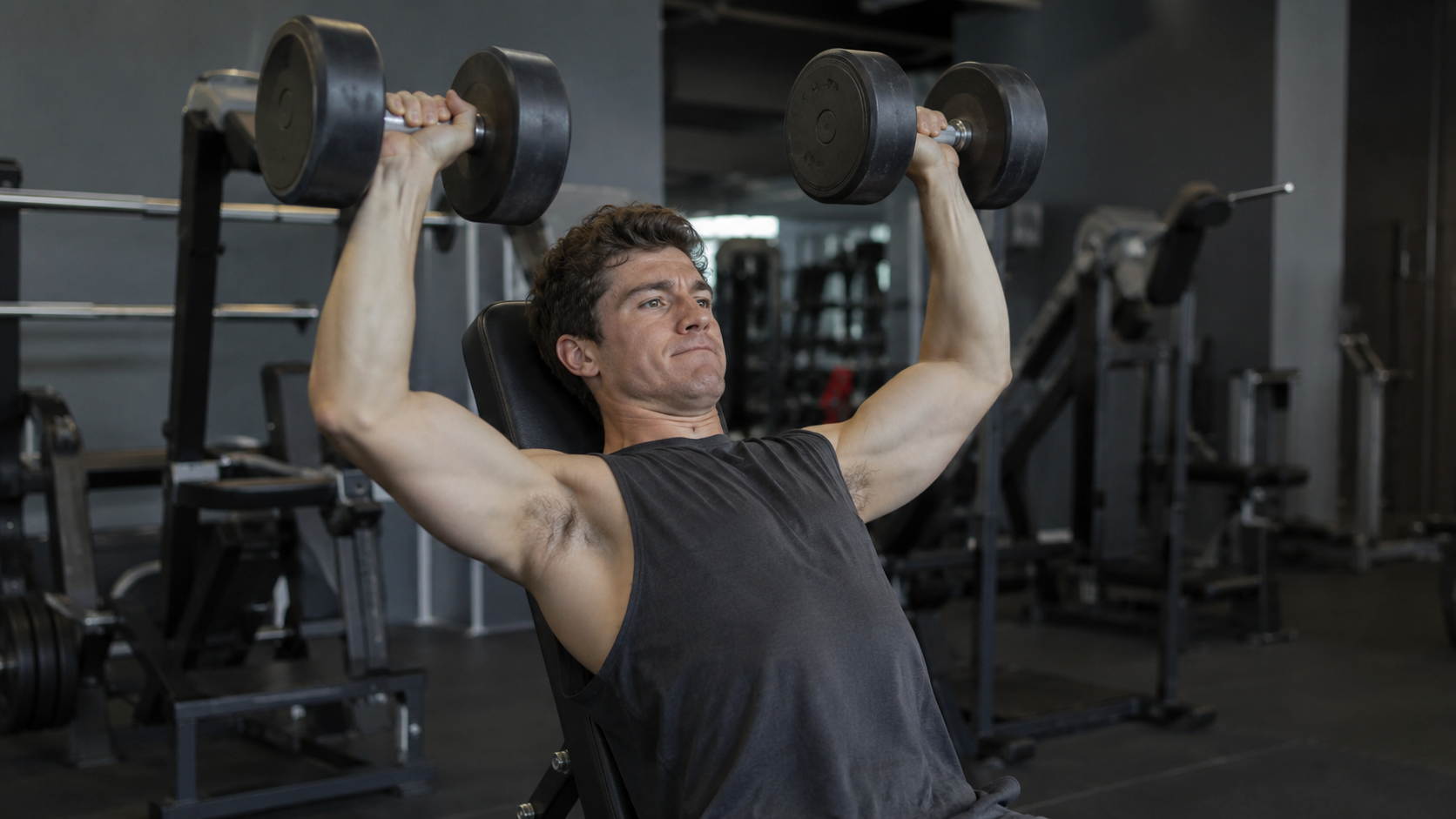
A clean rep is smooth and even from the seat to full lockout. You start with the dumbbells at shoulder height, wrists stacked over elbows, and the press travels straight overhead instead of drifting forward or out wide. At the top, both arms finish together, the elbows straighten, and the dumbbells sit over the shoulders without one side lagging.
On video, the path should look controlled on the way up and just as controlled on the way down. The torso stays braced, so you do not see a big lean back or a rib flare to steal range. The upper back stays quiet, the descent returns to shoulder height without a drop, and the whole rep moves through the full shoulder flexion and extension you can actually own without losing position.
How Corect reads this lift
Your dumbbells should travel from shoulder height to a clean overhead lockout, then come back under control. If they drift forward, finish unevenly, or lose control on the way down, the rep is off even if it feels fine.
The hard part is that you cannot see yourself mid-rep. Corect can score the lift from phone video and flag the exact rep where the path breaks, the wrists stop stacking over the elbows, one dumbbell finishes higher than the other, or the torso starts helping when the shoulders and triceps should be doing the work. That is what lets you catch the miss you only notice later in a filmed rep.
Dumbbell Shoulder Press: the movement, step by step
- Sit on a bench with a dumbbell in each hand, resting on your thighs.
- Raise the dumbbells to shoulder height, palms facing forward.
- Press the dumbbells upward until your arms are fully extended overhead.
- Pause for a moment at the top, then slowly lower the dumbbells back to shoulder height.
- Repeat for the desired number of repetitions.
Common questions
What are the most common dumbbell shoulder press mistakes?
The most common misses are the dumbbells drifting forward, one side finishing before the other, the elbows flaring early, and rushing the lower half of the rep before the dumbbells are back at shoulder height.
What should a clean dumbbell shoulder press look like on video?
A clean rep starts at shoulder height, rises on the same path without one dumbbell drifting forward or wide, finishes with both arms together, and comes back down with control to shoulder height.
How do I know if the press is off position?
If the dumbbells drop below shoulder height before you press, drift forward, or flare wide before lockout, the rep is off from the start.
What does torso compensation look like?
The torso may lean back and the ribs may flare, making the rep look like extra movement instead of a steady press from shoulder height to overhead.
The hardest part of fixing any of this is that you cannot see yourself mid-rep. Corect reads your form from a phone video and shows you what actually happened on each rep of your dumbbell shoulder press — depth, bar path, where the breakdown starts. Try it free.