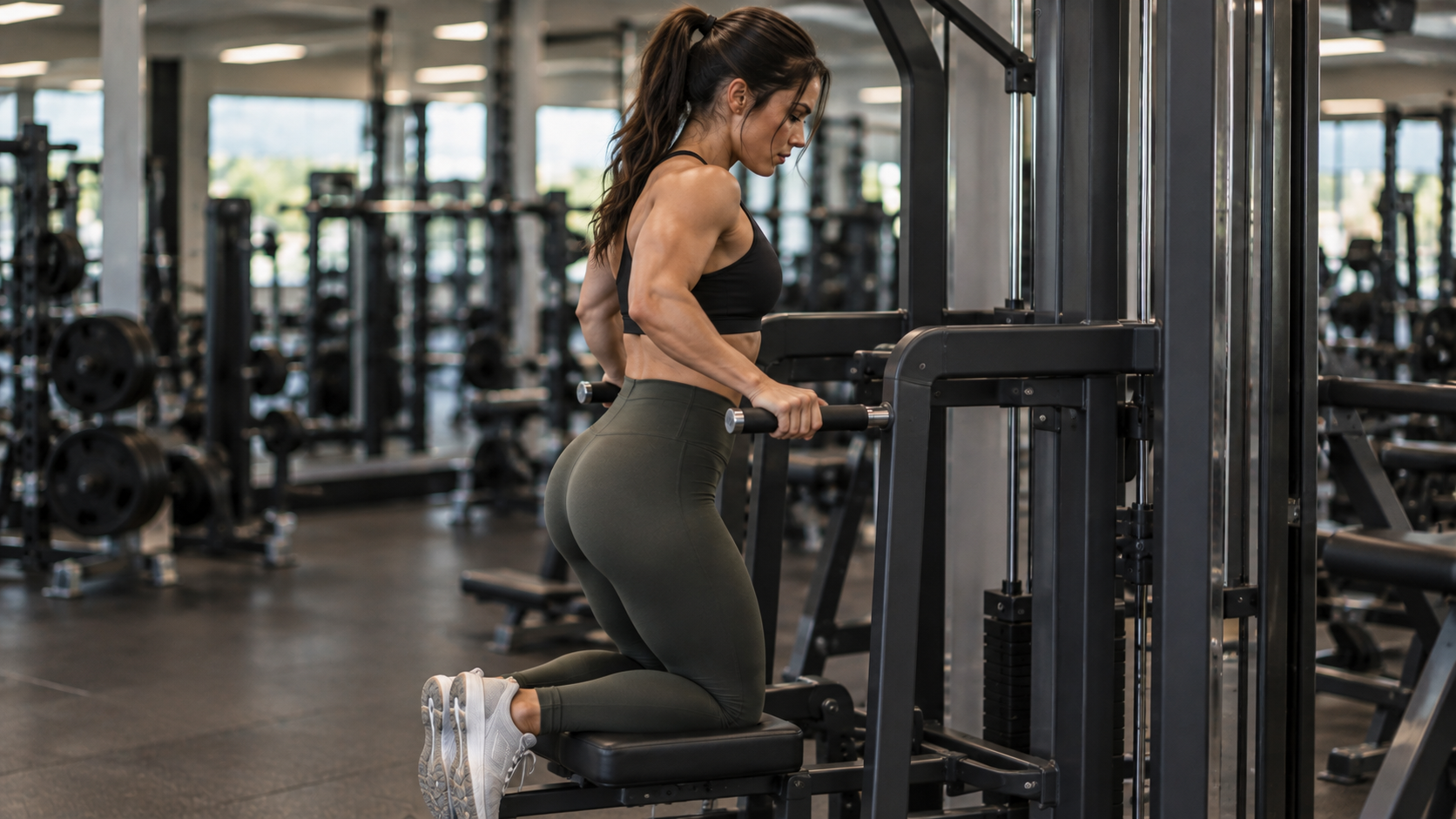
Set the machine to your weight and height, then kneel on the pad facing it and grip the handles. Lower your body by bending your elbows, keep your back straight and close to the machine, pause at the bottom, then push back to the starting position for your reps.
Set the machine before your first rep
Set the machine so the first rep starts in a clean groove, not in a scramble. Pick a weight that lets you move through the full elbow bend and extension without jerking the stack, then adjust the height so your kneeling setup lets you stay close to the machine with your torso steady.
The right start position feels locked in: your hands hold the handles without reaching, your upper arms can bend and straighten under control, and the pad leaves you balanced instead of tipping you forward. If the weight is too high, the rep will start with a shove instead of a smooth press. If the height is off, you will feel yourself fight the machine path before the elbows even get to work, and that usually turns the triceps work into more chest and shoulder involvement than you wanted.
Get into the kneeling position
Kneel on the pad facing the machine with your hands on the handles. Keep your back straight and stay close enough to the frame that the start feels fixed, not stretched out.
Lower under control
Lower with a clean bend at the elbows. Keep your upper arms close to the machine and the back straight; if the setup is off, you’ll see the torso drift back and the path open up instead of staying tight.
Stop the descent before control slips. A rushed rep turns the bottom soft and loose.
Pause at the bottom, then press up
Pause at the bottom, then drive up without losing control. The pause should settle the rep before the push starts.
From there, press back up on the same path you lowered on. If the drive turns jerky or shifts, the rep changes.
Common form errors
Your torso drifting away from the machine, your back losing its straight line, and the rep turning into a shoulder and chest push are the main mistakes to catch on video. The upper arms should stay close and the motion should stay compact.
A shallow descent and a half-finished return mean you are cutting the range short. The triceps never have to finish the rep.
A fast drop and rebound off the bottom are the other tell. You want a brief pause there, then a clean press back up.
How to check your reps on video
Film from the side and check for the same elbow path and the same pause at the bottom on each rep.
The useful check is consistency: a smooth descent, a brief still pause, and a clean press back up without the movement changing shape from rep to rep. If one rep looks rushed or the rebound changes, that set is no longer giving you a clean comparison.
Assisted triceps dip vs. related searches
Nearby searches like assisted chest dip kneeling usually point to the same machine pattern. Here, the focus stays on triceps-dominant execution.
Assisted Triceps Dip (kneeling): the movement, step by step
- Adjust the machine to your desired weight and height.
- Kneel down on the pad facing the machine, with your hands gripping the handles.
- Lower your body by bending your elbows, keeping your back straight and close to the machine.
- Pause for a moment at the bottom, then push yourself back up to the starting position.
- Repeat for the desired number of repetitions.
Common questions
How do you set up the kneeling assisted triceps dip?
Set the machine to your weight and height, then kneel on the pad facing it and grip the handles. The start position should feel locked in, with your hands not reaching and your torso steady.
What should the rep look like?
Lower by bending your elbows while keeping your back straight and staying close to the machine. Pause at the bottom, then press back up on the same path without getting jerky.
What are the main form errors to watch for?
Common mistakes are letting your torso drift away, losing your straight back, turning the rep into a chest and shoulder push, cutting the range short, or rebounding off the bottom.
How can you check your form on video?
Film from the side and look for the same elbow path and the same brief pause at the bottom on every rep. The useful check is consistency from descent to press.
The hardest part of fixing any of this is that you cannot see yourself mid-rep. Corect reads your form from a phone video and shows you what actually happened on each rep of your assisted triceps dip (kneeling) — depth, bar path, where the breakdown starts. Try it free.