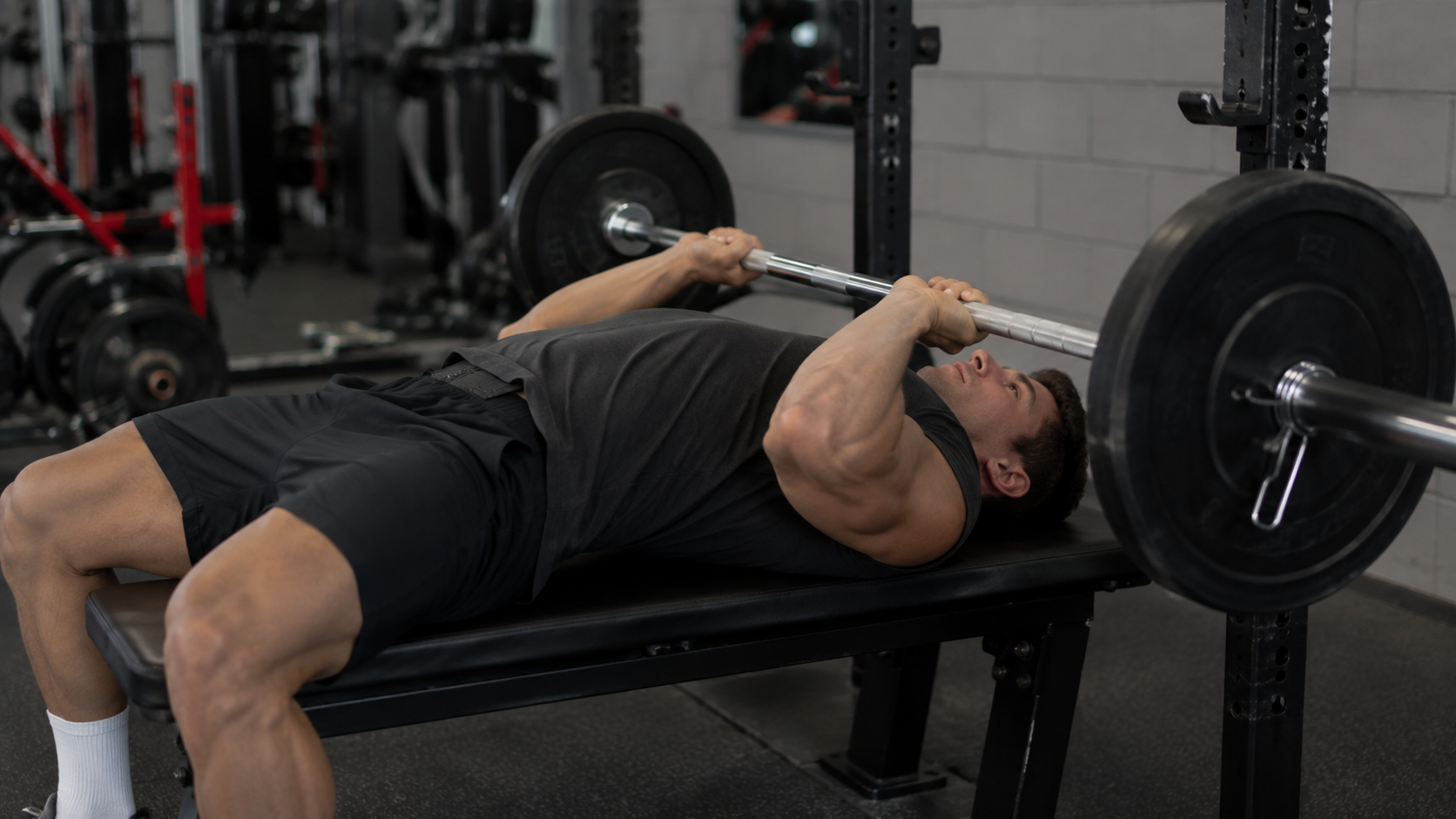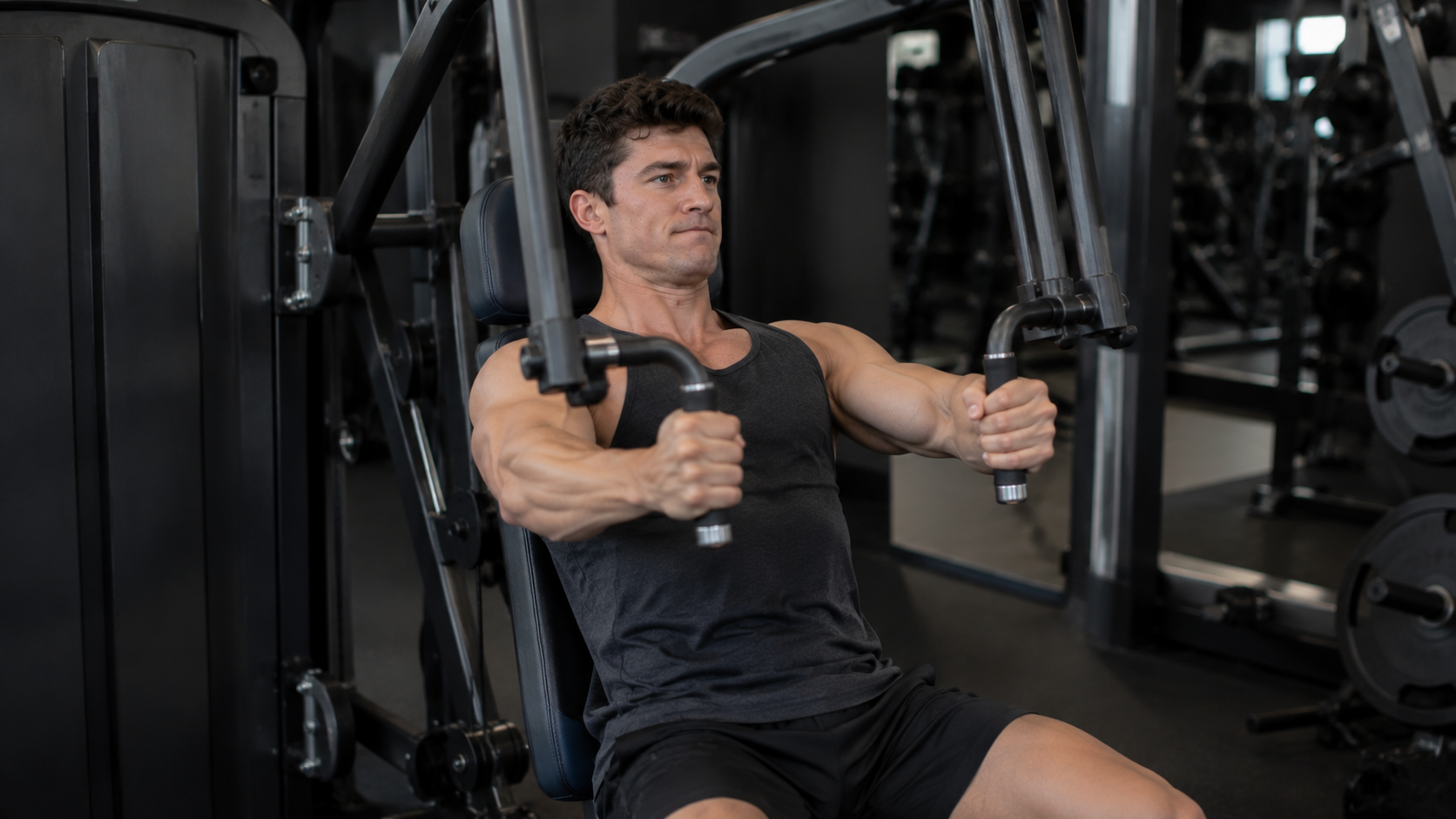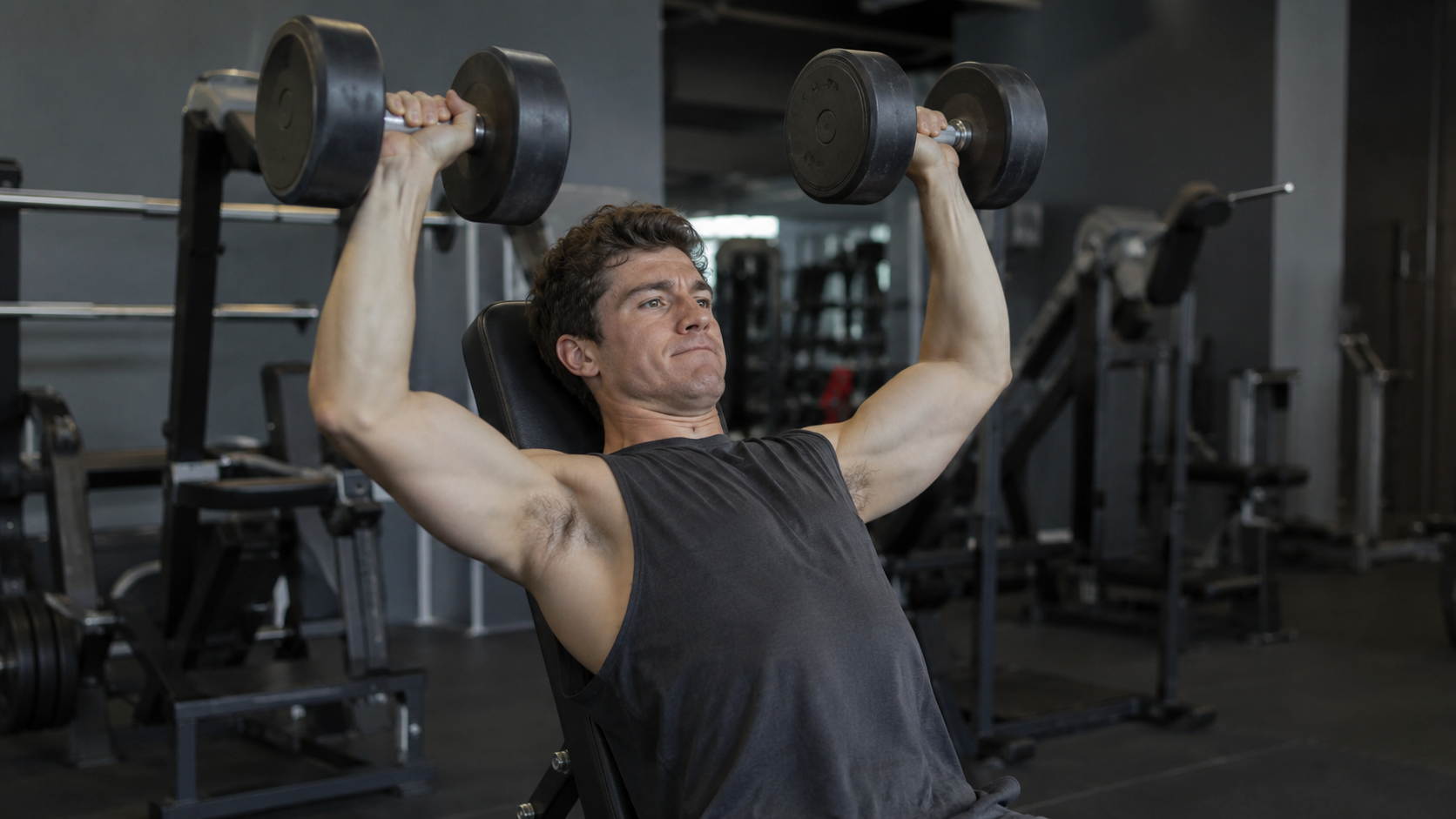
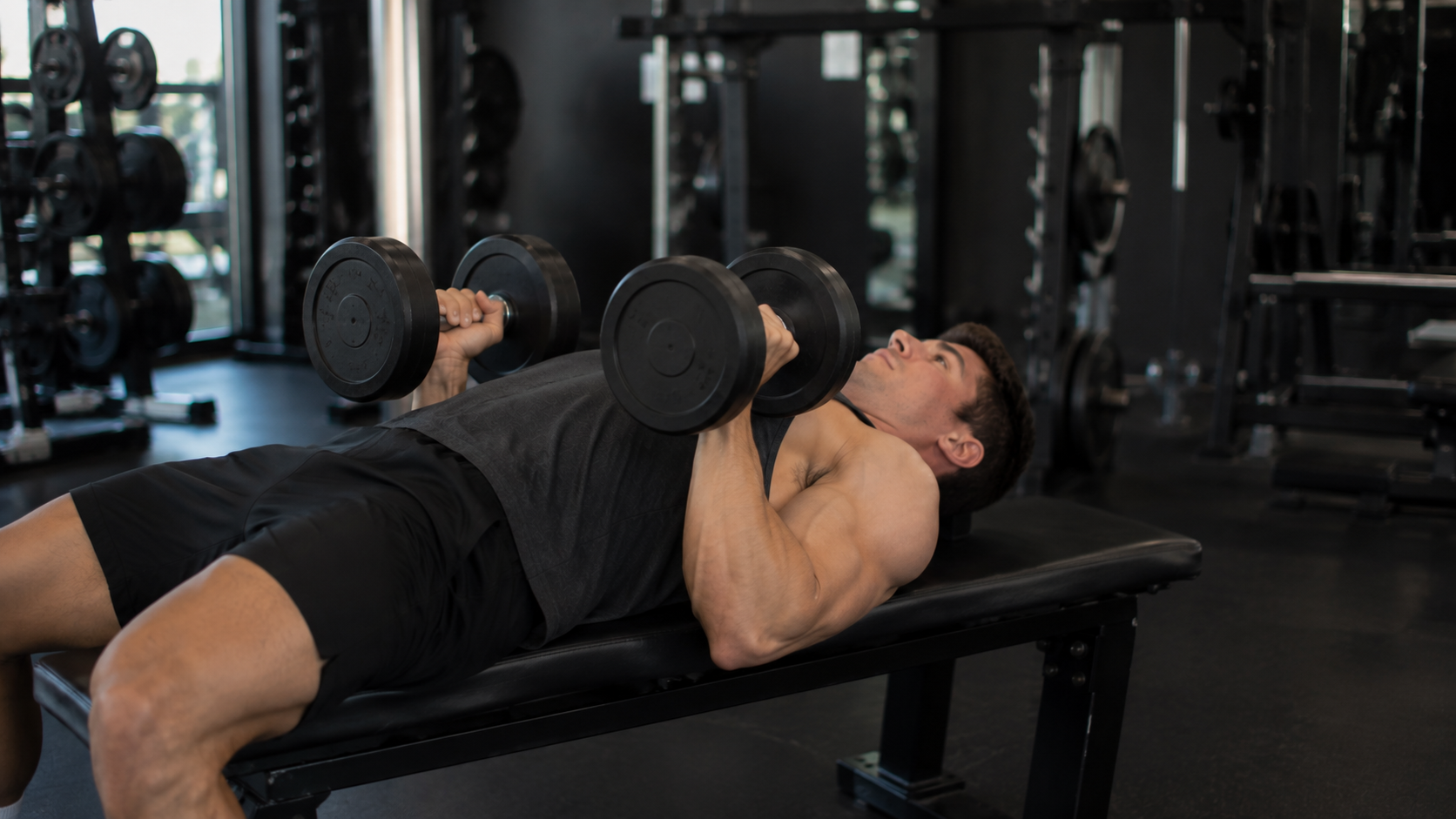
The triceps are the primary movers, and the shoulders assist, so this is an upper-arm press built to load the back of the arm first. As the dumbbells come up and the wrists rotate, the stress stays most direct on the triceps; if the elbows flare or the dumbbells drift, the shoulders take more of the work.
Why the loading lands there
Triceps do the main work here, with the shoulders assisting as the dumbbells move from shoulder height to full extension. The upper arms are the clear focus.
What you should feel in a good rep
The triceps do most of the work, with the shoulders helping as the dumbbells come up. A good rep keeps the load on elbow extension, not on a bigger press that shifts work into the shoulders.
When shoulders take over
The shoulders take over when the rep stops staying compact and the dumbbells wander off the same path from start to finish.
If the elbows flare wide, the wrist rotation comes late, or the dumbbells travel in a loose arc instead of moving cleanly up and back to shoulder height, the load shifts away from the triceps.
How this differs from other presses
This is not a chest-dominant bench press or a straight shoulder press. The work stays on the upper arms, with the triceps doing most of the rep and the shoulders assisting.
That is why the muscle answer is not the same as for those presses. It uses a dumbbell, and the focus stays on the triceps and shoulders through a controlled raise, press, and lower.
Who this is for
This fits lifters who want a triceps-first upper-arm press with some shoulder contribution, and it works well in both home and gym setups because all you need is a dumbbell and a flat bench. Use it when you want elbow extension to stay central in the rep, but you still want enough shoulder work to make the press feel different from a straight triceps isolation move.
It makes the most sense for people who can keep the dumbbell path tight and the wrist rotation clean. If the bells drift, the elbows flare, or you rotate late, the stress moves away from the triceps and the shoulders start doing more of the work. That is why this exercise is useful in video-based form checks: small changes in the rep show you exactly where the load is landing.
Use it for upper-arm work when you want a controlled pressing pattern without a long, complex setup.
Dumbbell Tate Press: the movement, step by step
- Sit on a flat bench with a dumbbell in each hand, palms facing each other.
- Raise the dumbbells to shoulder height, then rotate your wrists so that your palms are facing away from you.
- Press the dumbbells up until your arms are fully extended, then lower them back down to shoulder height.
- Rotate your wrists back to the starting position and repeat for the desired number of repetitions.
Common questions
What muscles does the dumbbell Tate press work?
The triceps are the primary movers, with the shoulders assisting. It is upper-arm training with a dumbbell, not a chest-dominant press.
When do the shoulders take over in the Tate press?
The shoulders take over when the rep stops staying compact and the dumbbells wander off the same path. Late wrist rotation, flared elbows, or a loose arc shift work away from the triceps.
How is the Tate press different from other presses?
It is not a chest-dominant bench press or a straight shoulder press. The work stays on the upper arms, with the triceps doing most of the rep and the shoulders assisting.
Corect analyses your lifting form from a phone video and shows you what changed rep to rep. See how it works.