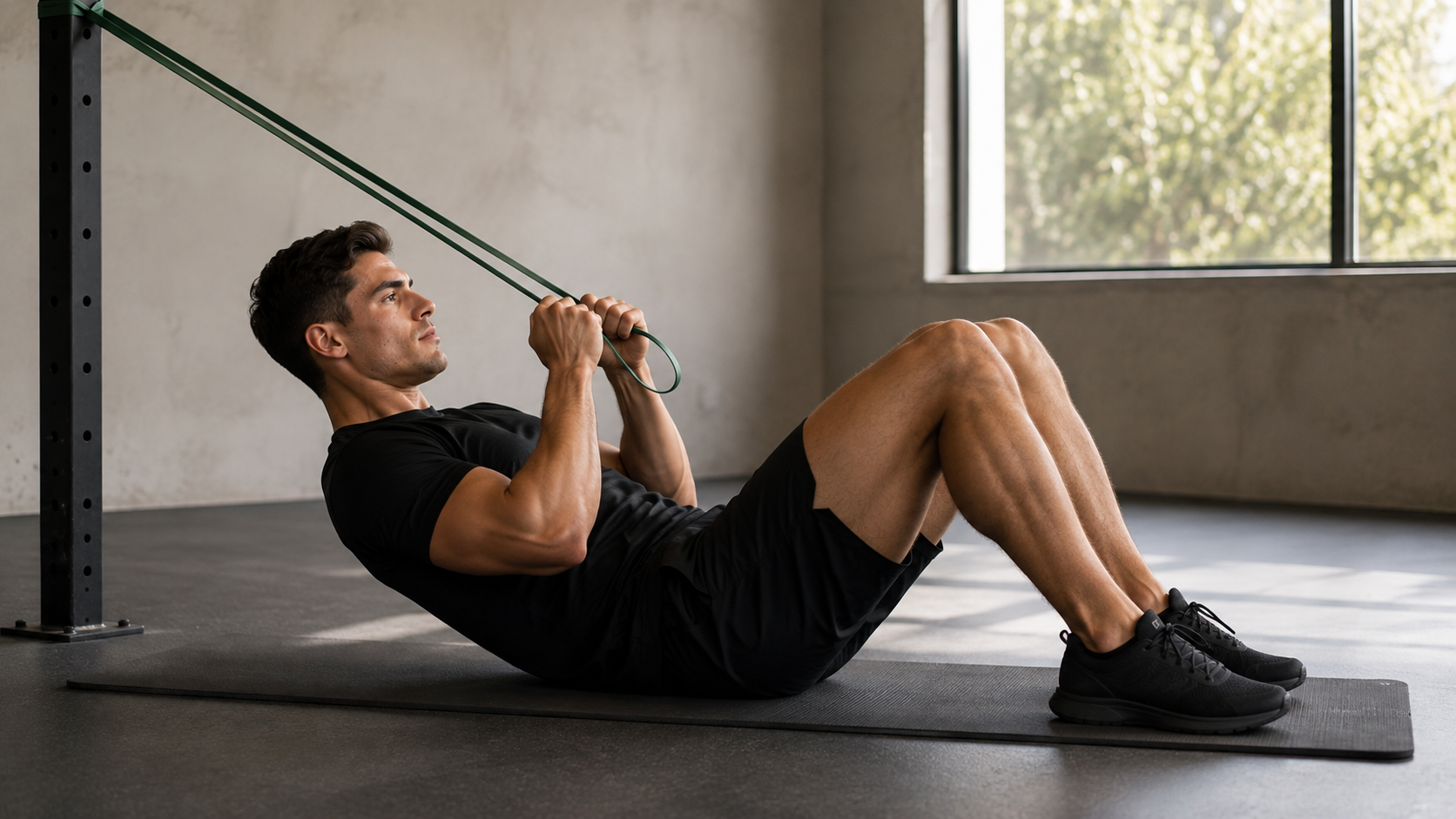
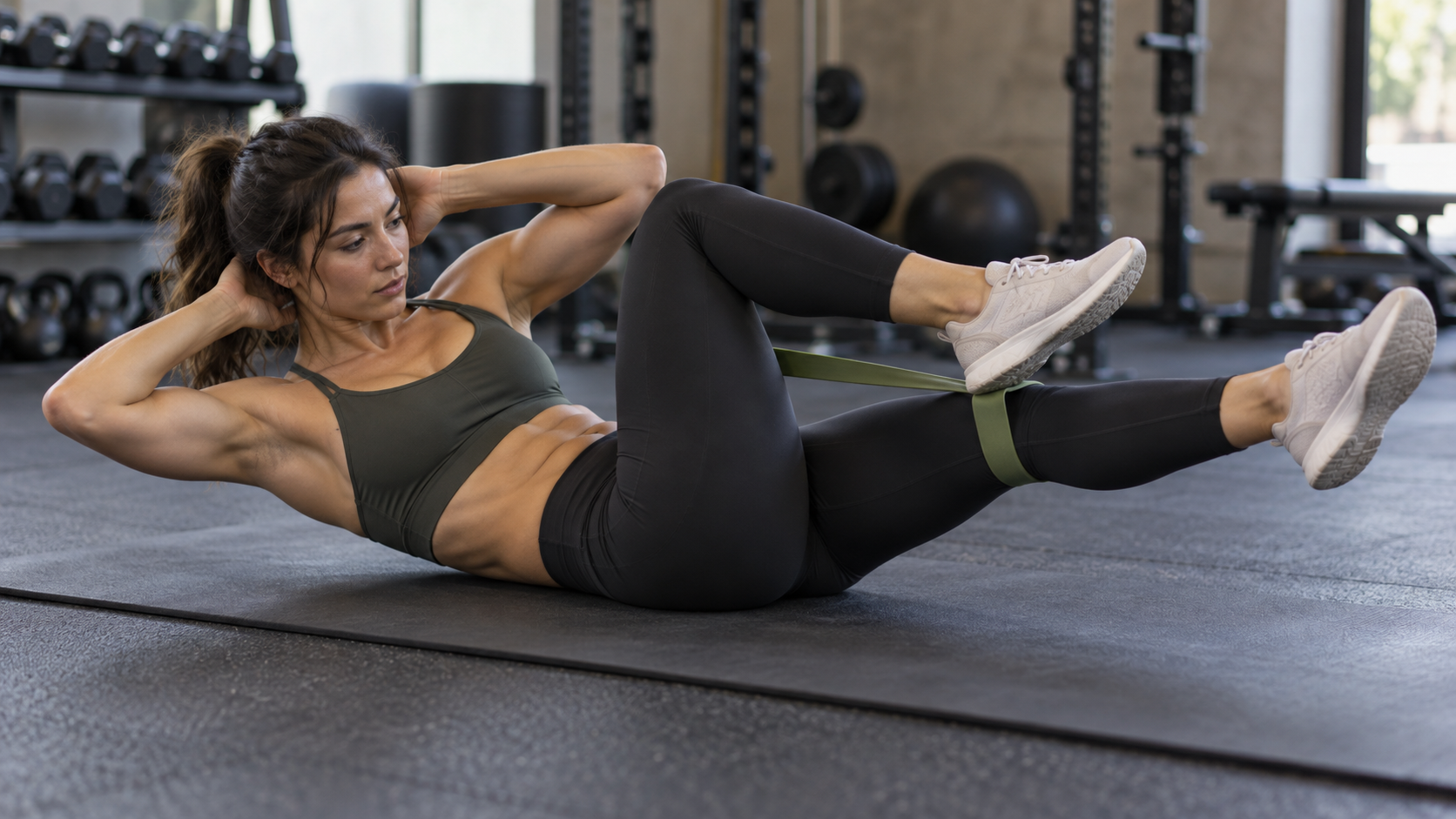
This banded crunch is for the waist. It targets the abs, hip flexors, and obliques, and the band adds resistance to the motion.
It works the front and sides of the waist through alternating twists and knee drive. You can do it at home or in the gym.
Setup and starting position
Lie flat on your back with your hands behind your head and your knees bent. Set the band so it is already snug before you start.
Keep your head and hands light, and let the band add resistance without changing your position. The setup should feel compact through your waist, with your torso stable before the first rep.
How the twist should travel
Keep the twist tight and the waist braced. On video, the torso should rotate cleanly without the shoulders taking over or the knees drifting.
Start on the floor with your hands behind your head, lift the feet, and let the movement stay organized through the core. If the rep gets short or messy, the twist and leg change stop matching.
What you should feel
Keep the torso twisting across the waist and the legs alternating in a steady bicycle pattern. The rep should stay controlled, with the core engaged throughout and the band adding resistance to the movement.
Common form errors
Neck tugging is the first fault. If your hands pull the head forward, the twist is coming from the neck instead of the waist.
The other failure is a rushed switch. When the leg extends before the torso finishes rotating, the rep turns into flailing instead of a controlled pedal.
Once your core tension drops, the waist opens and the torso rocks instead of turning. Keep the movement tight so the band drives a clean twist through the abs and obliques.
How to use Corect to check your reps
Set your phone so it can see your waist, elbows, and knees. A good video shows whether the rep stays controlled as one side turns in and the other extends, or whether the movement starts to come apart at the waist.
What you get from video is the break point. If the twist gets rushed, the alternation loses rhythm, or the torso starts doing the work instead of the core, the rep will look messy before it feels obvious.
Bicycle crunch variations and alternatives
Use the unbanded version if the band is pulling your knees off rhythm. You should see one knee come in as the other leg straightens, without the twist arriving late or the feet drifting around between reps.
If the banded version feels messy, slow the alternating pattern down until each elbow-to-opposite-knee turn has a clear finish. On video, the bad rep usually shows up as the knee changing but the torso barely rotating, or the twist happening after the leg has already moved.
For a harder version, keep the band and make the reps tighter instead of faster. The band should expose a side-to-side mismatch: one knee may track cleanly toward the chest while the other side cuts short, drops lower, or makes your core lose tension before the next twist.
Band Bicycle Crunch: the movement, step by step
- Lie flat on your back with your hands behind your head and your knees bent.
- Lift your feet off the ground and bring your right knee towards your chest while simultaneously twisting your torso to bring your left elbow towards your right knee.
- Straighten your right leg while bringing your left knee towards your chest and twisting your torso to bring your right elbow towards your left knee.
- Continue alternating the twisting motion, as if you are pedaling a bicycle, while keeping your core engaged throughout the movement.
- Repeat for the desired number of repetitions.
Common questions
How should the band bicycle crunch be set up?
Lie flat on your back with your hands behind your head and your knees bent. The band should already feel snug before you start, with your torso stable and your waist compact.
What should the twist look like on video?
The torso should rotate cleanly while the shoulders do not take over and the knees do not drift. The movement should stay organized through the core as one side turns in and the other extends.
What are the most common form errors?
Neck tugging is the first fault, followed by a rushed switch when the leg extends before the torso finishes rotating. If core tension drops, the waist opens and the torso rocks instead of turning.
How can video help you check your reps?
Set your phone so it can see your waist, elbows, and knees. Video shows the break point: whether the twist stays controlled or the movement starts to come apart at the waist.
The hardest part of fixing any of this is that you cannot see yourself mid-rep. Corect reads your form from a phone video and shows you what actually happened on each rep of your band bicycle crunch — depth, bar path, where the breakdown starts. Try it free.