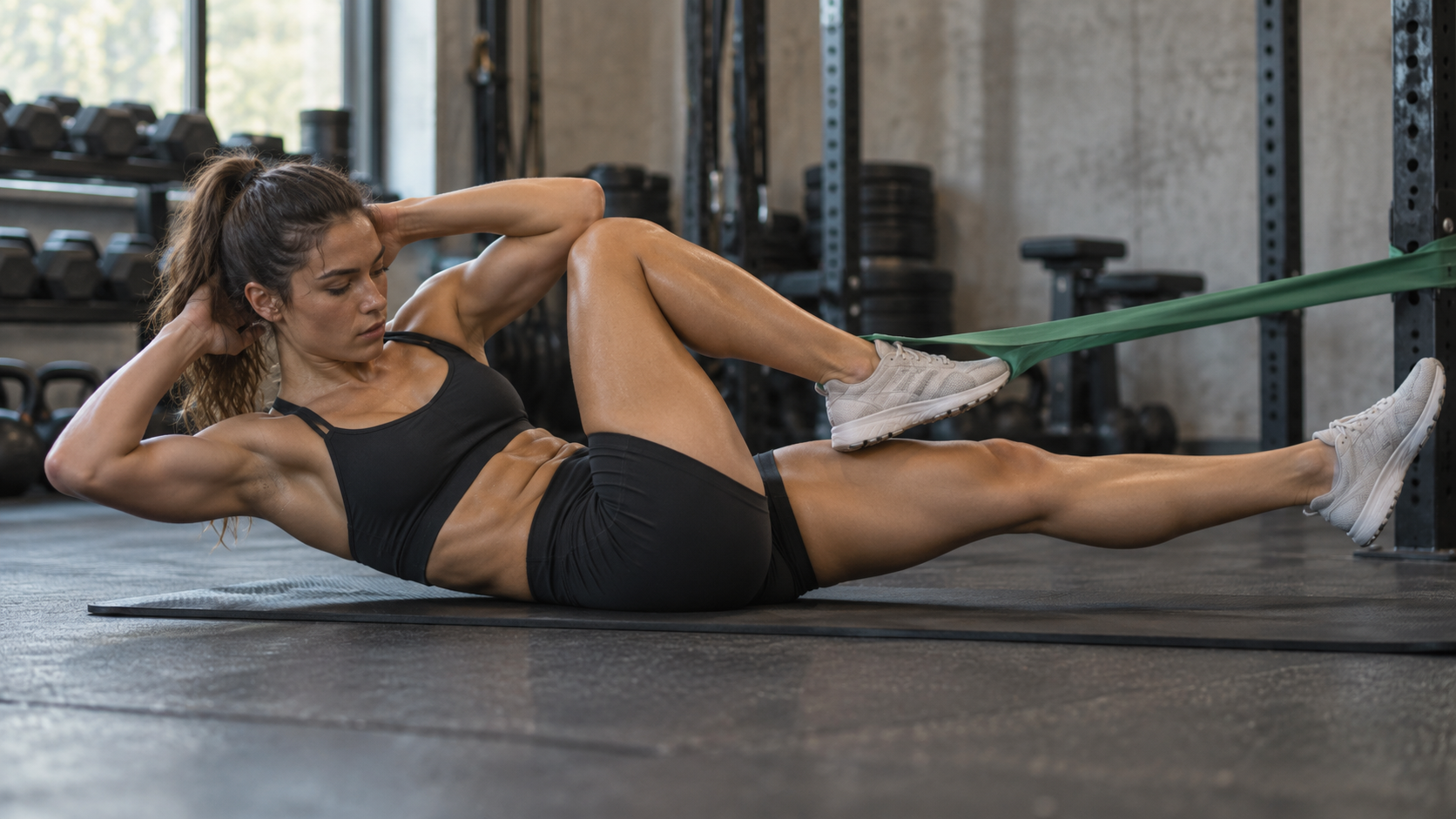
Abs, hip flexors, and obliques do most of the work in the band bicycle crunch. Your abs brace your trunk, your obliques drive the side-to-side rotation, and your hip flexors lift and switch the knees through each alternating rep.
The band changes the challenge only if it makes that rotation and knee drive harder to control. If the twist gets shallow, the ribs flare, or the elbow and knee stop meeting on time, the band is adding noise instead of useful resistance.
What the band changes
The band should make the rep feel harder to control, not busier. If the motion gets rushed, the extra tension just hides breakdown. Corect can show whether the band is actually changing the challenge.
How the rep should load your core
Your abs do the main work, with the obliques and hip flexors taking more load as the movement alternates side to side. Keep the trunk tight so the waist does not let the torso twist loose or the legs take over.
Where people leak tension
Most breakdowns show up when the torso starts working for the legs, or when the elbow and knee rush to meet each other. If the neck tightens or the lower back takes over, the rep has stopped being clean. Corect can catch that in video: the difference between controlled alternating twists and a hurried pattern that only looks busy.
What good reps look like on video
This movement works the abs, hip flexors, and obliques in the waist.
The band adds resistance, so those muscles have to stay engaged through the alternating twist and leg drive.
Why it may feel more in your hips than your abs
If the twist stays clean, the core does the work. If the rep turns into a bigger leg drive, the hip flexors start to take over and the band feels harder through the hips.
Quick answers to related questions
The band matters only if it stays tight through the rep; otherwise it is just extra setup. Corect can use phone video to check whether the resistance is actually changing the pattern or just making the movement messier.
Band Bicycle Crunch: the movement, step by step
- Lie flat on your back with your hands behind your head and your knees bent.
- Lift your feet off the ground and bring your right knee towards your chest while simultaneously twisting your torso to bring your left elbow towards your right knee.
- Straighten your right leg while bringing your left knee towards your chest and twisting your torso to bring your right elbow towards your left knee.
- Continue alternating the twisting motion, as if you are pedaling a bicycle, while keeping your core engaged throughout the movement.
- Repeat for the desired number of repetitions.
Common questions
What muscles does the band bicycle crunch work?
This movement works the abs, hip flexors, and obliques in the waist. The band adds resistance, but the main demand still stays on those muscles as you alternate the twist and leg drive.
Why may the band bicycle crunch feel more in my hips?
If the twist stays clean, the core does the work. If the rep turns into a bigger leg drive, the hip flexors start to take over and the band feels harder through the hips.
What does the band change in the rep?
The band should make the rep feel harder to control, not busier. If the motion gets rushed, the extra tension can hide breakdown instead of improving the challenge.
What do good reps look like on video?
Good reps show controlled alternating twists with the trunk staying tight. A hurried pattern, neck tension, or the lower back taking over means the rep is no longer clean.
The hardest part of fixing any of this is that you cannot see yourself mid-rep. Corect reads your form from a phone video and shows you what actually happened on each rep of your band bicycle crunch — depth, bar path, where the breakdown starts. Try it free.