This press is for making the triceps do most of the work while the chest and shoulders help keep the bar moving. The load should stay on the upper arms: if the elbows drift out or the bar starts traveling too low or too high, the work shifts away from the triceps and the rep stops looking like the movement you meant to do.
Done well, the rep feels tight and controlled, with the upper arms staying close and the finish coming from clean extension rather than a loose shove. Done poorly, the bar gets away from you, the elbows flare, or the lockout turns messy, which is the first sign the set is breaking down and needs a check on video.
Set up on the bench
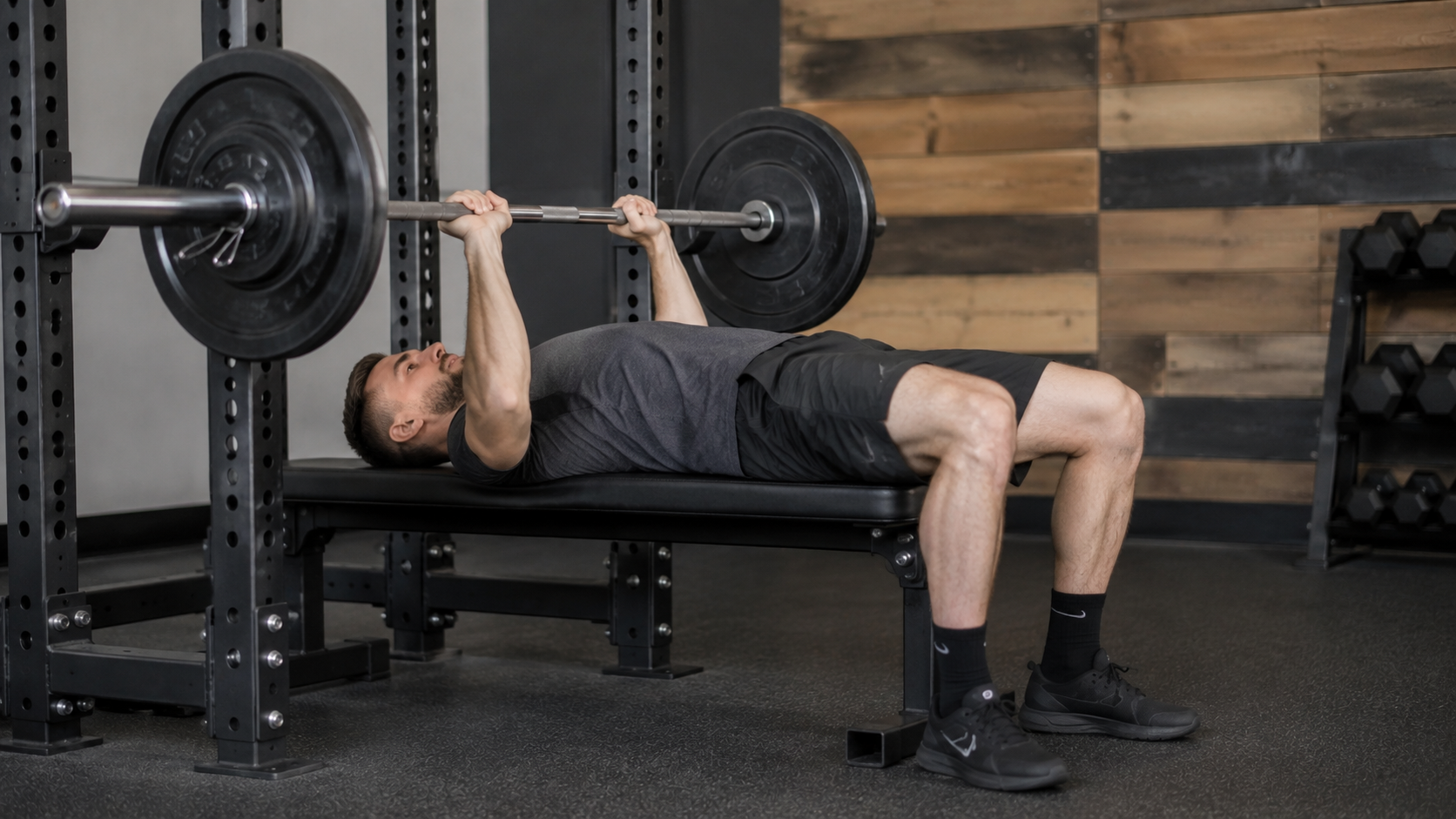
Set your body so the rep starts from a stable base, not from a loose shoulder position. Feet stay planted, your back stays in contact with the bench, and the grip sits just outside shoulder width so the upper arms can stay tucked instead of flaring out early.
At setup, you want the shoulders packed enough that the elbows can track close to your sides without the bar feeling unstable in your hands. If the grip is too wide, the upper arms drift outward before the descent even starts; if it is too narrow, the wrists and elbows get cramped and the press tends to feel jammed rather than controlled. From video, the setup should look tight and organized before the first rep moves: feet fixed, torso still, elbows ready to travel in a straight tucked line instead of starting from an open position.
Lower the bar with the elbows tucked
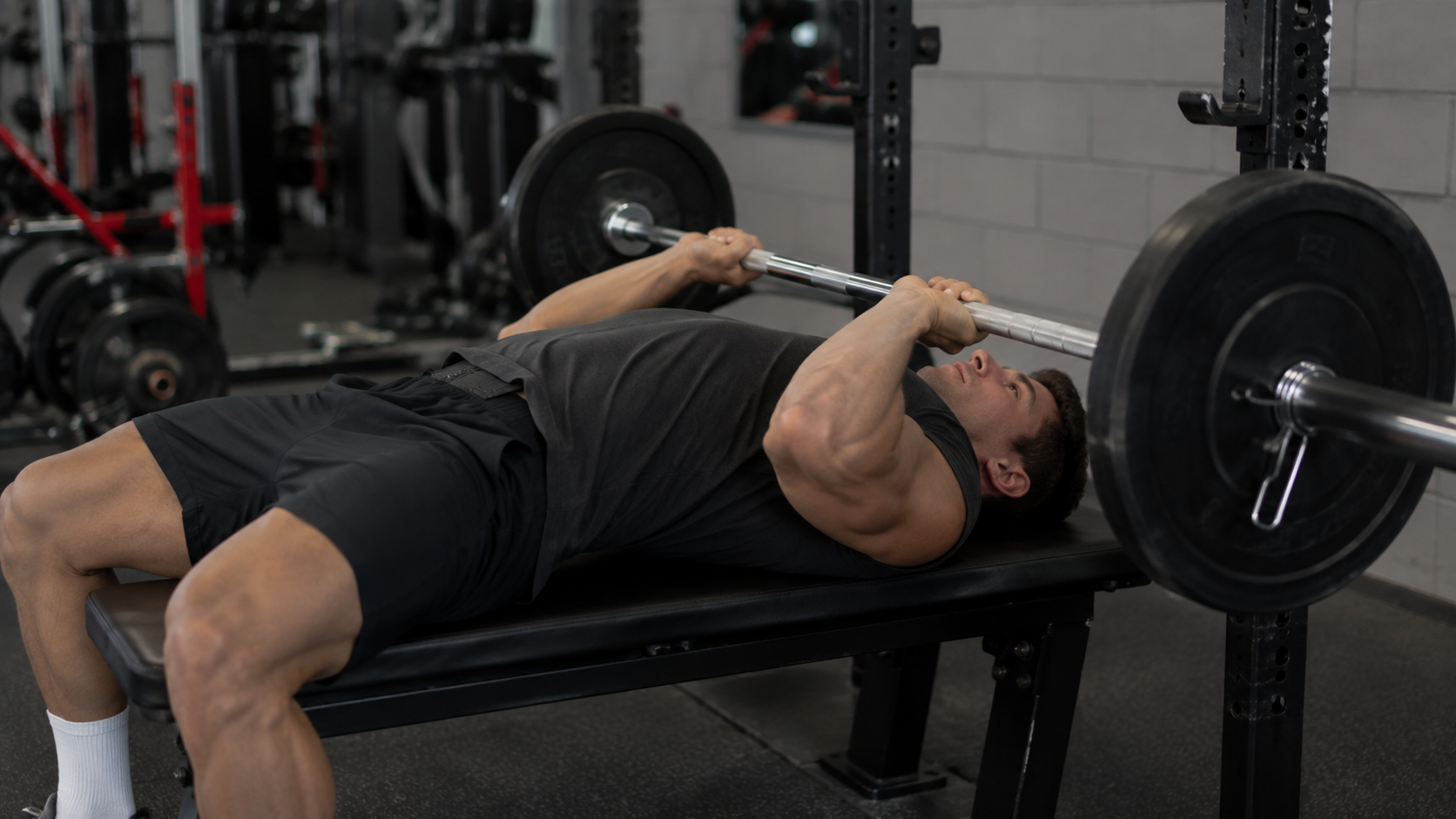
Lower the bar on a tight line with your elbows staying tucked so the upper arms keep doing the work instead of letting the shoulders take over. You should feel the bar stay close and the triceps and chest stay loaded all the way down.
If the elbows flare early, the descent gets loose fast. The bar starts drifting away from the body, the shoulders take more of the load, and the rep loses its control before you even touch down.
Press back to full extension
Drive the bar back up by straightening the elbows, not by letting the shoulders take over early. The cleanest rep feels like the triceps finish the last part of the press while the upper arms stay controlled and the bar comes back to a stable top position instead of wobbling out of the groove.
At lockout, the arms should finish fully extended and the bar should look settled, with no extra heave to “find” the top. If the elbows flare hard, the bar drifts too high, or the rep turns into a shove instead of a controlled finish, the top starts to break down.
You should be able to tell on video whether the rep ends cleanly: the bar rises to one clear top position, the elbows finish together, and the motion stops there. If one arm finishes late, the bar keeps drifting after the push, or the upper arms lose their tucked control on the way up, the lockout is not clean yet.
Common form errors
The rep breaks down when the elbows drift away from the body and the bar stops tracking back over the same path on every rep. That usually shows up as the press getting loose off the chest and the finish losing force.
A clean rep keeps the elbows tucked as the bar comes down and the press smooth as it comes back up. If the path shifts or the elbows flare, the upper arms lose control and the rep starts to feel shaky.
What it should feel like
A clean rep is compact: the upper arms stay tucked, the bar lowers under control to the chest, and the press finishes with full elbow extension. If it starts to wander, the elbows are usually the first thing to give way.
The useful cue is in the triceps. The chest and shoulders stay involved, but they should not take over the press or turn it into a loose, drifting rep.
How Corect checks your reps
Corect can analyse this movement from a phone video and score its form. It checks the rep against the setup, grip, elbow position, and finish.
It can flag when your elbows drift out, the bar path gets messy on the way down, or you cut the press short at the top. The goal is to show whether the triceps, chest, and shoulders are doing the work through the full rep.
Barbell Jm Bench Press: the movement, step by step
- Lie flat on a bench with your feet flat on the ground and your back pressed against the bench.
- Grasp the barbell with an overhand grip, slightly wider than shoulder-width apart.
- Lower the barbell to your chest, keeping your elbows tucked in close to your body.
- Push the barbell back up to the starting position, fully extending your arms.
- Repeat for the desired number of repetitions.
Common questions
How should I set up for the barbell JM bench press?
Lie flat on the bench with your feet flat on the ground and your back pressed against the bench. Grip the barbell overhand, slightly wider than shoulder-width apart.
Where should the bar travel on the way down?
Lower the bar to your chest with your elbows tucked close to your body. The path should stay tight and controlled instead of drifting out in front.
What does a clean rep feel like?
A clean rep feels compact, with the upper arms tucked, the bar lowered under control to the chest, and the press finished with full elbow extension.
What are the common form errors?
The rep breaks down when the elbows drift away from the body and the bar stops tracking back over the same path on every rep. That makes the press looser and the finish less forceful.
The hardest part of fixing any of this is that you cannot see yourself mid-rep. Corect reads your form from a phone video and shows you what actually happened on each rep of your barbell jm bench press — depth, bar path, where the breakdown starts. Try it free.