If your chest dip is going wrong, it usually shows up as the body line collapsing, the elbows flaring early, or the shoulders never getting below the elbows. It is a bodyweight press on parallel bars that targets the chest, triceps, and front deltoids, and it fits at home or in the gym.
Set up on the parallel bars
Start tall on the parallel bars and make the top position look finished, not half-set.
This is the checkpoint before the rep starts. If the line of your body softens or the shoulders drift before you move, the next rep usually turns into a rushed drop with less control.
Lower under control
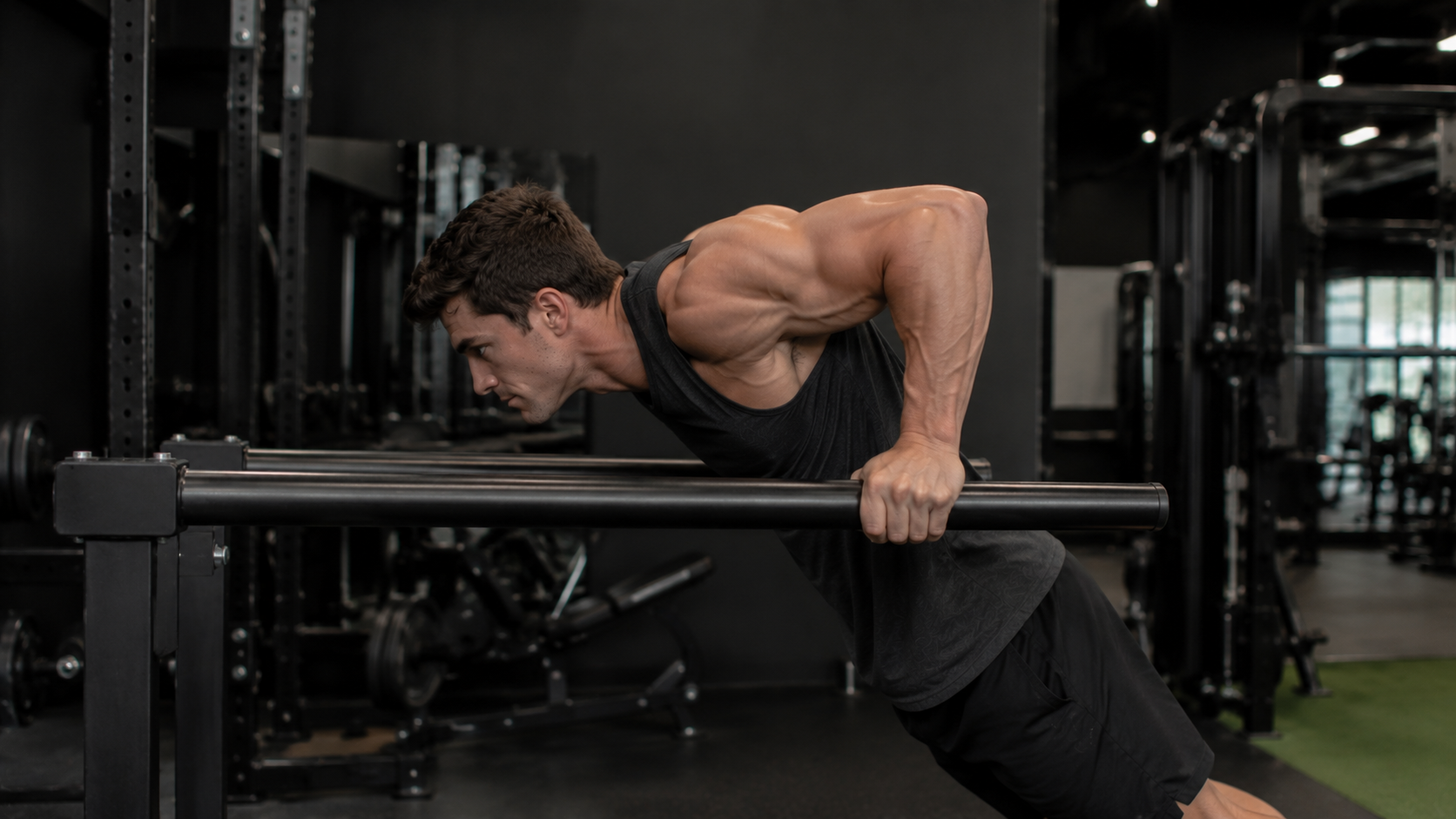
Keep the descent smooth and even so the rep stays clean on video. The bottom position is the key checkpoint: your shoulders should finish below your elbows.
If the body swings, one shoulder drops first, or the bars stop feeling balanced, the rep has broken down.
Drive back to the top
At the top, the return should feel stacked and quiet, with the arms finishing straight and the chest still supported under the load.
If the finish is clean, the body comes back to the start as one piece instead of hanging unevenly on one side.
What good reps look like on video
A good rep is easy to read on camera: the body stays straight on the bars, the descent is controlled, and the shoulders get below the elbows before you press back up.
The cleanest reps do not fold at the torso or drift to one side. The press finishes with full arm extension and no bounce at the top.
Common form errors
The biggest mistakes are cutting the dip short, softening at the top, and letting the body drift out of control on the way down. On video, a clean rep stays stacked on the parallel bars; a bad one loses that line as the shoulders and elbows start taking over.
If you stop before your shoulders drop below your elbows, the rep never reaches the depth this movement calls for. If you do not finish back in full arm extension, the top never looks clean and the triceps never complete the rep.
Watch for these breakdowns:
- elbows opening up too soon instead of bending under control
- the torso sagging or swinging instead of staying straight
- one side taking over the lift
- missing a solid lockout at the top
If you use assisted dips, the support can hide these faults and make the rep look cleaner than it is.
Assisted versions and easier options
Use the assist to make the rep possible, not to change the movement. It should let you keep the body straight and move through the same path without a bounce or a side-to-side shift.
If the assist is doing too much, the rep stops telling you anything useful. Keep it at the point where you can still control the lowering and finish to full arm extension.
Quick self-check before your next set
Before your next rep, check that you’re still solid on the parallel bars with straight arms and a straight body. If the setup has already drifted, reset instead of repeating the same rep.
On the way down, the rep should stay controlled until your shoulders pass below your elbows. On the way up, finish by straightening your arms cleanly, with the body staying in one line.
Chest Dip: the movement, step by step
- Position yourself on parallel bars with your arms fully extended and your body straight.
- Lower your body by bending your elbows until your shoulders are below your elbows.
- Push yourself back up to the starting position by straightening your arms.
- Repeat for the desired number of repetitions.
Common questions
What should a good chest dip look like on video?
A good rep stays straight on the parallel bars, descends under control, and gets the shoulders below the elbows before you press back up. The finish should be clean, with full arm extension and no bounce at the top.
What are the main chest dip form errors?
The biggest mistakes are cutting the dip short, softening at the top, and letting the body drift out of control on the way down. Other breakdowns include the torso sagging, one side taking over, and missing a solid lockout.
Where should the bottom of the rep be?
The bottom position is the key checkpoint, and your shoulders should finish below your elbows. If you stop higher than that, the rep does not reach the depth this movement calls for.
How should assisted dips be used?
Use the assist to make the rep possible, not to change the movement. It should still let you keep the body straight, control the lowering, and finish to full arm extension.
The hardest part of fixing any of this is that you cannot see yourself mid-rep. Corect reads your form from a phone video and shows you what actually happened on each rep of your chest dip — depth, bar path, where the breakdown starts. Try it free.