
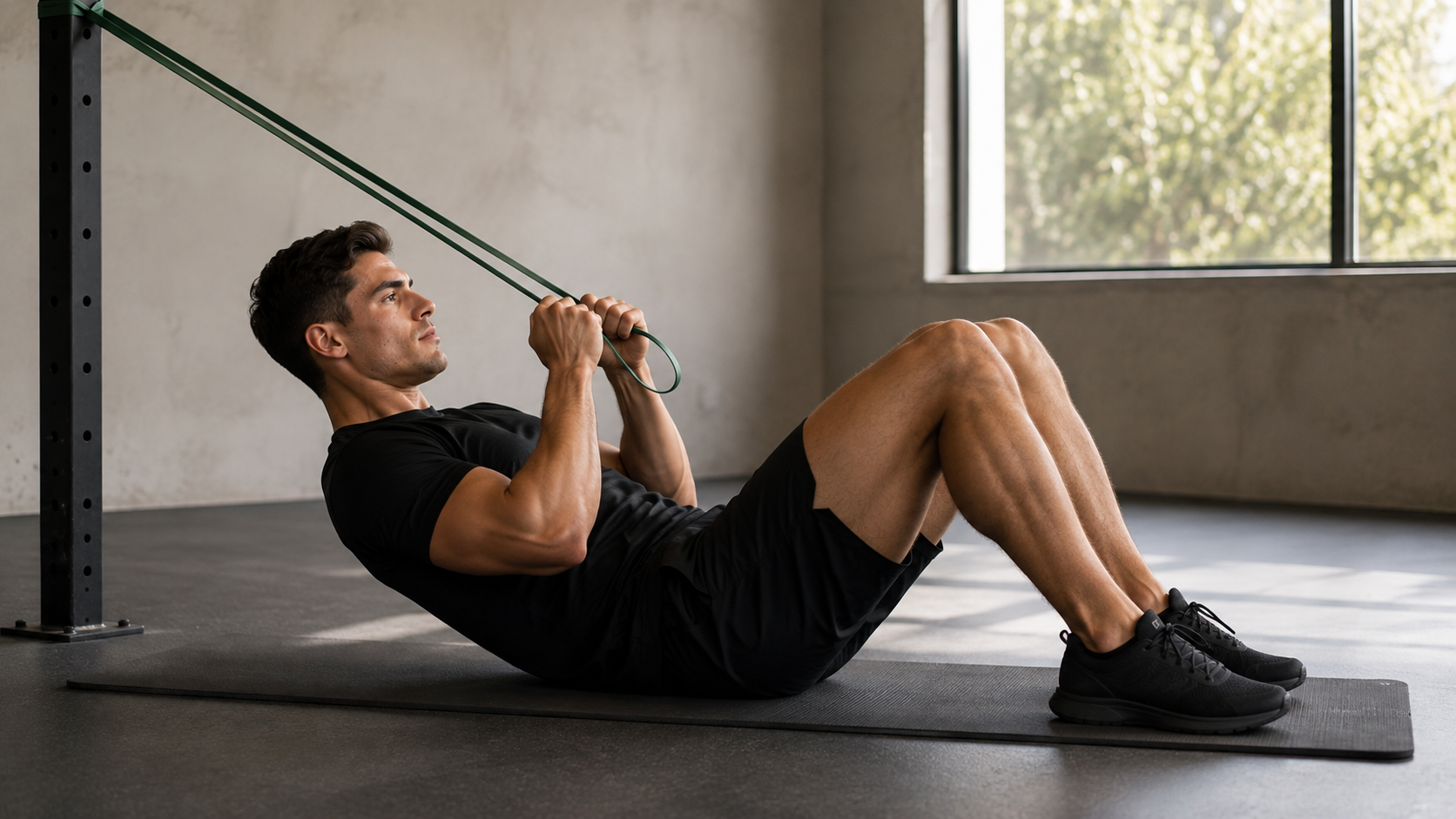
Band Push Sit-up trains the Abs first, with Shoulders and Chest as secondary muscles. It is a loaded sit-up with a band, so the abs do most of the work while the shoulders and chest assist.
Why the band changes the feel
The band adds demand because you have to hold it overhead while you curl up. That makes the top position harder to control, especially if your torso drops past 45 degrees or the band drifts. On the way down, the same setup keeps the movement under tension rep to rep.
Setup that decides where the work goes
Set the band on a stable anchor, lie flat with your knees bent and feet planted, and hold your arms straight up toward the ceiling. That setup keeps the position tight before the rep starts.
What the top position should look like
The abs finish the rep when the torso curls to the top and holds briefly without the shoulders taking over the band. That pause should look controlled, with the body set before the slow lowering starts.
How the lowering phase loads the abs
The controlled descent keeps the abs working through the rep. If you rush back down, the band and upper body take over sooner and the torso loses tension before the next rep.
Why shoulders and chest get mentioned
Shoulders and chest help keep the band steady overhead, but the abs still do the main work. They support the movement rather than drive it, so the load stays on the waist instead of turning into an upper-body hold.
Common ways the rep goes wrong
The rep goes wrong when you stop short of a clean curl and your upper body never lifts far enough to show a real change in angle. If the band pulls your hands out of position, the movement turns messy and you lose control of the rep. A hard drop back down also breaks the quality of the set. The top should look brief and controlled, not rushed or cut short.
How Corect judges form from video
This movement works the abs most, with the shoulders and chest helping as secondary muscles. The band adds resistance through the curl, so the waist does the main work while the upper body helps stabilize and support the lift.
Band Push Sit-up: the movement, step by step
- Attach the band securely to a stable anchor point.
- Lie flat on your back with your knees bent and feet flat on the ground.
- Hold the band with both hands and extend your arms straight up towards the ceiling.
- Engaging your abs, slowly lift your upper body off the ground, curling forward until your torso is at a 45-degree angle.
- Pause for a moment at the top, then slowly lower your upper body back down to the starting position.
- Repeat for the desired number of repetitions.
Common questions
What muscles does the band push sit-up work most?
The band push sit-up trains the abs first. The shoulders and chest are secondary muscles that help hold the band steady overhead.
Why does the band change the feel of the exercise?
The band adds demand because you have to hold it overhead while you curl up. That makes the top position harder to control and keeps the movement under tension on the way down.
What should the top position look like?
The abs finish the rep when the torso curls to the top and holds briefly without the shoulders taking over the band. The pause should look controlled before the slow lowering starts.
How does the lowering phase affect the abs?
The controlled descent keeps the abs working through the rep. If you rush back down, the band and upper body take over sooner and the torso loses tension before the next rep.
The hardest part of fixing any of this is that you cannot see yourself mid-rep. Corect reads your form from a phone video and shows you what actually happened on each rep of your band push sit-up — depth, bar path, where the breakdown starts. Try it free.