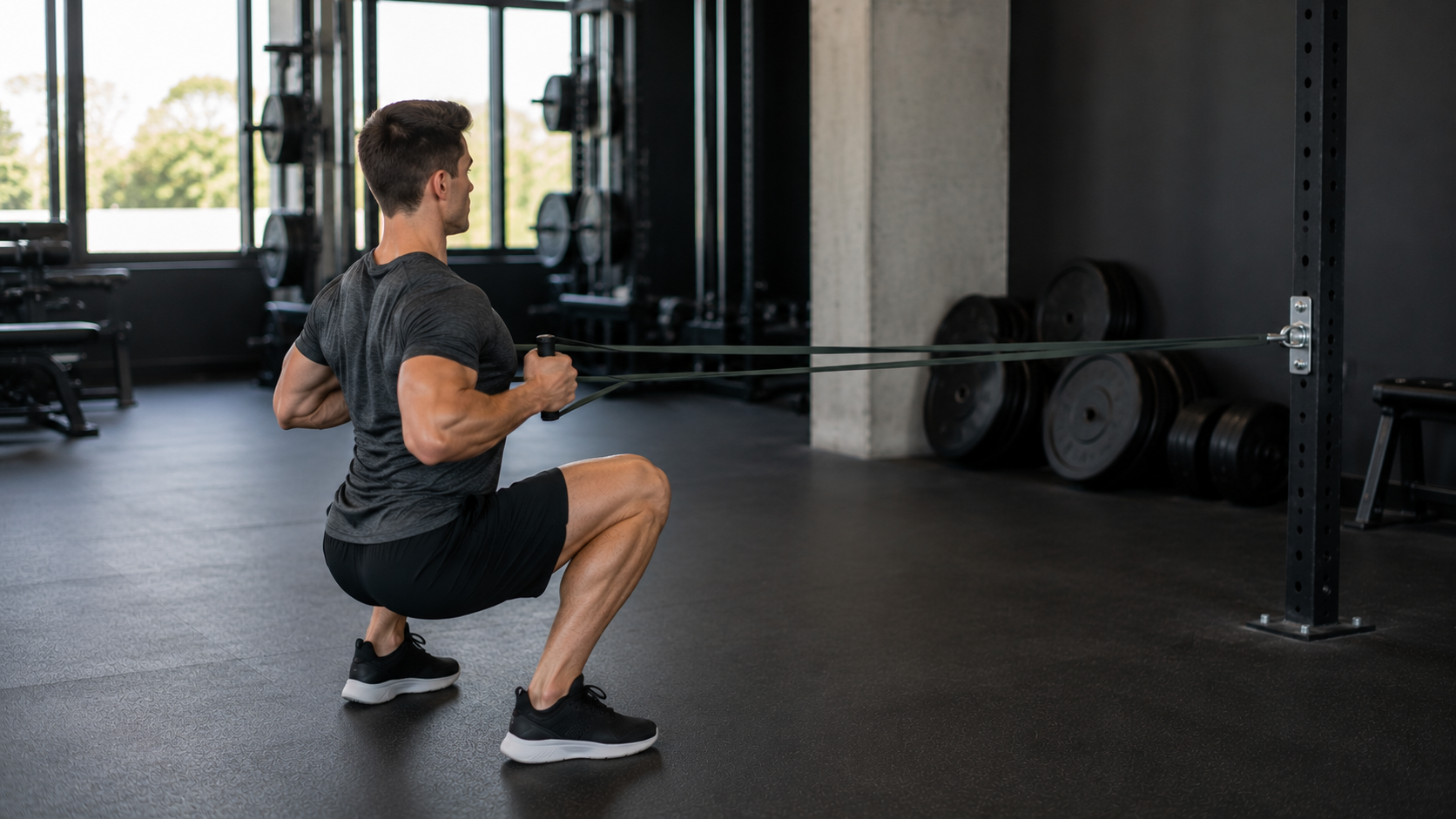
This movement works your glutes, hamstrings, quadriceps, and back. The squat drives the upper legs; the row shifts the work into the back, so both parts stay under load in the same rep.
As you sit into the squat, the legs take more of the demand. As you pull the band toward your body, the back takes over more of the emphasis, especially if your chest stays lifted and your shoulder blades come together cleanly.
Why the squat changes the muscle emphasis
The squat keeps the upper legs loaded while you row. As you drop into the squat, the glutes, hamstrings, and quadriceps stay under tension, so the pull happens on top of leg work instead of taking over.
If you stay tall and keep the squat clean, the back has to work while the legs keep carrying their share. On video, the question is simple: are you holding the squat position, or are you standing up and turning it into mostly a row?
Why the row changes the muscle emphasis
Glutes, hamstrings, quadriceps, and back all work here, but the pull is what brings the back into the rep.
You drop into the squat first, then pull the handles toward your body and squeeze your shoulder blades together. That extra pull is what shifts the work away from just the legs and into the back while the lower body holds the position. If the torso starts to rise before the pull finishes, the emphasis gets sloppy.
What good reps look like on video
Glutes, hamstrings, quadriceps, and back do the main work here.
On video, the rep should read as a combined lower-body and upper-back movement: the squat loads the upper legs and glutes, while the row brings in the back. If the band work looks smooth and controlled, you should see the back and upper legs sharing the effort instead of the arms taking over.
If the squat is shallow, the upper legs and glutes are not getting much out of it. If the row looks like a shrug or a yank, the back is doing less of the work.
When the exercise stops matching its target
Glutes, hamstrings, quadriceps, and back do the main work here.
The set starts to miss the target when the two parts of the rep stop blending together. If the squat stays too small, the upper legs do less. If the pull gets shortened or the shoulder blades never come together, the back does less. If you lose the chest-up, back-straight position, the rep stops loading cleanly. Video analysis can catch those shifts before the movement turns into something else.
Who this movement is for
It works in both home and gym settings, and it is best read as one lower-body and back movement rather than two separate actions.
Band Squat Row: the movement, step by step
- Attach the band to a sturdy anchor point at waist height.
- Stand facing the anchor point with your feet shoulder-width apart.
- Hold the band handles with your palms facing each other and your arms extended in front of you.
- Bend your knees and lower into a squat position, keeping your back straight and chest lifted.
- From the squat position, pull the band handles towards your body, squeezing your shoulder blades together.
- Pause for a moment at the top, then slowly release the tension and return to the starting position.
- Repeat for the desired number of repetitions.
Common questions
What muscles does the band squat row work?
It works your glutes, hamstrings, quadriceps, and back. The squat drives the upper legs, while the row shifts more of the emphasis into the back.
How does the squat change the muscle emphasis?
As you drop into the squat, the glutes, hamstrings, and quadriceps stay under tension. That keeps the upper legs loaded while you row.
How does the row change the muscle emphasis?
As you pull the band toward your body and squeeze your shoulder blades together, the back takes over more of the emphasis. If the torso rises before the pull finishes, the emphasis gets sloppy.
What should good reps look like on video?
The rep should read as a combined lower-body and upper-back movement. If the squat is shallow or the row looks like a shrug or a yank, the movement is losing its target.
The hardest part of fixing any of this is that you cannot see yourself mid-rep. Corect reads your form from a phone video and shows you what actually happened on each rep of your band squat row — depth, bar path, where the breakdown starts. Try it free.