The barbell back squat works your quadriceps, glutes, hamstrings, and core most. Your quadriceps also show up as a secondary mover, with the hamstrings, calves, and core helping through the lift.
The load sits on your upper back, so your torso and hips have to stay organized while your legs drive the rep. A more upright path shifts more work toward the quadriceps, while more hip hinge and a stronger push through your heels bring the glutes and hamstrings in harder.
Why the load shifts between quads, glutes, hamstrings, and core
The load shifts with how well you stay braced and keep the bar over midfoot. Small changes in stance, depth, and torso angle change which muscles have to hold position and which ones finish the rep.
The setup that decides the emphasis
A shoulder-width stance with toes slightly turned out is the standard barbell back squat setup, and it tends to spread the load across the quadriceps, glutes, hamstrings, and core. Changes in stance width and toe angle shift more of the work toward the hips or the knees.
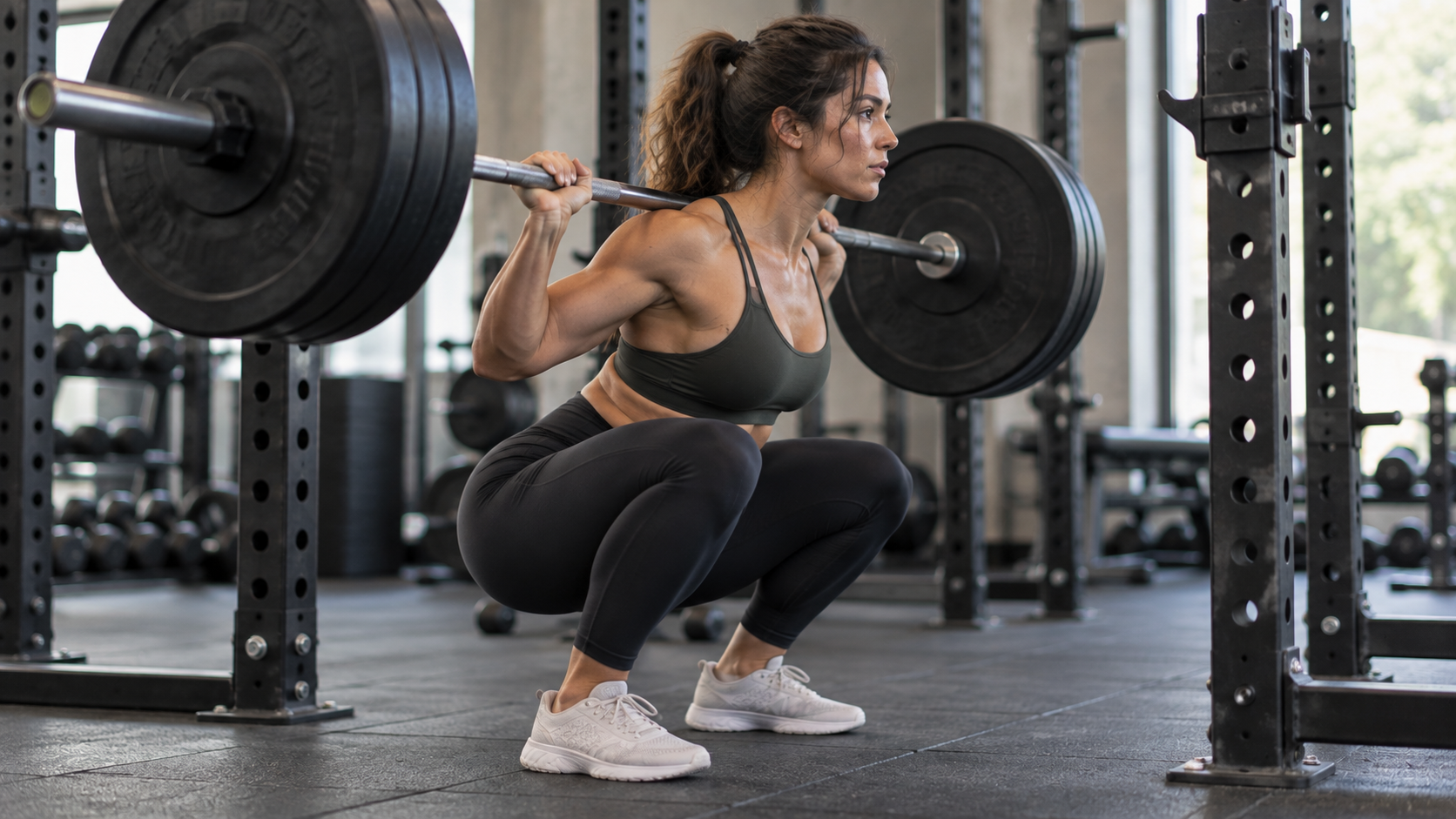
The bar sits across the upper back on the traps or rear delts, with the upper back and core helping keep the load organized. That placement is part of why the upper legs, glutes, hamstrings, and core are the muscles this lift hits most.
What depth changes
Going below parallel increases the work the legs have to do. The deeper you go, the more the quads, glutes, and hamstrings have to share the load, and the core has to keep you braced through the whole rep.
How knee, hip, and torso position change the feel
Quadriceps, glutes, hamstrings, and core do the main work, with calves helping stabilize the rep.
What you feel most depends on how the rep moves. A more upright torso and stronger knee bend put more of the load on the quadriceps. More hip hinge and a bigger hip drive shift more of it into the glutes and hamstrings. If the torso pitches forward, the core works harder to keep the bar steady on your upper back.
What strong bracing does
Strong bracing keeps the torso from collapsing under the bar, so the hips and knees can drive the lift together. It helps you keep your chest up on the way down and drive through your heels on the way up.
If the brace softens, the rep tips forward and the shape breaks sooner. The lift gets harder to control, and the legs lose some of the force they could put into the bar.
How to read your own rep on video
The main load is on your quadriceps, glutes, hamstrings, and core, with calves helping.
Corect scores how evenly that load shows up in the rep.
Barbell Back Squat: the movement, step by step
- Stand with your feet shoulder-width apart, toes slightly turned out.
- Hold the barbell across your upper back, resting it on your traps or rear delts.
- Engage your core and keep your chest up as you begin to lower your body down.
- Bend at the knees and hips, pushing your hips back and down as if sitting into a chair.
- Lower yourself until your thighs are parallel to the ground or slightly below.
- Keep your knees in line with your toes and your weight in your heels.
- Drive through your heels to stand back up, extending your hips and knees.
- Repeat for the desired number of repetitions.
Common questions
What muscles does the barbell back squat work most?
The barbell back squat works your quadriceps, glutes, hamstrings, and core most. Your quadriceps also show up as a secondary mover, with the hamstrings, calves, and core helping through the lift.
Why does the load shift between muscles in the squat?
The load shifts with how well you stay braced and keep the bar over midfoot. Small changes in stance, depth, and torso angle change which muscles have to hold position and which ones finish the rep.
How does depth change what the squat works?
Going below parallel increases the work the legs have to do. The deeper you go, the more the quads, glutes, and hamstrings have to share the load, and the core has to keep you braced through the whole rep.
How do torso angle and setup change the feel of the lift?
A more upright torso and stronger knee bend put more of the load on the quadriceps. More hip hinge and a bigger hip drive shift more of it into the glutes and hamstrings.
The hardest part of fixing any of this is that you cannot see yourself mid-rep. Corect reads your form from a phone video and shows you what actually happened on each rep of your barbell back squat — depth, bar path, where the breakdown starts. Try it free.