This variation mainly works your quads, glutes, hamstrings, and calves.
The bench setup keeps the load on your upper legs, with the quads driving most of the squat and the glutes, hamstrings, and calves helping you control the bottom and stand back up.
Why the load lands where it does
The load shifts because you are working against a fixed bar while your body has to stay balanced under it. That keeps the effort spread through the upper legs, with the calves helping steady each rep.
Form details that change muscle emphasis
Quads, glutes, hamstrings, and calves do the work here. A more upright squat tends to put more of the load on the quads, while a deeper rep asks more from the glutes and hamstrings as well. The calves stay involved as part of the base through the descent and drive up. A pause at the bottom makes the next rep feel harder across the whole lower leg and upper leg chain.
What good reps should look like on video
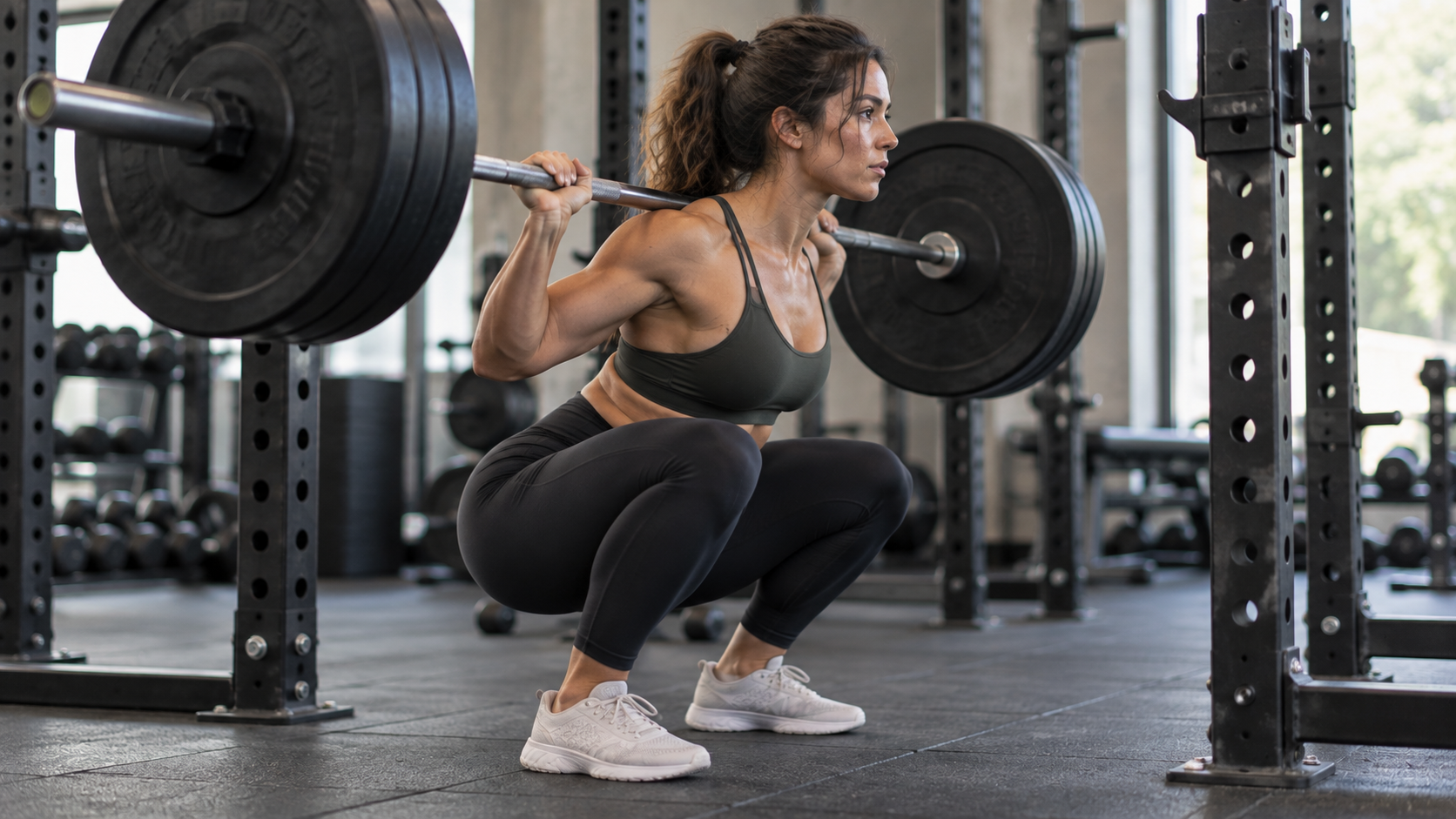
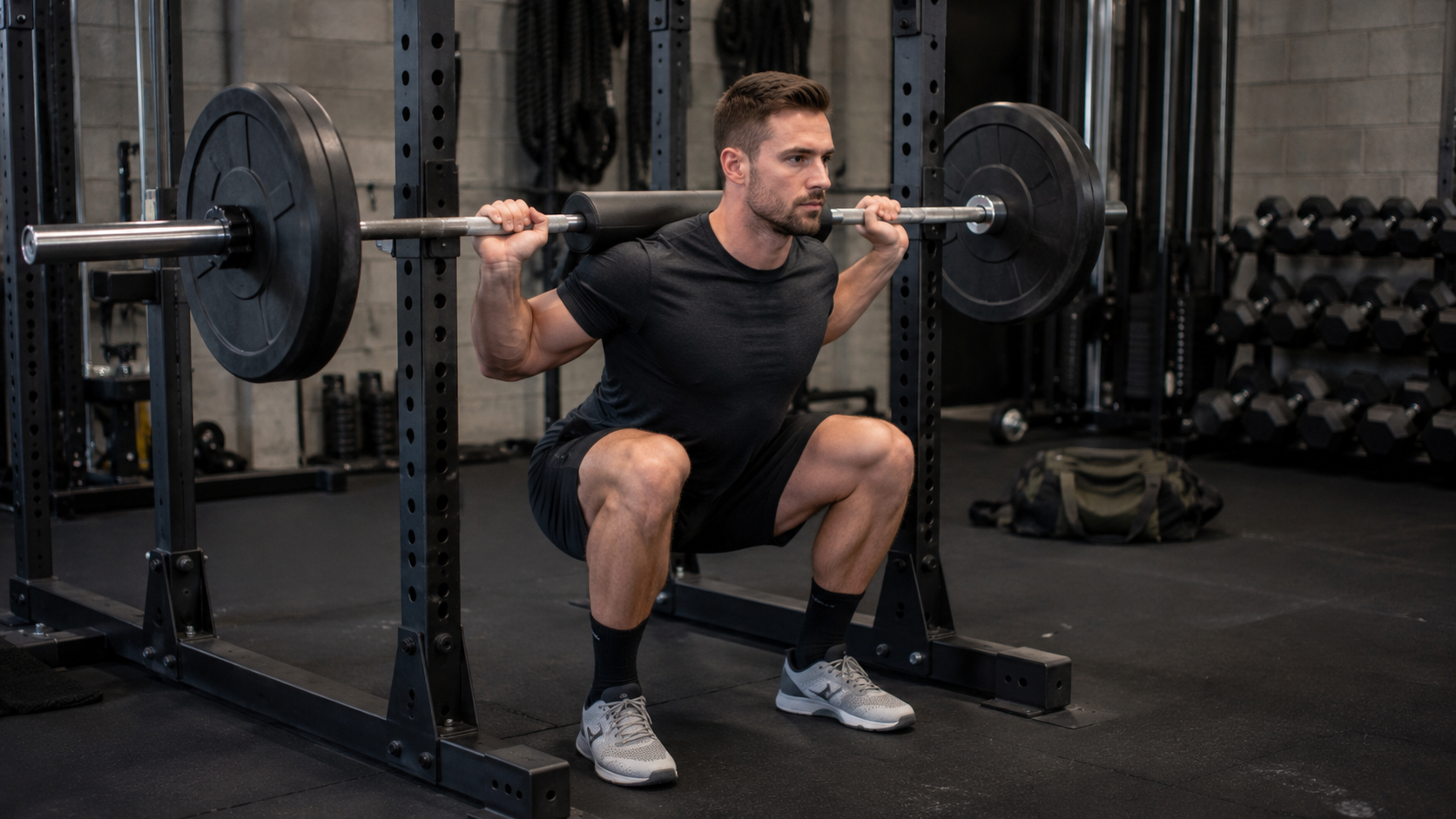
Quads, glutes, hamstrings, and calves do the work, with the quads most visible when you stay upright and the drive comes cleanly through the legs. A good rep looks like that effort staying centered through the upper legs instead of turning into a fold at the hips.
The feet stay planted about shoulder-width apart, with the knees tracking in line with the toes, so the load keeps moving where those muscles can control it. The descent should be smooth, the bottom brief and stable, and the ascent should look like a strong push from the legs and hips together.
Common breakdowns that change the muscle answer
When your chest drops or your back rounds, the load shifts off the upper legs. If your knees cave in, the quads lose their clean drive out of the bottom. If your heels lift, you lose the stable base that carries the rep to the top.
Who this movement is for in the gym
For lifters who want a barbell squat in the gym that puts the focus on the upper legs and can be checked rep by rep from phone video.
It suits you if you want a lower-body lift you can load and score for form, with Corect able to analyse the movement from video.
Barbell Bench Squat: the movement, step by step
- Set up a barbell on a squat rack at chest height.
- Stand facing away from the rack, with your feet shoulder-width apart.
- Bend your knees and lower your body down into a squat position, keeping your back straight and chest up.
- Grasp the barbell with an overhand grip, slightly wider than shoulder-width apart.
- Lift the barbell off the rack and step back, ensuring your feet are still shoulder-width apart.
- Lower your body down into a squat, keeping your knees in line with your toes.
- Pause for a moment at the bottom, then push through your heels to return to the starting position.
- Repeat for the desired number of repetitions.
Common questions
What muscles does the barbell bench squat work?
This variation mainly works your quads, glutes, hamstrings, and calves. The quads do most of the squat, while the other muscles help control the bottom and stand back up.
Why does the load land on the upper legs?
The load shifts because you are working against a fixed bar while your body has to stay balanced under it. That keeps the effort spread through the upper legs, with the calves helping steady each rep.
How does squat depth change muscle emphasis?
A more upright squat tends to put more of the load on the quads, while a deeper rep asks more from the glutes and hamstrings as well.
What should good reps look like on video?
Good reps keep the effort centered through the upper legs, with the feet planted, the knees tracking with the toes, and the descent smooth before a strong push up through the legs and hips together.
The hardest part of fixing any of this is that you cannot see yourself mid-rep. Corect reads your form from a phone video and shows you what actually happened on each rep of your barbell bench squat — depth, bar path, where the breakdown starts. Try it free.