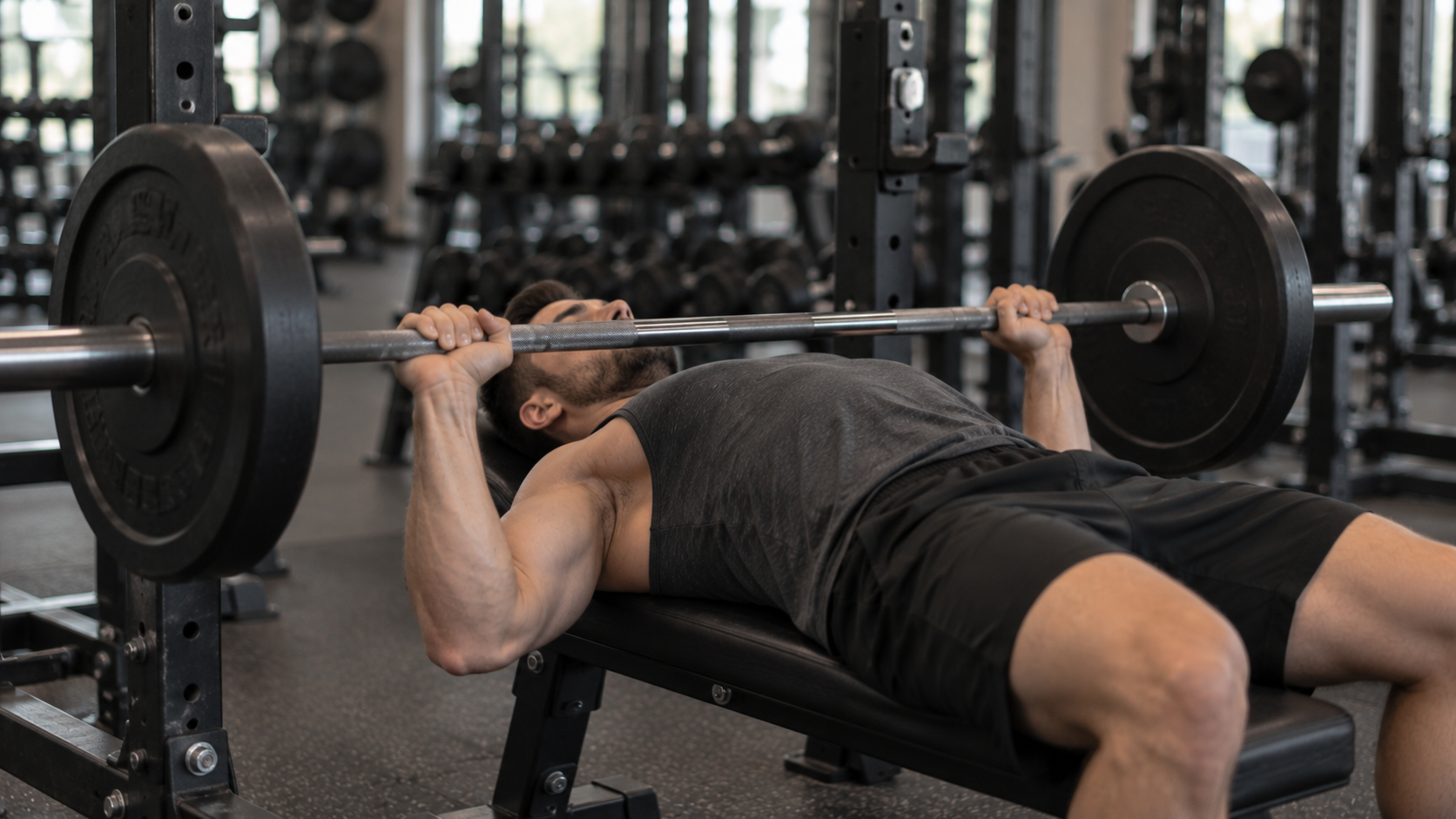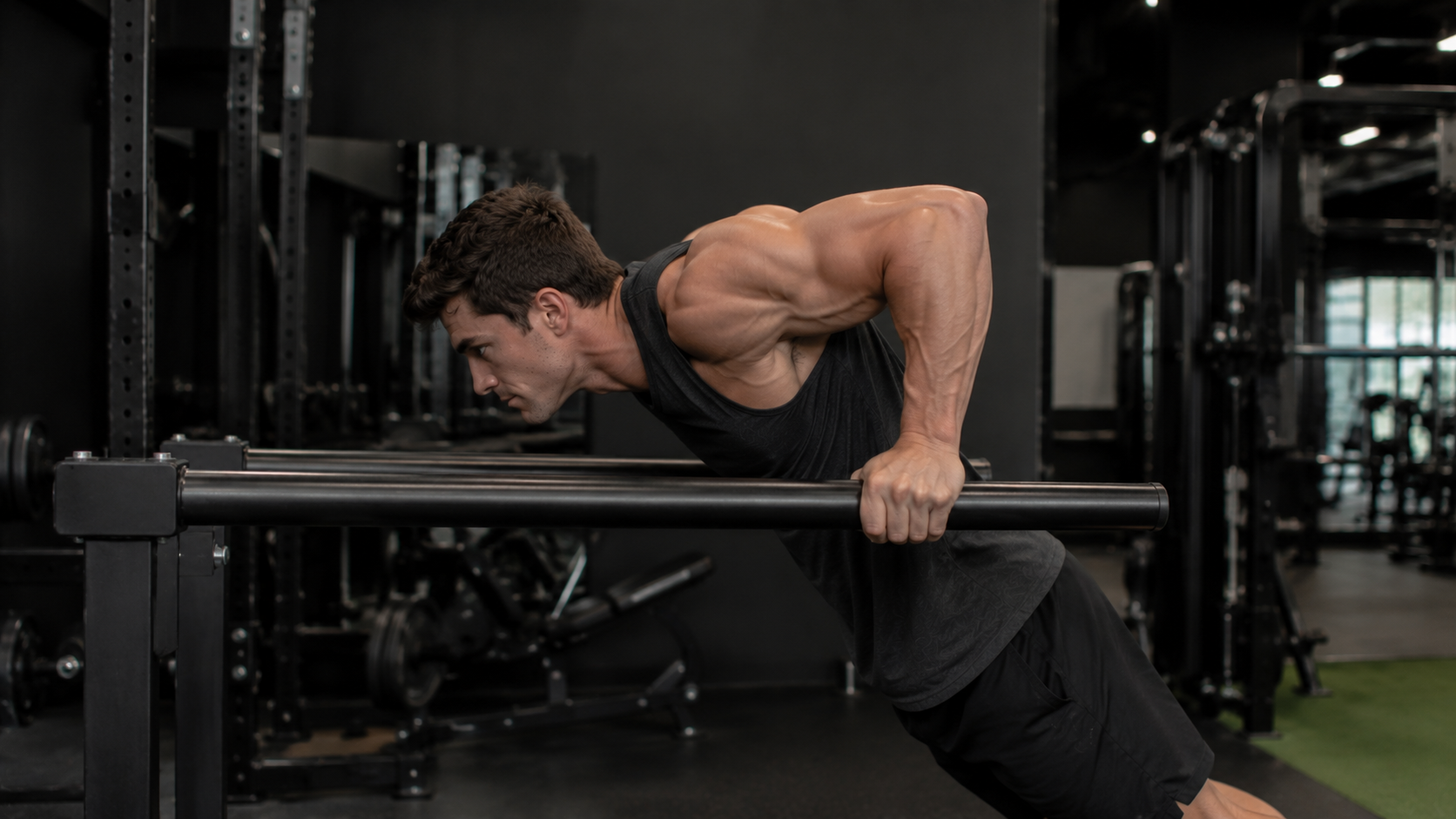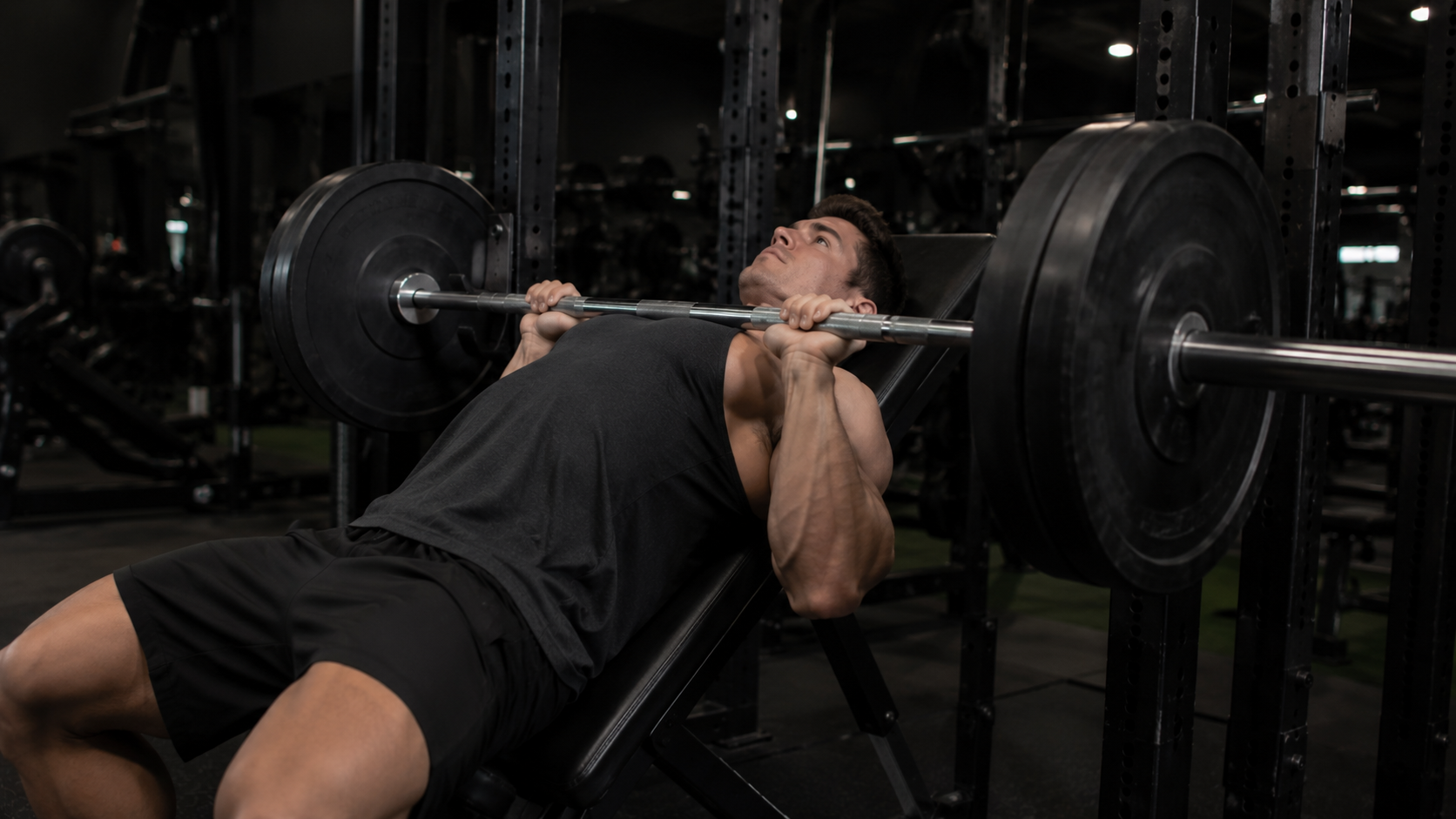
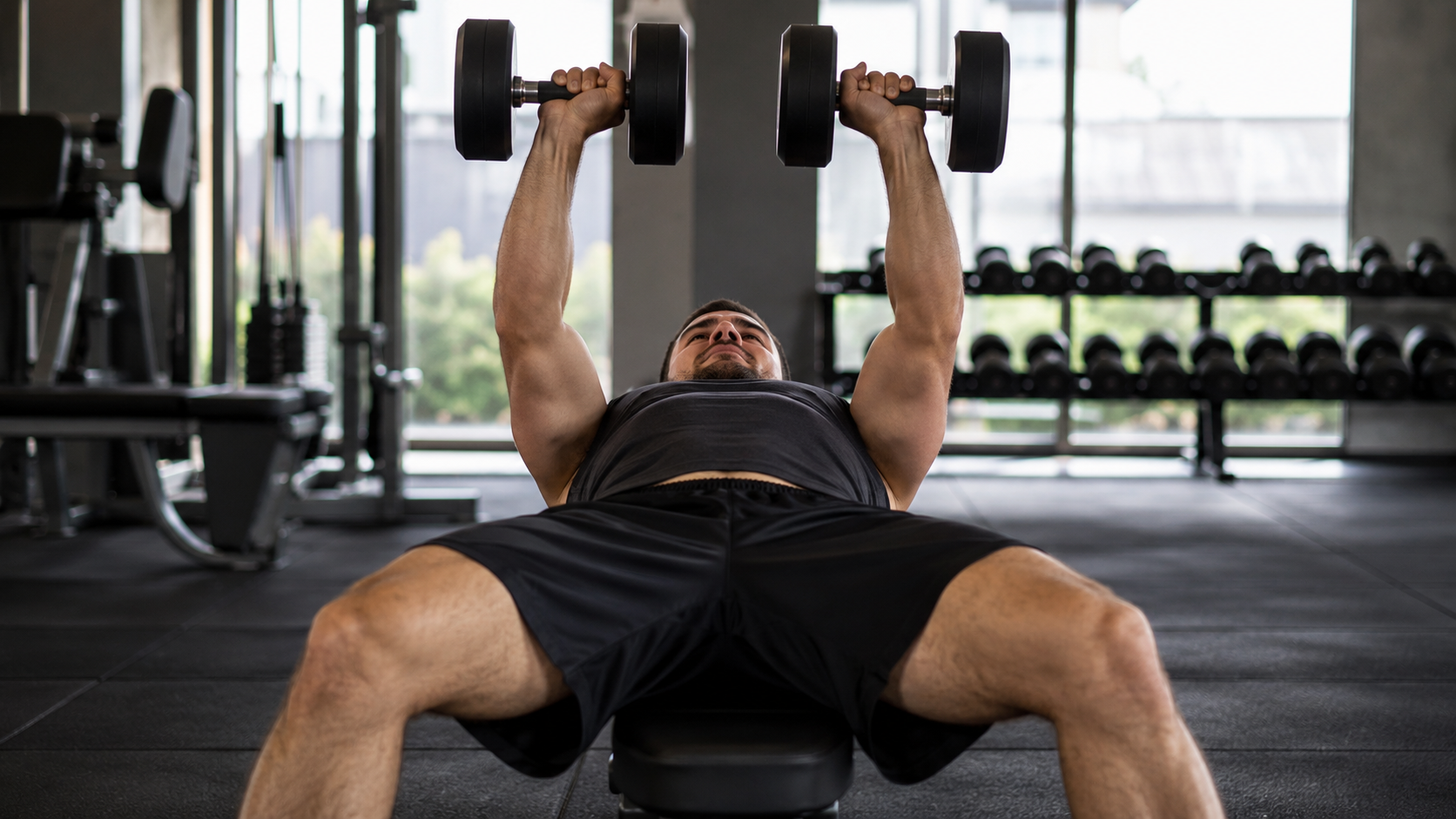
The dumbbell bench press works the chest first, with the triceps and front delts as the main helpers. You lower the dumbbells to the sides of your chest with your elbows at 90 degrees, then press back to full arm extension, so a shorter descent or rushed lockout shifts more of the work away from the chest and toward the triceps and front delts.
Why the chest usually does the main job
The chest is the main mover here, with the triceps and front delts assisting as you press. On the way up, the dumbbells stay over the chest and the elbows finish the lift; that is where the chest does its best work.
Where the triceps take over
The top of the press shifts more work toward elbow extension, so the triceps do more of the finishing. If the rep is shortened or the dumbbells are unstable, that top half can feel even more triceps-heavy.
How the front delts get involved
The front delts assist on every rep, but they are secondary to the chest and triceps. They contribute most as the dumbbells move back up to the start, helping finish the press and control the top of the lift.
How form changes the muscle emphasis
The way you move the dumbbells changes what you feel. A slower lower and a brief pause keep the rep under control; if you rush it, the shoulders and triceps tend to do more of the work. A cleaner path, with both dumbbells staying steady, helps the press stay even.
What good reps should look like on video
The dumbbell bench press should load the chest, triceps, and front delts without one muscle taking over. If the rep looks uneven or the dumbbells lose a steady path, more work is going into control than into the press itself. A smooth lower, a brief pause, and a strong finish show those muscles sharing the load the way they should.
Dumbbell bench press vs other press variations
Chest, triceps, and front deltoids do the work here.
Compared with a barbell or machine press, the dumbbells let each side move on its own, so it is the better choice when you want to spot side-to-side differences and check how well you control the path.
Dumbbell Bench Press: the movement, step by step
- Lie flat on a bench with your feet flat on the ground and your back pressed against the bench.
- Hold a dumbbell in each hand, with your palms facing forward and your arms extended above your chest.
- Lower the dumbbells slowly to the sides of your chest, keeping your elbows at a 90-degree angle.
- Pause for a moment, then push the dumbbells back up to the starting position, fully extending your arms.
- Repeat for the desired number of repetitions.
Common questions
What muscles does the dumbbell bench press work most?
The chest is the main mover, with the triceps and front delts assisting as you press.
When do the triceps take over more?
The top of the press shifts more work toward elbow extension, so the triceps do more of the finishing. Shorter or unstable reps can make that feel even more triceps-heavy.
How do front delts fit into the lift?
The front delts assist on every rep, but they are secondary to the chest and triceps. They help most as the dumbbells move back up and the press finishes.
What changes the muscle emphasis most?
Range of motion, elbow path, and dumbbell control change what you feel. A slower lower and brief pause keep the rep controlled, while rushing it shifts more work to the shoulders and triceps.
The hardest part of fixing any of this is that you cannot see yourself mid-rep. Corect reads your form from a phone video and shows you what actually happened on each rep of your dumbbell bench press — depth, bar path, where the breakdown starts. Try it free.