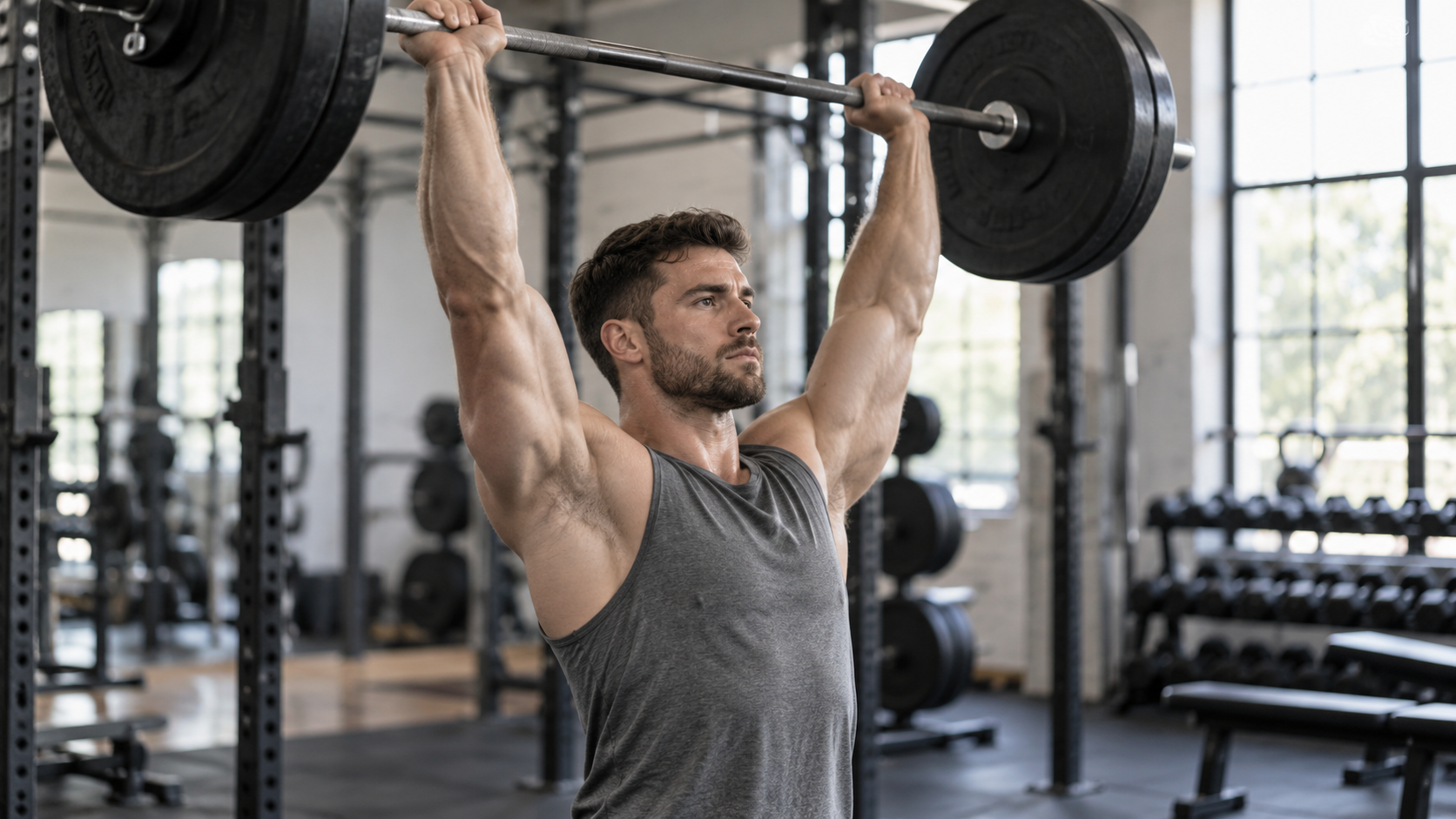
Shoulders, triceps, upper chest, and core do most of the work, with the upper back helping. That is the simple verdict here: the lift is shoulder-led, and the other muscles support the press and finish it overhead.
Why the shoulders are the main driver
The shoulder is the part that keeps the press moving once the weight leaves shoulder level. From there, the lift is about getting the arms overhead without letting the torso take over.
If the bar or dumbbells drift forward, the rep stops being a clean shoulder press and turns into a compensation through the back and ribs. Keeping the load stacked over the shoulders is what makes the movement stay honest.
Where the triceps take over
Shoulders and triceps drive the press. Near the top, elbow extension matters more as the arms approach full extension.
Why the upper chest still matters
Shoulders and triceps do most of the work, with the upper chest, core, and upper back assisting through the press.
The upper chest contributes as the weight moves from shoulder level to overhead, which is why it appears in the primary muscle list.
What the upper back and core are doing
The core keeps the torso stacked so the press stays vertical, and the upper back keeps the shoulders steady as the arms go overhead. When you lose that brace, the rep turns into a lean-back save instead of a clean press.
How bad reps change the muscle load
Clean reps keep the emphasis on the shoulders.
If your ribs flare or your elbows drift, the press stops looking strict and the core and upper back have to do more of the work just to keep the weight overhead.
How to tell from your own video
A clean bar path keeps the rep on the shoulders instead of turning it into a backbend. Watch for rib flare, hard lumbar extension, elbow drift, and a stalled lockout; those are the cues that show whether the press stays stacked and controlled.
Overhead Press: the movement, step by step
- Stand with your feet shoulder-width apart, holding a dumbbell in each hand at shoulder level with your palms facing forward.
- Press the dumbbells upward until your arms are fully extended overhead.
- Pause for a moment at the top, then slowly lower the dumbbells back down to shoulder level.
- Repeat for the desired number of repetitions.
Common questions
What muscles does the overhead press work most?
Shoulders and triceps do most of the work, with the upper chest, core, and upper back assisting through the press.
Why are the shoulders the main driver?
The shoulder keeps the press moving once the weight leaves shoulder level. The lift stays honest when the load stays stacked over the shoulders.
What happens when the rep gets sloppy?
If the ribs flare or the elbows drift, the press stops being strict and the core and upper back have to do more just to keep the weight overhead.
How can you tell if your rep stayed clean?
Watch the bar path and look for rib flare, hard lumbar extension, elbow drift, and a stalled lockout. Those cues show whether the press stayed stacked and controlled.
The hardest part of fixing any of this is that you cannot see yourself mid-rep. Corect reads your form from a phone video and shows you what actually happened on each rep of your overhead press — depth, bar path, where the breakdown starts. Try it free.