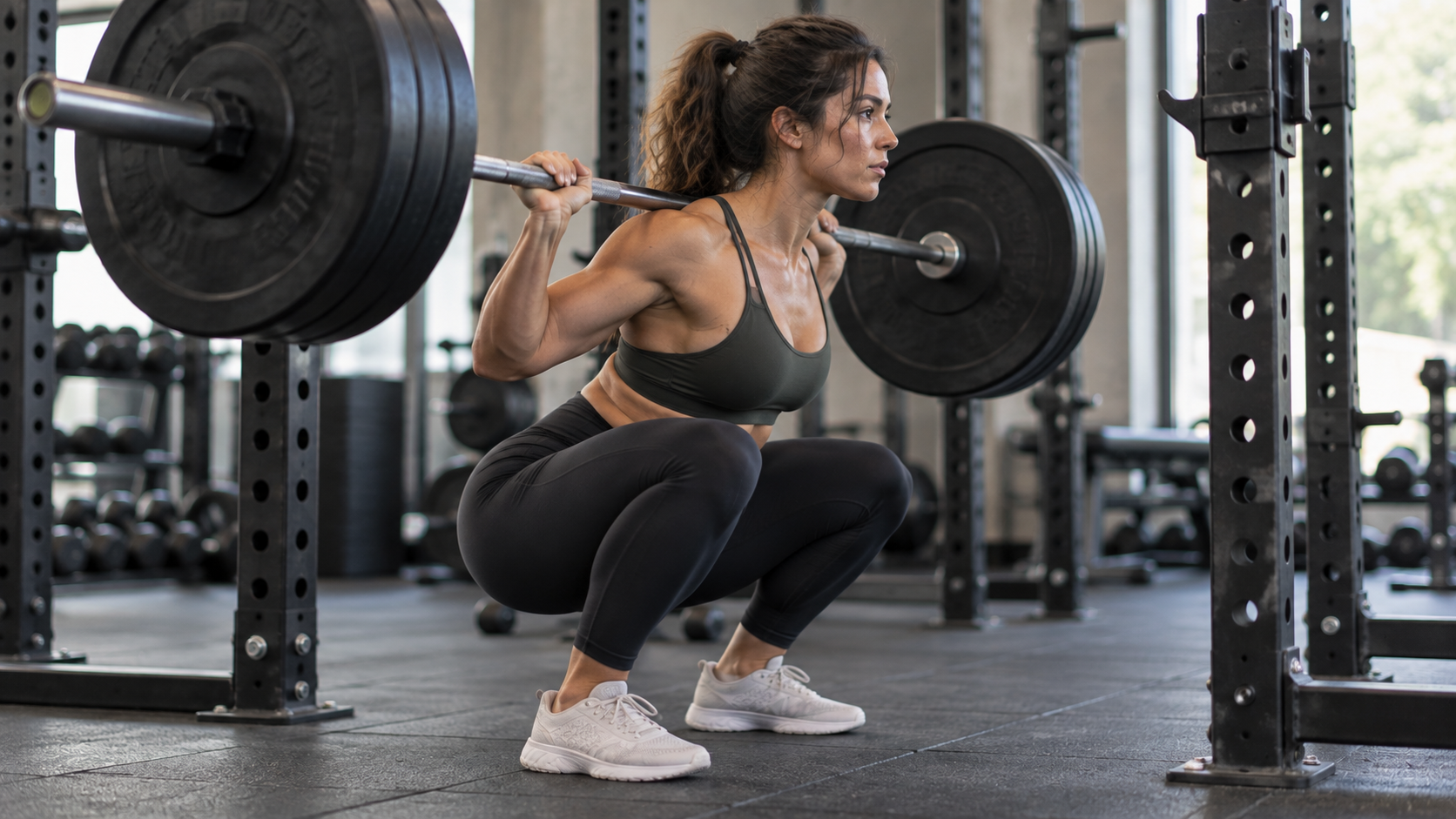
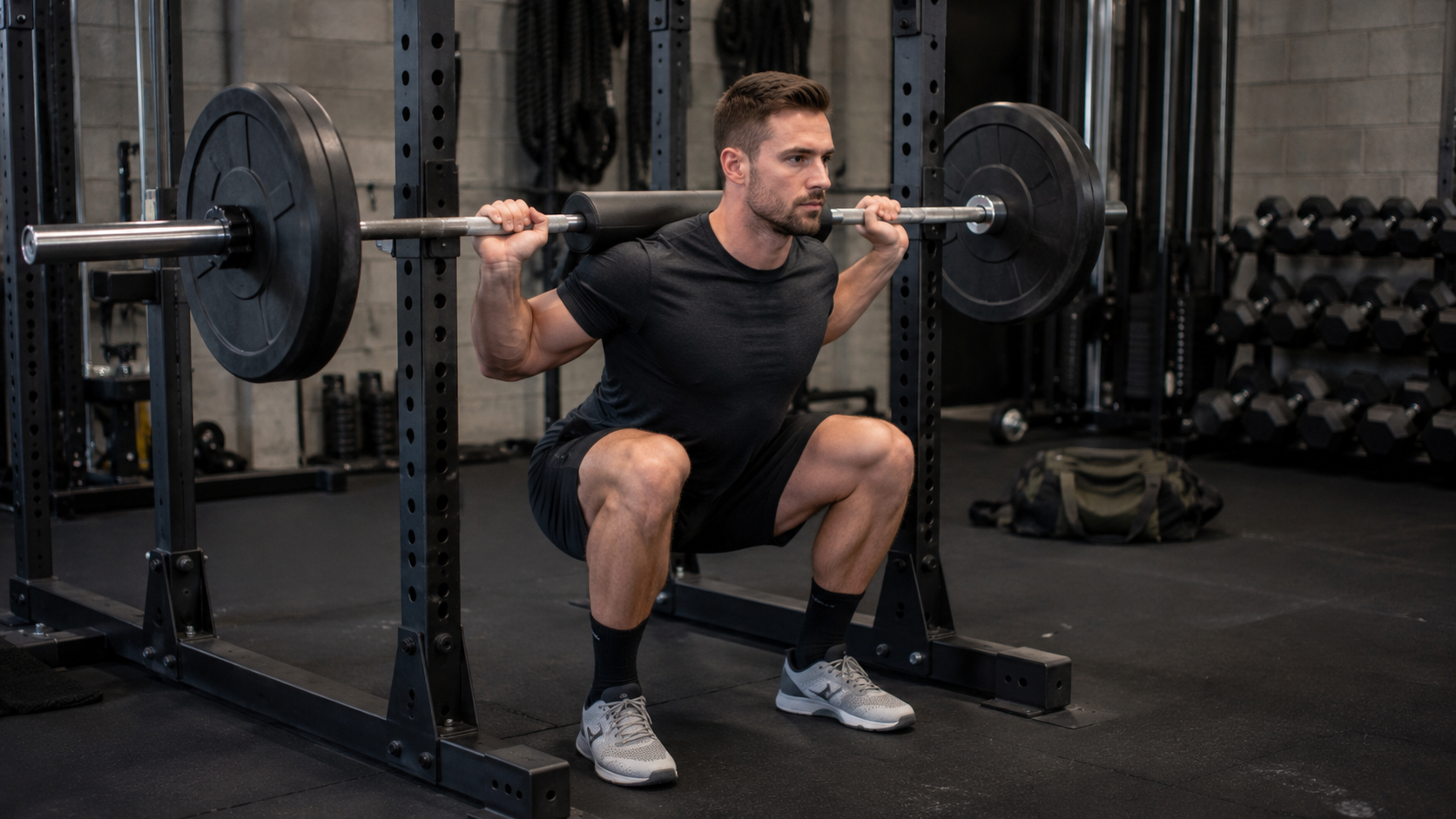
If your rep looks off, it usually starts with the rack setup, your stance, or the way your knees track on the way down. This barbell squat variation trains your quads, glutes, hamstrings, and calves in a gym setup with the bar set on a squat rack at chest height, then Corect can check your setup, depth, and knee tracking from a phone video rep by rep.
Set the rack and stance
Set the rack so the bar sits at chest height, then stand facing away from it with your feet shoulder-width apart. That gives you room to unrack cleanly and start from a balanced base.
Get into the squat and grab the bar
Grasp the barbell with an overhand grip, slightly wider than shoulder-width apart.
From the squat position, stay controlled so you can lift the bar off the rack cleanly and step back with your feet still shoulder-width apart.
Unrack and step back cleanly
Take the bar out smoothly, then step back cleanly. The rep starts the moment the bar clears the hooks.
Keep the bar steady in your hands as you move your feet back into place. If the unrack is right, the bar leaves the rack without a jolt and you land back under control. If it is wrong, the bar swings, one foot searches farther than the other, or you have to catch yourself before you can settle.
Once you step back, freeze and reset before you descend. The goal is a quiet, stable base for the first squat rep.
Lower into the rep
Use this part to set up what the camera should check, not to restate the same descent cues. Keep the movement controlled and steady so the rep stays easy to judge on video.
Pause and drive up
Pause briefly at the bottom, then push through your heels to stand back up. That pause should keep you honest; if you bounce out of it, the rep loses control.
As you rise, keep the motion smooth and the knees in line with your toes until you are back to the starting position.
Common form errors
A useful video check here is not just whether the rep is “clean.” It is whether the setup, descent, bottom, and drive each stay organized.
Setup errors show up when your feet are not set shoulder-width apart after the unrack, or the bar leaves you out of position before the rep starts. Descent errors show up when the body drops out of stack and the knees stop tracking with the toes. Bottom errors show up when the pause disappears and you sink or rebound instead of controlling the range. Drive errors show up when the lift comes up unevenly or the heels lose pressure before you finish the rep.
How Corect scores the movement from video
Corect can analyze this movement from a phone video and score its form, so you can compare one rep to the next without guessing.
Use the video to check whether your stance stays shoulder-width, your back stays straight, your chest stays up, your knees track with your toes, and your heels drive the return. If those pieces stay consistent from unrack to the top, the rep is easier to trust on camera.
Barbell Bench Squat: the movement, step by step
- Set up a barbell on a squat rack at chest height.
- Stand facing away from the rack, with your feet shoulder-width apart.
- Bend your knees and lower your body down into a squat position, keeping your back straight and chest up.
- Grasp the barbell with an overhand grip, slightly wider than shoulder-width apart.
- Lift the barbell off the rack and step back, ensuring your feet are still shoulder-width apart.
- Lower your body down into a squat, keeping your knees in line with your toes.
- Pause for a moment at the bottom, then push through your heels to return to the starting position.
- Repeat for the desired number of repetitions.
Common questions
How do you set up the barbell bench squat?
Set the rack so the bar sits at chest height, then stand facing away from it with your feet shoulder-width apart. Grasp the bar with an overhand grip slightly wider than shoulder-width.
What should the unrack and step back feel like?
The bar should leave the rack smoothly without a jolt, and you should step back under control. If it is right, you land in place quietly and can reset before descending.
What should happen at the bottom of the rep?
Pause briefly at the bottom, then push through your heels to stand back up. The pause should keep you honest instead of letting you bounce out of the hole.
What form errors does Corect check for?
Corect looks for a steady shoulder-width stance, a straight back and up chest, knees tracking with the toes, and heels driving the return. It also checks for issues in the setup, descent, bottom, and drive.
The hardest part of fixing any of this is that you cannot see yourself mid-rep. Corect reads your form from a phone video and shows you what actually happened on each rep of your barbell bench squat — depth, bar path, where the breakdown starts. Try it free.