
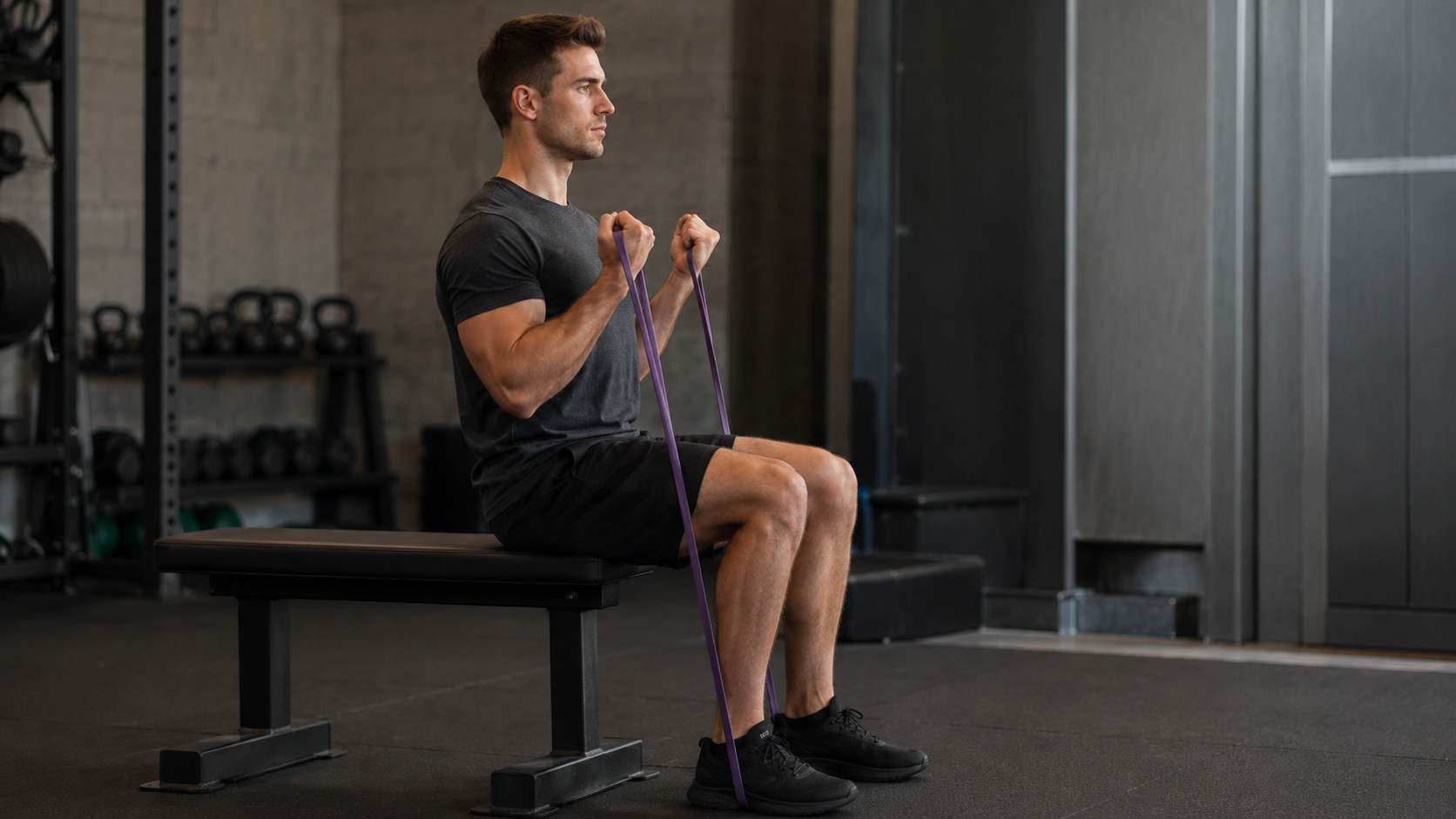
Sit on a chair or bench with your back straight and feet flat on the ground, then hold the band with an underhand grip and your arms extended down by your sides. Keep your upper arms still as you curl the band toward your shoulders.
What the curl should feel like
You should feel the band loading your biceps and forearms from the first inch, with the effort staying smooth rather than turning into a jerk. The rep should feel like a clean pull against steady resistance, and the top should finish with a hard squeeze before the band gives you back down.
The most common form errors
The useful signs of a bad rep are the ones that break the line and the tempo. If the band jumps, the return is rushed, or the lift turns into a body swing, the biceps are no longer doing the work cleanly.
A strict rep looks controlled on the way up and slower on the way down. When the movement gets sloppy, the band loses tension at the bottom and the forearms have to catch it instead of guiding it.
How to fix a sloppy rep
If the rep turns into a swing, the fix is to make the first inch of the curl honest. Start only when the band is loaded enough that the pull begins from the biceps, not from a yank.
Keep the upper arms from drifting forward. Once the elbows travel, the shoulders shorten the path and the rep stops looking like a curl.
Keep the wrists quiet so the forearms do not take over. The band should rise because the elbows bend, not because you lean back or rock through the torso.
Lower under control until the band is stretched again. If you drop it, the next rep starts loose and the shape falls apart.
How to read your video
On video, check three things: your back stays straight, your feet stay flat, and your upper arms do not wander. If those stay put, the rep is easier to read.
The band should move from arms hanging by your sides to hands near your shoulders without your torso helping. If your body rocks or your upper arms drift forward, the curl is doing more than the biceps and forearms.
At the top, look for a brief pause with the band still tight. On the way down, the band should return under control, not snap back.
What muscles this movement targets
This movement targets your biceps first, with your forearms helping throughout the curl. If the rep is clean, you should feel the biceps do the main work while the forearms stay engaged from gripping the band and controlling the line of pull.
The underhand grip puts the biceps in the best position to contract hard as you flex the elbow and bring the band up. Keeping your upper arms still keeps the load on the arm itself instead of letting the shoulders take over. That is why the rep should feel like a tight bend at the elbow, not a full-body pull.
At the top, the squeeze should feel strongest in the biceps, with the forearms still holding the band steady. On the way down, the same muscles should control the band back to the start instead of letting tension disappear. If the band goes slack, the forearms may still be working, but the biceps are no longer doing the same job through the whole rep.
When the rep is clean enough to count
A rep counts when it follows the same clean path as the rest of the set, without needing extra body movement to finish it. If one rep is solid and the next is a cheat, the set is not consistent enough to score well.
Corect is looking for repeats that stay controlled and repeatable from start to finish. Once the pattern changes, the quality of the set drops.
Resistance Band Curl: the movement, step by step
- Sit on a chair or bench with your back straight and feet flat on the ground.
- Hold the resistance band with an underhand grip, palms facing up, and arms extended down by your sides.
- Keeping your upper arms stationary, exhale and curl the resistance band up towards your shoulders.
- Pause for a moment at the top, squeezing your biceps.
- Inhale and slowly lower the resistance band back to the starting position.
- Repeat for the desired number of repetitions.
Common questions
What should the resistance band curl feel like?
It should feel like the band is loading your biceps and forearms from the first inch, with smooth effort instead of a jerk. The top should finish with a hard squeeze before the band gives you back down.
What are the most common form errors?
The main mistakes are letting the band jump, rushing the return, or turning the rep into a body swing. If the movement gets sloppy, the band loses tension at the bottom and the forearms have to catch it instead of guiding it.
How do you fix a sloppy rep?
Start with a honest first inch so the pull begins from the biceps, not a yank. Keep the upper arms from drifting forward, keep the wrists quiet, and lower under control until the band is stretched again.
When does a rep count?
A rep counts when it follows the same clean path as the rest of the set, without extra body movement to finish it. Once the pattern changes, the quality of the set drops.
The hardest part of fixing any of this is that you cannot see yourself mid-rep. Corect reads your form from a phone video and shows you what actually happened on each rep of your resistance band curl — depth, bar path, where the breakdown starts. Try it free.