The abs are primary, with the hip flexors and lower back helping.
That stays true whether you do it at home or in the gym.
Why the Load Changes With Range of Motion
The abs, hip flexors, and lower back all work here, but stopping around 45 degrees keeps the abs doing the main job. If you cut the range short, the hip flexors and lower back still help, but the movement shifts away from the abs and loses some of its finish.
Abs vs Hip Flexors vs Lower Back
The abs drive the curl off the floor and keep the rep moving through the waist. The hip flexors help as you come up, and the lower back is most relevant on the way down.
If the ascent stalls before the top, the abs are doing less of the work. If the return drops fast, the lower back loses control on the way back to the start.
What Good Reps Look Like on Video
Good reps shift the work to the Abs, with the Hip Flexors and Lower Back staying secondary instead of taking over early.
The movement should read as the waist doing the work, with the torso curling forward under control and then lowering back down smoothly. If the hips drive the rep or the lower back starts helping early, the Abs are not carrying enough of the load.
Common Form Breaks That Change the Muscles Worked
Fast, sloppy reps shift work away from the abs and make the lower back help sooner than it should.
If you rush the lift or lose control on the way down, the movement stops staying centered at the waist and the load spreads to the hip flexors and lower back instead of staying clean.
How This Differs From a Full Sit-up
The shorter range keeps the effort centered on the abs and the waist, with less of the extra motion that lets the hip flexors and lower back take over. That makes the top half feel tighter and more direct, especially when you pause at the 45-degree finish and control the way back down.
Who This Movement Fits
It mainly works the abs, with the hip flexors and lower back helping through the lift and lower. That makes it a bodyweight waist exercise for home or gym work when you want direct abdominal emphasis with some support from the hips and lower back.
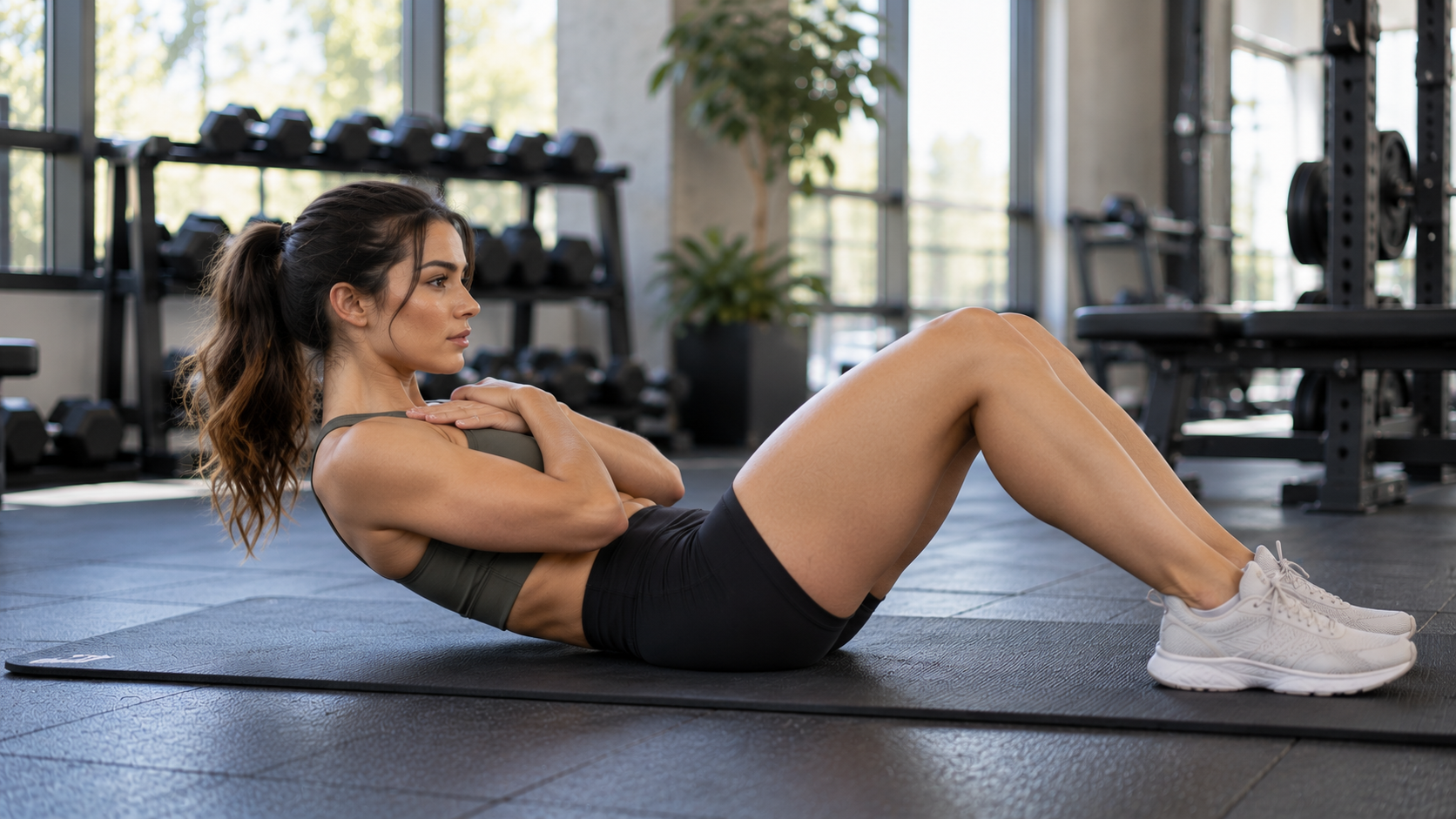
3/4 Sit-up: the movement, step by step
- Lie flat on your back with your knees bent and feet flat on the ground.
- Place your hands behind your head with your elbows pointing outwards.
- Engaging your abs, slowly lift your upper body off the ground, curling forward until your torso is at a 45-degree angle.
- Pause for a moment at the top, then slowly lower your upper body back down to the starting position.
- Repeat for the desired number of repetitions.
Common questions
What muscles does the 3/4 sit-up work?
The abs are primary, with the hip flexors and lower back helping. It works as a short-range trunk flexion drill whether you do it at home or in the gym.
How does range of motion change the muscles worked?
Stopping around 45 degrees keeps the abs doing the main job. If you cut the range short, the hip flexors and lower back still help, but the movement shifts away from the abs.
What do good reps look like on video?
Good reps shift the work to the abs, with the hip flexors and lower back staying secondary. The torso should curl forward under control and lower back down smoothly.
How is the 3/4 sit-up different from a full sit-up?
The shorter range keeps the effort centered on the abs and waist, with less extra motion that lets the hip flexors and lower back take over.
The hardest part of fixing any of this is that you cannot see yourself mid-rep. Corect reads your form from a phone video and shows you what actually happened on each rep of your 3/4 sit-up — depth, bar path, where the breakdown starts. Try it free.