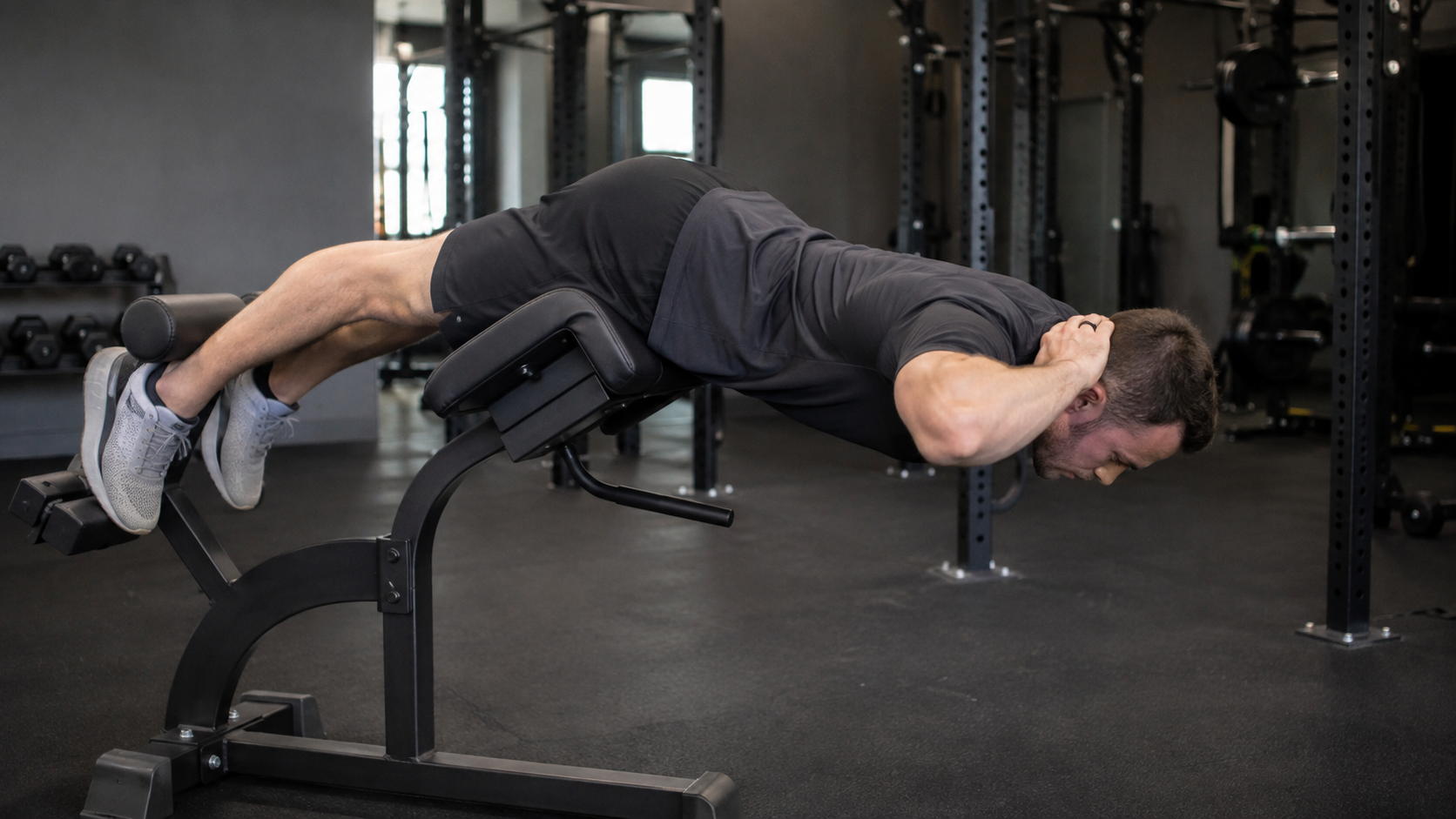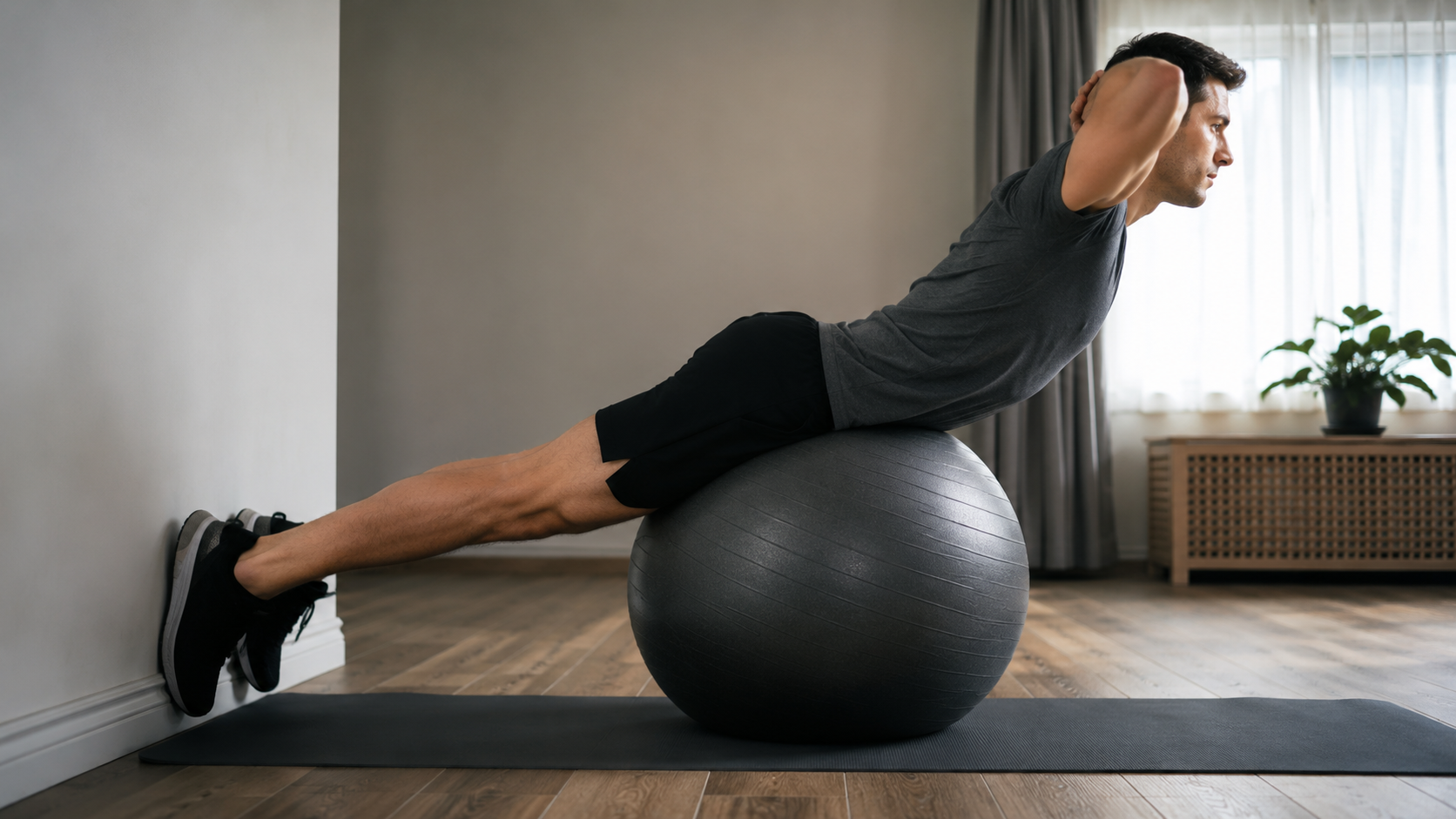
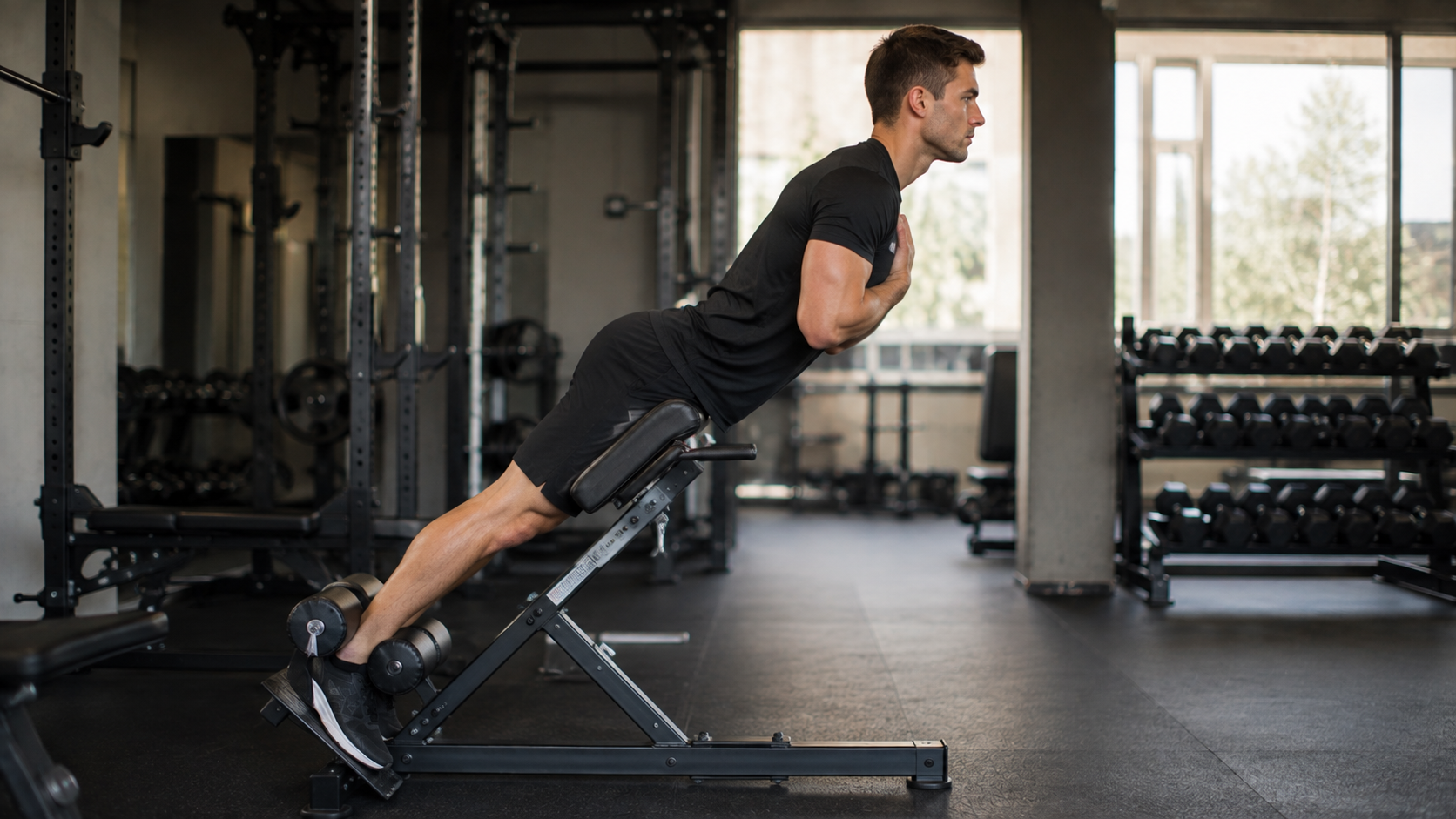
The back extension works the lower back, glutes, and hamstrings. Those are the primary muscles, with the glutes and hamstrings also listed as secondary movers.
It’s a bodyweight back movement you can do at home or in the gym, also called a hyperextension or 45 degree back extension.
Why the load shifts with execution
How it feels changes with the hinge and how strictly you keep your back straight. Stay cleaner through the bottom and the hips have to carry more of the raise; shorten the range or rush through it, and the rep stays easier but gives you less to work with.
How to set up the bench
Set the bench so your upper thighs rest on the pad and your feet are secured. That gives you a stable start before you move. Begin from a position you can hold without collapsing, then hinge from the hips.
What the lowering phase should look like
Lower under control and keep your back straight all the way down. That keeps the rep on the intended muscles instead of turning into a spinal collapse, and the pause at the bottom should still feel controlled, not dropped.
What the bottom pause does
The pause marks the reset between lowering and rising, so the movement has to start again from stillness. That makes the lower back, glutes, and hamstrings do the work of bringing your upper body back up until it is in line with your legs.
What the top position should look like
The top position shows how the lower back, glutes, and hamstrings share the load: your upper body finishes in line with your legs, and that straight line is where the movement shifts through those muscles. If the rep stops short or goes past that line, the balance between them gets harder to read.
How to tell which muscles are taking over
This movement works the lower back, glutes, and hamstrings. Corect can analyze your rep from a phone video and score your form.
When the machine version feels different
This version is easy to judge from the setup: your upper thighs rest on the pad, your feet are secured, and your back stays straight as you lower and rise. Corect can analyse the movement from a phone video and score whether you pause at the bottom and finish with your upper body in line with your legs.
Back Extension: the movement, step by step
- Adjust the hyperextension bench so that your upper thighs are resting on the pad and your feet are secured.
- Cross your arms over your chest or place your hands behind your head.
- Lower your upper body towards the ground while keeping your back straight.
- Pause for a moment at the bottom, then raise your upper body back up until it is in line with your legs.
- Repeat for the desired number of repetitions.
Common questions
What muscles does the back extension work?
The back extension works the lower back, glutes, and hamstrings. The page lists the glutes and hamstrings as secondary movers too.
How does execution change which muscles do more work?
The load shifts with the hinge and how strictly you keep your back straight. Staying cleaner through the bottom makes the hips carry more of the raise, while shortening the range or rushing through it makes the rep easier but less effective.
What should the bottom of the rep look like?
Lower under control and keep your back straight all the way down. The pause at the bottom should still feel controlled, not dropped.
What should the top position look like?
At the top, your upper body should finish in line with your legs. That straight line is where the movement shifts through the lower back, glutes, and hamstrings.
The hardest part of fixing any of this is that you cannot see yourself mid-rep. Corect reads your form from a phone video and shows you what actually happened on each rep of your back extension — depth, bar path, where the breakdown starts. Try it free.