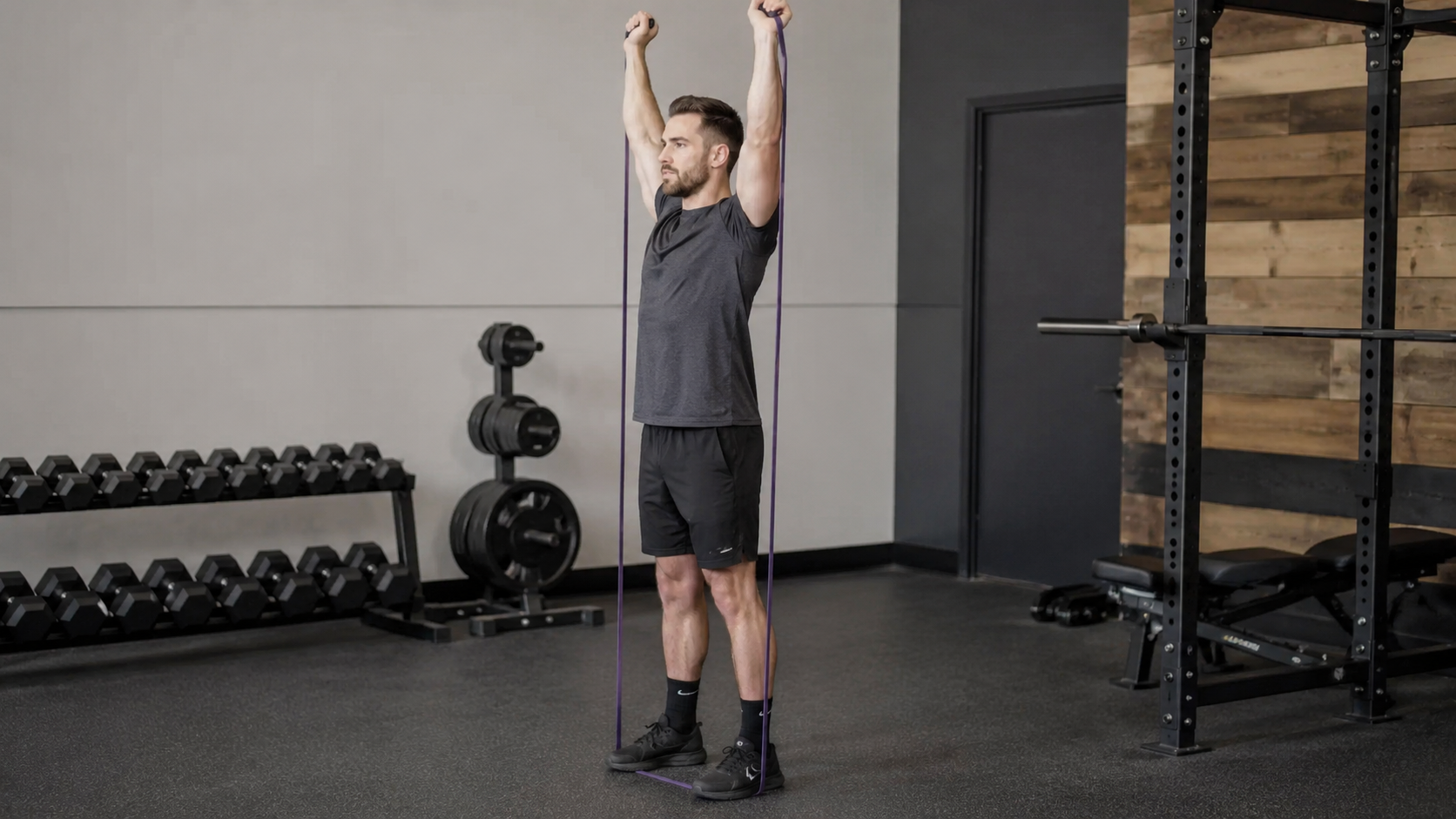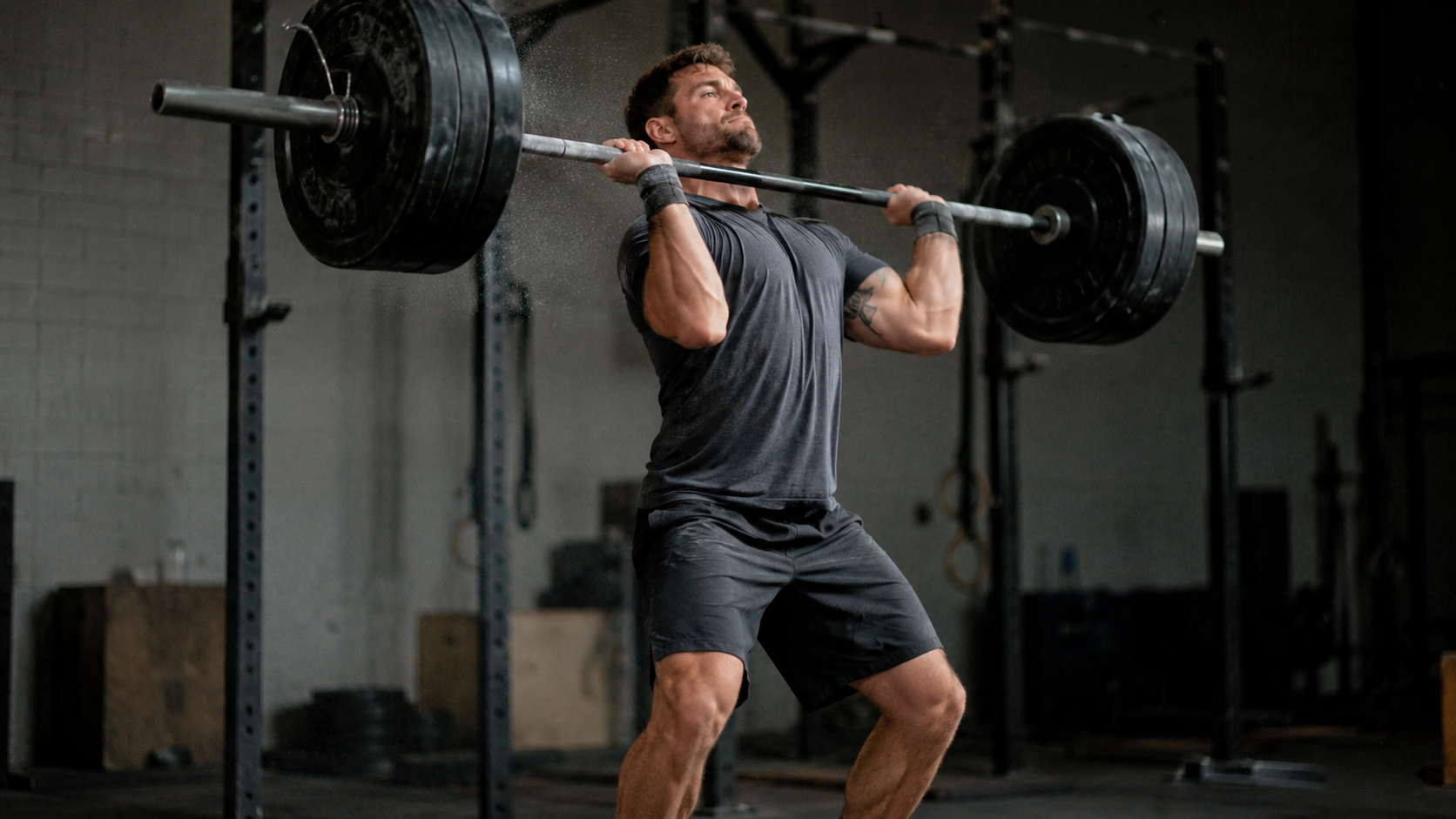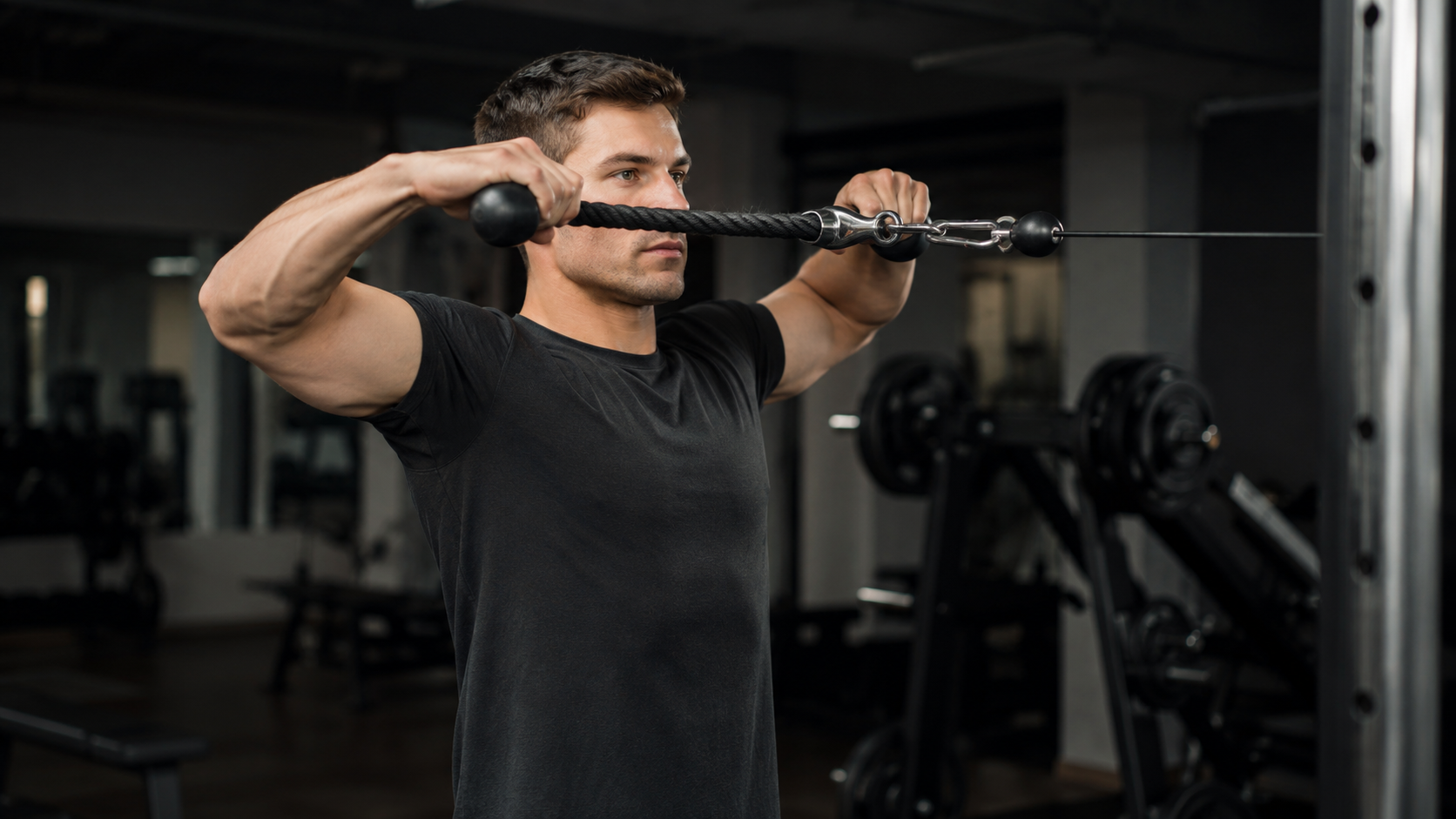
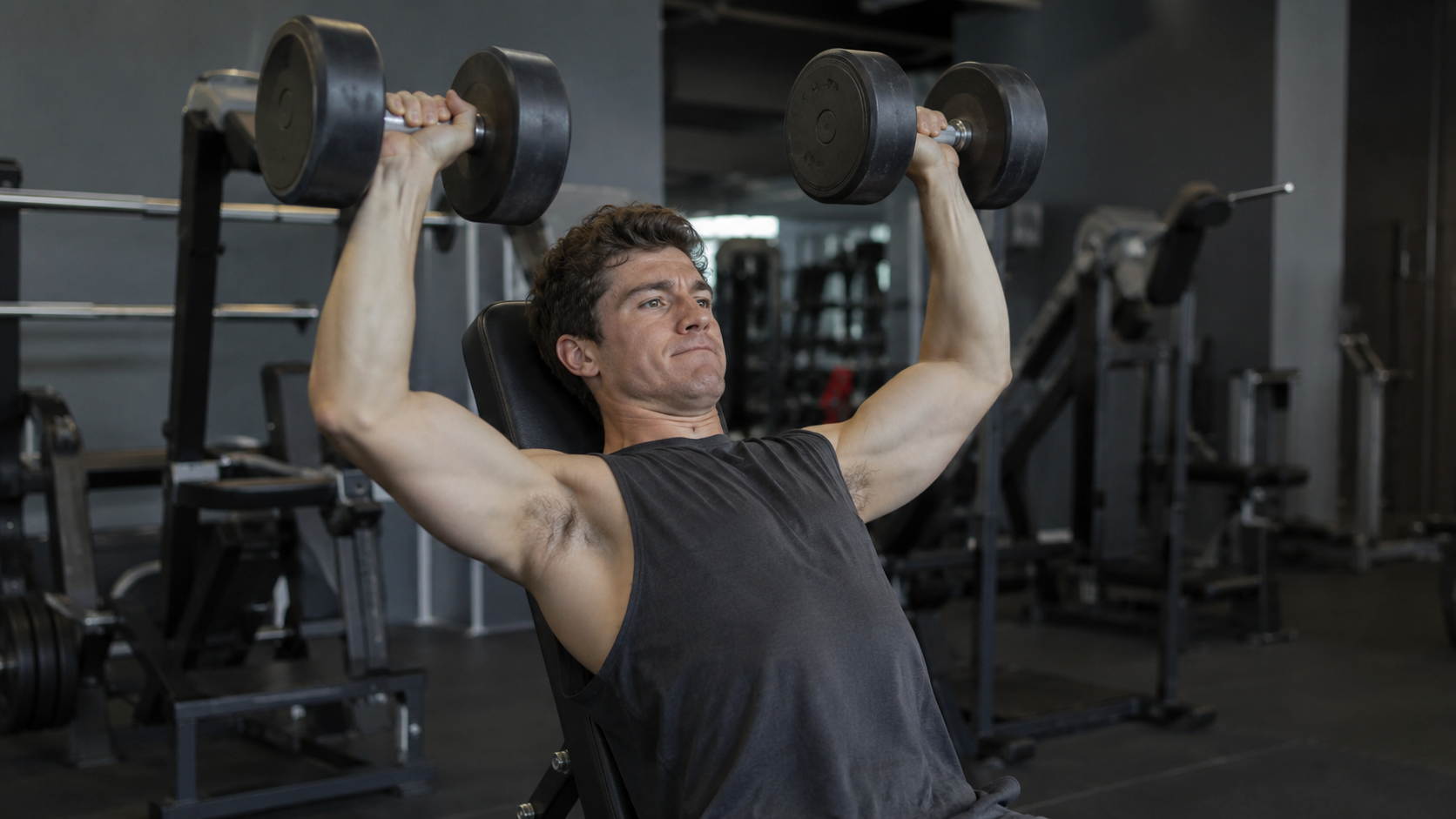
The shoulders and triceps are the primary movers, with the upper back assisting. The shoulders do most of the pressing from shoulder height to full extension overhead, the triceps finish the rep, and the upper back keeps the dumbbells stable throughout.
Why the same lift can feel different rep to rep
Shoulders and triceps do most of the work here, with the upper back helping to steady the press.
The same dumbbell shoulder press can feel more shoulder-dominant or more triceps-dominant from rep to rep depending on where you finish each press. If the dumbbells reach true overhead lockout, the shoulders carry more of the load. If you stop short, the triceps pick up more of the work near the top.
What Corect looks for in video
Shoulders and triceps do the main work, with the upper back helping to keep the press stable.
In video, Corect looks for clear loss of stability as the dumbbells rise or return, not whether the rep is “correct.” It flags reps that lose a stacked overhead path or finish out of position because that is where the movement starts to break down.
How the setup changes the result
A seated setup lets the shoulders and triceps do the main work, with the upper back assisting. Starting the dumbbells on your thighs and moving to shoulder height with your palms forward gives you the base for the press overhead.
How the press should travel
The dumbbells should move straight up and finish directly over the shoulder joint, with full extension overhead and no drift forward. Pause briefly at the top, then lower them under control back to the start.
Common form errors that change the muscles working
The main movers are the shoulders and triceps, with the upper back helping keep the press steady.
If the rep turns into a partial press, the shoulders do less work and the triceps take over sooner. If the lowering phase is rushed, the shoulders lose time under tension and the upper back has to clean up the movement. A full press and controlled return keep the load on the shoulders rep to rep.
When to think about variation, not just load
Shoulders and triceps do the main work here, with the upper back helping to steady the rep.
If you want more shoulder focus, keep the press clean and full so the shoulders keep doing the work through the whole rep. If the motion turns into a shorter, easier push, the triceps usually feel more of it.
That is why an Arnold press or machine shoulder press can feel different. The setup changes how much the shoulders and triceps have to share the rep.
Dumbbell Shoulder Press: the movement, step by step
- Sit on a bench with a dumbbell in each hand, resting on your thighs.
- Raise the dumbbells to shoulder height, palms facing forward.
- Press the dumbbells upward until your arms are fully extended overhead.
- Pause for a moment at the top, then slowly lower the dumbbells back to shoulder height.
- Repeat for the desired number of repetitions.
Common questions
What muscles does the dumbbell shoulder press work?
The dumbbell shoulder press mainly works the shoulders and triceps, with the upper back helping secondarily. The shoulders do most of the work through the press, and the triceps help finish overhead.
Why can the same dumbbell shoulder press feel different from rep to rep?
If the dumbbells reach true overhead lockout, the shoulders carry more of the load. If you stop short, the triceps pick up more of the work near the top.
How does setup change what muscles work?
A seated setup lets the shoulders and triceps do the main work while the upper back assists. Starting the dumbbells on your thighs and bringing them to shoulder height with palms forward sets up the press overhead.
What happens if the rep turns into a partial press?
If the rep turns into a partial press, the shoulders do less work and the triceps take over sooner. A full press and controlled return keep the load on the shoulders rep to rep.
The hardest part of fixing any of this is that you cannot see yourself mid-rep. Corect reads your form from a phone video and shows you what actually happened on each rep of your dumbbell shoulder press — depth, bar path, where the breakdown starts. Try it free.