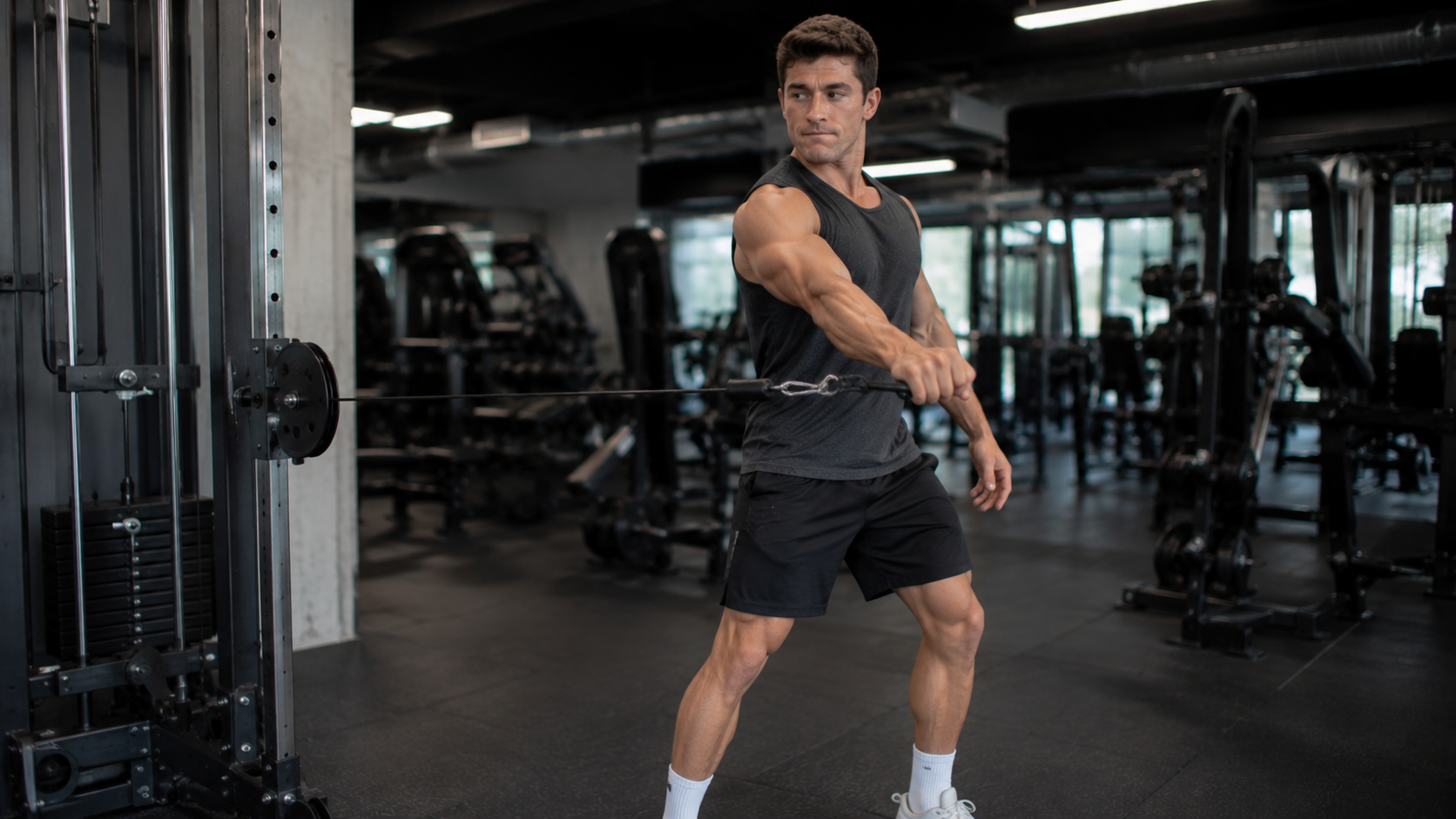

The front deltoids do most of the work, with the biceps and trapezius helping. This is a shoulders exercise with a dumbbell.
At the top and on the slow lowering phase, the shoulders stay under load.
Why the front delts do most of the work
The front delts are the main driver here, with the biceps and trapezius helping as secondary muscles.
Keep the lift strict. Straight arms, palms toward your thighs, then raise the dumbbells to shoulder level without letting the shoulders shrug or the weight swing. That keeps the front of the shoulder doing the work on the way up and on the way back down.
Where the biceps and trapezius come in
The biceps and trapezius only support the lift. They help, but the front delts do the work.
How rep quality changes the load
Cleaner reps keep the load on the shoulders. If you bend the arms, stop short of shoulder level, or drop the weight on the way down, more of the work leaks into the biceps and trapezius and the rep loses value.
What you should feel during a clean rep
You should feel the front of the shoulders doing the main work as the dumbbells travel smoothly to shoulder level. The rep stays controlled on the way down, with no swing or jerking.
Common reasons the load shifts away from the target
If the rep turns into a swing or the weight travels only partway up, the front delts stop doing most of the work. Keep the lift strict, take it to shoulder level, and lower it with control so the shoulders stay on task.
Front raise variations people search for
The dumbbell front raise and plate raise use the same shoulder pattern: the load moves through the shoulders, and the way you position your body changes where the stress lands. A clean starting position with your palms facing your thighs keeps the arm path honest. Lift to shoulder level with the arms straight, then pause and lower under control. If the top position turns into a swing, the biceps and trapezius help more. If the range of motion shortens, the Front Deltoids lose work. Corect can analyse this movement from a phone video and score its form.
How Corect judges the rep
Corect scores the rep from phone video by checking whether the movement pattern matches a shoulder-focused load on the Front Deltoids.
Clean reps keep the dumbbells moving in front of the shoulders without the biceps or trapezius taking over. If the torso swings or the shoulders hike, the score drops.
Front Raise: the movement, step by step
- Stand with your feet shoulder-width apart, holding a dumbbell in each hand with your palms facing your thighs.
- Keeping your arms straight, exhale and lift the dumbbells in front of you until they are at shoulder level.
- Pause for a moment at the top, then inhale and slowly lower the dumbbells back down to the starting position.
- Repeat for the desired number of repetitions.
Common questions
What muscles does the front raise work?
The front delts do most of the work, with the biceps and trapezius helping as secondary muscles.
How does form change the load in a front raise?
Strict reps keep the load on the shoulders. Bending the arms, cutting the range short, or swinging the weight shifts work away from the front delts.
What should a clean front raise feel like?
You should feel the front of the shoulders doing the main work as the dumbbells move smoothly to shoulder level, then lower under control.
What happens when the rep turns into a swing?
If the rep becomes a swing or the weight only travels partway up, the front delts stop doing most of the work and the rep loses value.
The hardest part of fixing any of this is that you cannot see yourself mid-rep. Corect reads your form from a phone video and shows you what actually happened on each rep of your front raise — depth, bar path, where the breakdown starts. Try it free.