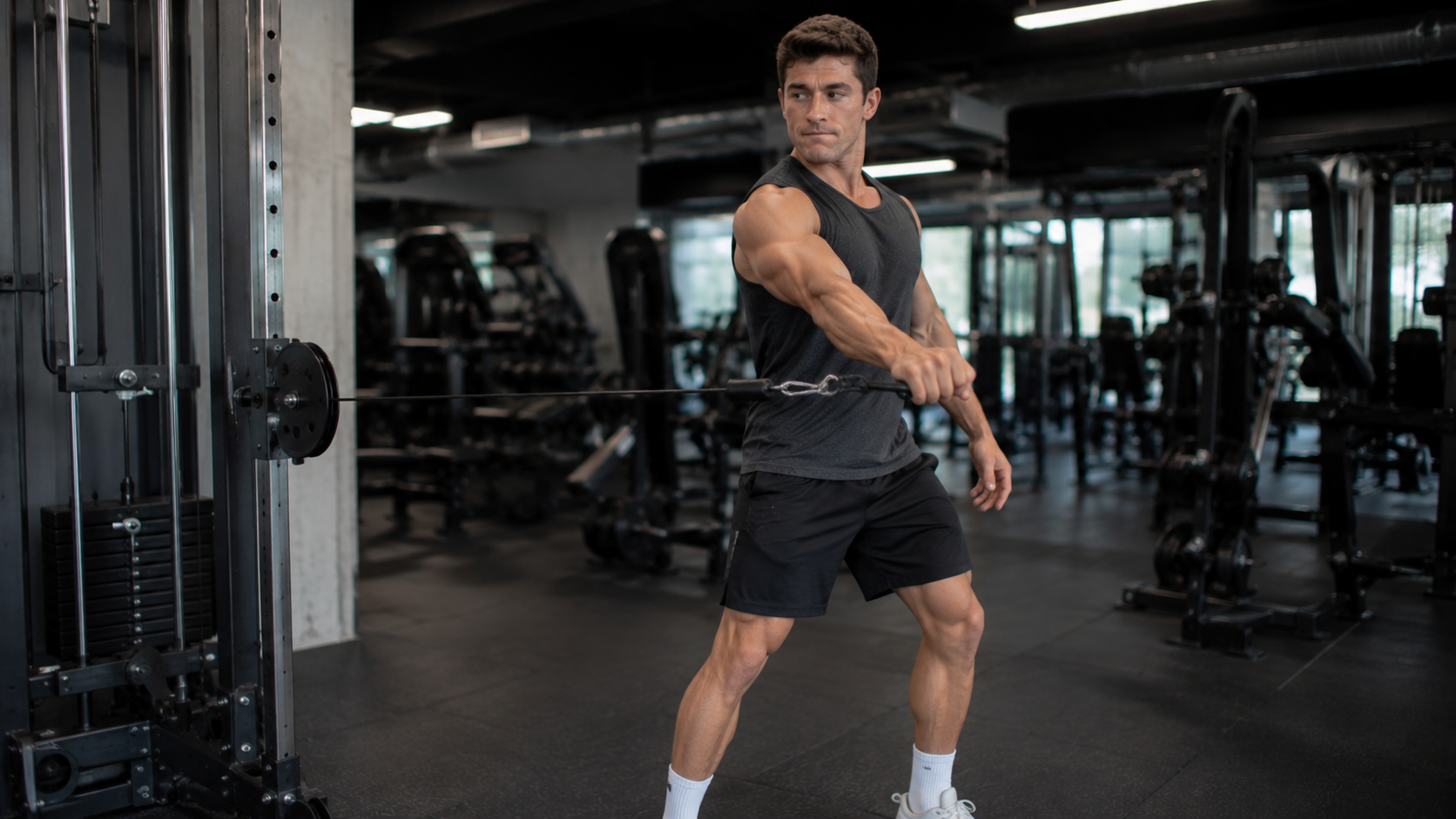
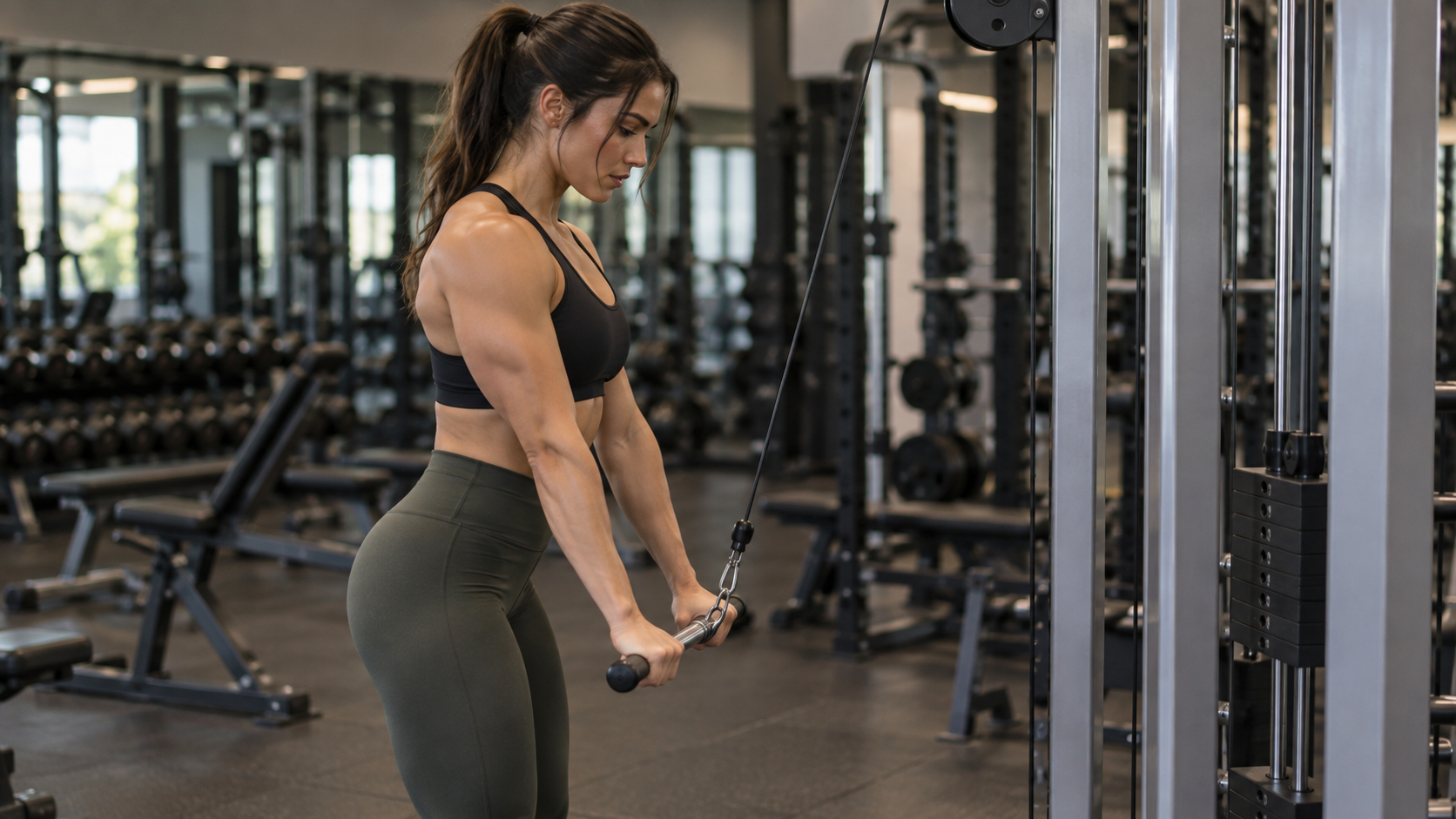
This is a back-focused cable pull built around the lats, with the shoulders and biceps assisting. The cable and straight bar let you keep the arms straight as the bar travels from overhead to your thighs.
Setup on the cable machine
Attach a straight bar to the high pulley. Stand facing the machine with your feet shoulder-width apart, and grip the bar overhand with your arms straight and palms down.
Keep the same stance and grip for each rep so the pull starts from a fixed line and the bar returns under control.
How to perform each rep
This rep should feel like a controlled pull, not a recap of the setup. Let the motion stay smooth, hold the bottom briefly, then bring the bar back under control.
The key is that the rep keeps the tension where it belongs all the way through. If the movement turns sloppy, the next rep usually starts worse.
What a good rep should feel like
A good rep starts with the lats pulling the cable down, not the hands or shoulders. Your arms stay straight, the bar moves toward your thighs, and the back does the work instead of the elbows bending to help.
At the bottom, the rep stays controlled and finished, with the bar close to the thighs and the shoulders not rolling forward. On the way back up, the cable returns under control so the next pull starts from the same place.
Common form errors
The rep breaks when the elbows bend. Once that happens, the shoulders and biceps start helping more than they should, and the lats stop doing the work.
The other tell is motion through the torso. If you lean, swing, or drift forward, you are moving the cable with body English instead of keeping the pull controlled.
Watch the return too. If the bar snaps back up, you lose control before the next rep starts.
How to check your form on video
On video, the rep should show a straight bar moving under control toward your thighs while your arms stay straight. If the path changes from rep to rep, or your elbows start bending, the set is losing the pull it is supposed to have.
Film from the side or a slight front angle and watch the cable, the arm angle, and the pause at the bottom. A good rep keeps the chest steady, the pull smooth, and the return just as deliberate as the down phase.
The main tells are elbow flexion, shoulders taking over, and a bar path that drifts instead of finishing near the thighs.
Straight arm pulldown alternatives
If you want the closest non-cable pattern, use a dumbbell pullover or a band straight-arm pulldown. Both still ask the same thing of the rep: long arms, lats doing the pull, and the hands finishing near the thighs instead of drifting wherever your shoulders take them.
The dumbbell version makes the shoulder takeover easier to feel. If your elbows start bending or your ribs flare to move the weight, the tension has left the back and turned into a different pull.
The band version keeps the path closer to the cable setup, but speed hides mistakes. If the band snaps you back to the top or your hands change direction every rep, you are no longer controlling the straight-arm line.
Use the cable version when you want the cleanest rep-to-rep form score from video. Use the dumbbell or band version when the setup is simpler, but keep the same long-arm pull, steady return, and brief pause at the bottom.
Cable Straight Arm Pulldown: the movement, step by step
- Attach a straight bar to the high pulley of a cable machine.
- Stand facing the machine with your feet shoulder-width apart.
- Grasp the bar with an overhand grip, keeping your arms straight and your palms facing down.
- Engage your lats and pull the bar down towards your thighs, keeping your arms straight throughout the movement.
- Pause for a moment at the bottom, then slowly return the bar to the starting position.
- Repeat for the desired number of repetitions.
Common questions
How should the cable straight arm pulldown be set up?
Attach a straight bar to the high pulley, stand facing the machine with your feet shoulder-width apart, and grip the bar overhand with your arms straight and palms down. Keep the same stance and grip for each rep so the pull starts from a fixed line.
What should a good rep feel like?
A good rep starts with the lats pulling the cable down, not the hands or shoulders. Your arms stay straight, the bar moves toward your thighs, and the return comes back under control.
What are the most common form errors?
The main errors are bending the elbows, leaning or swinging through the torso, and letting the bar snap back up. Those mistakes shift the work away from the lats and make the next rep worse.
How can you check your form on video?
Film from the side or a slight front angle and watch the cable, arm angle, and pause at the bottom. The rep should show a straight bar moving under control toward your thighs with no drift from rep to rep.
The hardest part of fixing any of this is that you cannot see yourself mid-rep. Corect reads your form from a phone video and shows you what actually happened on each rep of your cable straight arm pulldown — depth, bar path, where the breakdown starts. Try it free.